Local vet explains how to prevent Christmas becoming a dog's dinner for pets
As the festive season approaches, Harrison Family Vets, which has practices in Longton and Kingswinford, is urging pet owners to stay alert to the many hazards that Christmas can bring for cats and dogs. The independent practice is advising how to avoid the most common pitfalls of the festive season.
James Harris, Group Clinical Director from Harrison Family Vets, said: “Christmas is one of the most hazardous times of the year for pets and we often see a spike in the number of emergency cases that we treat at this time of year. Christmas items that seem harmless to us can be extremely dangerous, or even life-threatening, for pets.”
“Lots of food and treats come into the house over Christmas and these are very tempting for our pets. Christmas cakes, mince pies, chocolate, nuts, alcohol and joints of meat all need to be kept well out of reach. It’s amazing what pets will do when they sniff out the good stuff!
“Many ingredients in festive food are poisonous, including chocolate which can be lethal for dogs, especially dark chocolate which contains higher levels of theobromine. However, large volumes of anything that a pet isn’t used to eating will make them ill, so if they do break through the barricades and enjoy a festive feast on something they shouldn’t, it’s important to get them checked by a vet right away.”
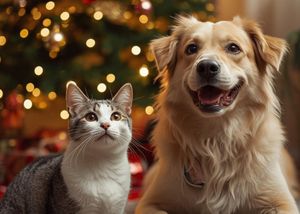
Harrison Family Vets has compiled a list of the 10 most common hazards for cat and dog owners to be aware of at Christmas:
Bones – Once they’re cooked, bones become brittle and splinter easily, which can cause all types of problems to pets. Plus, turkey bones are hollow so they splinter easily regardless of whether they are cooked or raw - they should never be given to pets.
Christmas cake and mince pies – As well as being full of fat, and possibly alcohol, these usually contain raisins and sultanas, which are similar to grapes and can make some pets seriously ill.
Chocolate – This is particularly dangerous to pets because as well as upsetting the intestinal system, it can also affect the heart and neurological systems. Don’t forget about chocolate decorations on trees, which lots of pets will soon sniff out.
Nuts – Although they are common at this time of year, pets should avoid eating them. Almonds and pistachios can cause an upset stomach or a severe throat obstruction and some nuts, such as macadamias and certain walnuts can be toxic, causing seizures or neurological signs.
Christmas trees – Should stand in a sturdy base so it won’t fall over if it’s climbed by a cat or knocked by a dog, which could injure the pet as well as anyone else that’s close by!
Pine needles – Should be cleaned up as soon as they drop because they can become embedded in paws.
Seasonal plants - Holly, mistletoe and poinsettias can all cause intestinal problems if they are eaten so keep them well away from pets.
Tinsel and ribbons – These are often attractive to pets, and particularly cats, but if they are swallowed, they will block the intestines, and surgery could be required to remove them.
Alcohol – Should never be given to pets and it’s also important to think about whether it’s been used in a recipe, before feeding a pet titbits.
Guests – Finally, don’t be afraid to ask guests not to feed your pets, especially because many non-pet owners might not understand the risks associated with certain food types.