West Midlands-based Southgate Global responds to Plastic Packaging Tax demands to support circular economy
West Midlands-based Southgate Global is helping food manufacturers and wholesalers confidently navigate Plastic Packaging Tax (PPT) requirements with the introduction of a new Global Recycled Standard (GRS) certified product range.
While governments and organisations are taking steps to reduce the amount of plastic used in food packaging, according to data released by Gitnux, the food packaging sector still accounts for approximately 40 per cent of the plastics used in packaging globally. Therefore, it’s essential British food organisations take the necessary steps to monitor their use of plastic in both the packaging and movement of goods.
Originally introduced on April 1, 2022, PPT was established to provide an economic incentive for businesses to use more recycled plastic in packaging. By applying a tax to packaging that uses less than 30 per cent recycled plastic, thus increasing the cost of virgin plastic, it was hoped companies would be incentivised to use recycled materials and support a circular economy.
In its first 10 months, the tax raised over £28m more than expected. However, over the last three years, it has come under increasing scrutiny, particularly regarding weak verification systems, suggesting virgin plastic is being sold under false recycled claims.
This, combined with additional pressures on the supply chain such as increasing costs and geopolitical instability, has sparked concerns around the enforcement and effectiveness of the tax.
Gavin Gill, Head of Compliance at Southgate, said: “While it’s encouraging to see steps being taken to combat the use of virgin plastic, it’s concerning that both the infrastructure and procedures to facilitate the use of more recycled packaging aren’t always in place. This adds confusion for businesses that use plastic in, for example, food packaging and shipping, in what can already be a complicated process, involving complex record-keeping.”
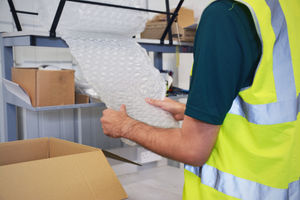
Recognising this, Southgate - whose Midlands distribution centre is based near Minworth, Birmingham - has invested in a GRS certified air cushion range, giving businesses a simple switch to avoid paying Plastic Packaging Tax (PPT) on these consumables. This helps them cut costs, reduce waste, and support the circular economy.
Southgate’s Pacplus air cushion range uses 30 per cent fully certified recycled content, while also being 100 per cent recyclable. Pacplus offers sustainable void fill to protect food products in transit without compromising on quality, cost, or performance. Whether packaging fragile food items or filling grocery box voids, they provide lightweight and eco-friendly protection at a lower cost than many alternatives. Working with most air cushion machines currently available on the market, Pacplus can be easily integrated into operations, meaning minimal changes to setup.
To further support its commitment to sustainability, Southgate has launched an Eco Product Framework, aimed at cutting waste and saving resources by taking achievable and immediate steps towards a greener future for its business and customers.
This framework consists of the 5Rs (Reduce, Reuse, Recycle, Replace and Repair), against which each new and existing Southgate listing, including Pacplus consumables, is reviewed. These segments provide a structure to evaluate and envelope Southgate’s product range, making sure that every offering is considered through a sustainability lens, and items that already deliver on that promise are highlighted.
Gavin added: “Our Pacplus air cushions are just one of our many products which is helping to tackle real issues that our customers are facing. It’s not just about producing products that are sustainable as a box-ticking exercise, but about investing in solutions that help organisations cut waste in ways that don’t impact their productivity and their bottom line.”