Successful breeding season for Pied Flycatchers on West Midlands nature reserve for the fourth year running
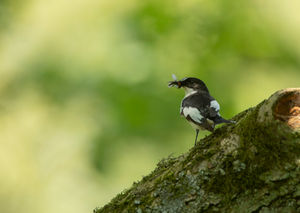
Pied Flycatchers have had their best ever breeding season at RSPB Coombes Valley and Consall Woods in Staffordshire.
The nature reserve has seen another successful breeding season with 76 occupied nest boxes this year. In 2021, there were just 39 occupied nest boxes at RSPB Coombes Valley and Consall Woods. This increased to 50 in 2022 and 64 in 2023. This number rose to a record-breaking 82 in 2024.
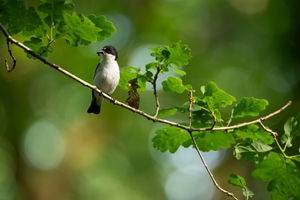
This year has been exceptional with regards to brood size, and the best since the RSPB began recording numbers on site. On average there were 7 to 8 chicks per nest, which is a remarkable number. This means, accounting for a few nest failures, fledging rates are likely high and even better than last year.
Pied Flycatchers are on the Amber list of Birds of Conservation Concern, meaning that conservationists are concerned for their UK population. In the UK, they have declined as a breeding species by 42% in the last 22 years.
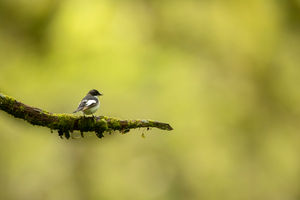
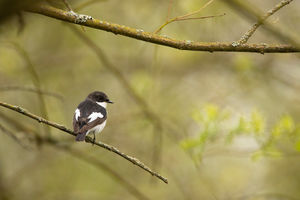
These insect eating, agile birds are migratory, arriving in the UK around mid-April to breed before returning to West Africa from September onwards for the winter. Pied Flycatchers are small songbirds, slightly smaller than House Sparrows. As their name might suggest, the birds are a striking black and white, the females however, are brown and white.
Jon Rowe, site manager at RSPB Coombes Valley and Consall Woods, said: “We are thrilled to celebrate another year of astoundingly high numbers of breeding Pied Flycatchers. It’s been incredibly rewarding seeing their numbers climb each year and this year has yielded the highest average number of chicks at Coombes Valley. We started a major project to improve the habitat for Pied Flycatchers nearly ten years ago, when they were still on the Red List of Birds of Conservation Concern.
"Since then, things have started to look up for them in the UK, and they were moved to the Amber List in 2021. It’s great to see how the addition of nestboxes and habitat restoration work is positively impacting population numbers locally.”
The team of staff and dedicated local volunteers carefully manage the woodlands to create ideal habitats for Pied Flycatchers and other woodland birds such as Common Redstarts and Wood Warblers. One of the main tasks is the removal of dense holly from the understorey or ‘shrub layer’ of the woods, which helps Pied Flycatchers to avoid predators easier.
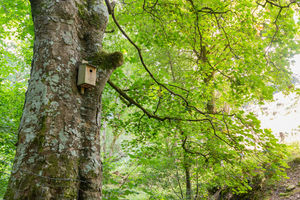
Volunteers at the nature reserve will spend much of the coming winter cutting the holly that will have started to regrow. This will ensure that the birds returning next spring will have the perfect habitat for raising their chicks. Alongside the installation and maintenance of nest boxes this work has contributed to the steady increase in Pied Flycatcher numbers at Coombes Valley and Consall Woods.
Jon explained: “The birds are highly alert to predators such as Sparrowhawks and prefer a clear line of sight to avoid danger. Having open ground below the trees makes it safer for them/Pied Flycatchers and encourages them to nest.”
Pied Flycatchers are localised breeders in mature woodlands and are relatively scarce breeders in the UK. As their name suggests, these birds often perch on a branch and wait for insects. They will then dart and swiftly catch insects in mid-air.
Visitors can plan their visit at rspb.org.uk/days-out/reserves/coombes-valley and rspb.org.uk/days-out/reserves/consall-woods.