How the UK’s waste industry transformed, 1960–2000
A Lifetime of Waste - Volume One: This book charts the development of UK private sector waste management companies and UK waste management equipment/vehicle suppliers during the 1960s to the year 2000.
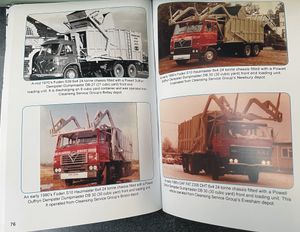
It examines the developments in both the methods of equipment and the vehicles operated by UK private sector waste management companies and includes the evolution of the use of skip loading systems, roll-on-off systems, front end loading collection, industrial rear end loader collection, trade waste collection vehicles and liquid waste tankers.
The development of the UK’s national and regional waste management companies and the various acquisitions which took place across the industry during the 1980s to the year 2000 are also discussed.
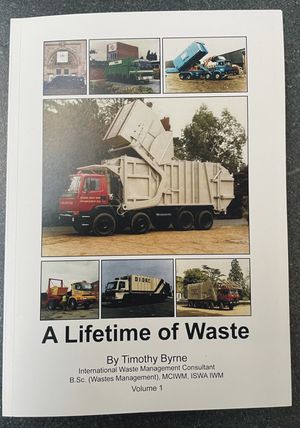
Finally, UK equipment/vehicle manufacturers are covered along with the developments in both waste handling equipment and vehicle chassis to fulfil the needs of the UK waste management sector during this period.
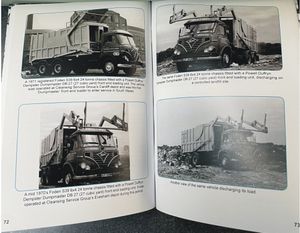
Most of the UK waste management companies and equipment suppliers featured were either founding or corporate members of the National Association of Waste Disposal Contractors (NAWDC). This was an organisation formed in the late 1960s to implement best practice in the transport and treatment of controlled wastes while maintaining high quality standards across the industry. The NAWDC also laid the grounds for the two primary pieces of waste management legislation enacted by Central Government; the Deposit of Poisonous Waste Act 1972 and the Control of Pollution Act 1974.
About the author
Timothy Byrne has been interested in waste transportation vehicles and waste management in general since he was four years old. He remembers all of the UK’s national and regional waste management companies which existed from the late 60s to the year 2000 and the developments of municipal chassis and waste compaction bodywork, used for waste collection in the 1960s, ‘70s, ‘80s, ‘90s and the 2000s. He also remembers the UK’s network of 1960s and ‘70s municipal waste incinerators and the network of controlled landfill sites and waste transfer stations which were operated by county councils and metropolitan boroughs during the 1980s and the ‘90s.
At home, he has an extensive collection of photographs, slides etc. illustrating dry and liquid waste collection vehicles operated by these various companies, and memorabilia of the municipal chassis and bodywork manufacturers. Tim’s collection also consists of plant operating brochures, slides and photographs of waste treatment facilities.
Tim has a degree in Wastes Management from the University of Northampton, is a Chartered Waste Manager (MCIWM) through the Chartered Institution of Wastes Management, and is an International Waste Manager, certified by the International Solid Waste Association (ISWA). He has worked in a variety of roles in the industry for many years and currently works as an International Waste Management Consultant.
Previously, Tim has written the popular book, ‘A Pictorial History of Biffa Waste Services Dry and Liquid Waste Collection Vehicles’. He also co - wrote the book, ‘The Road from Sand and Gravel’ for the Grundon Group, to celebrate the company’s 90th Birthday in 2019. He has also written a publication for ‘Ahern Waste Management: A Pictorial History of the Vehicles Used over Seventy Years’. Tim wrote Volume One, Two, Three and Four of ‘A Lifetime of Waste’ in 2021, 2022, 2023 and 2024. More recently, Tim wrote a book for the UK’s leading waste collection vehicle supplier, Stewart Commercials to commemorate their 50th Anniversary.
Tim is a regular contributor to the ‘Classic Truck’ magazine, published by Kelsey Media, in the UK. His articles depict the development of industrial rear end loaders, waste collection vehicle manufacturers, municipal chassis suppliers, waste management exhibitions and fleet engineers covering the eras of the 1980s to the year 2000.