Wolverhampton man is 'one of the lucky ones' after routine eye examination detected cancer
A Wolverhampton man who was diagnosed with a rare form of blood cancer following a routine eye examination has urged the public to get their eyes checked.
Robert Campbell has annual eye examinations due to having glaucoma but one of his routine check-ups turned out to be life changing.
Optometrist Claire Williams, from Flint Optometry, spotted a number of bleeds at the back of the eye and referred Mr Campbell to ophthalmology specialists at New Cross Hospital.
Following tests, the 67-year-old was diagnosed with Waldenstrom macroglobulinemia, a type of non-Hodgkin’s lymphoma that affects the lymphatic system.
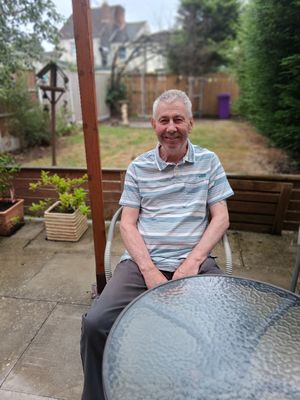
He said: “My head was all over the place. They said that there was good news and bad news – the good news is that the type of cancer I have is not that aggressive, but the bad news is that you never get rid of it.”
Mr Campbell has undergone bone marrow biopsies, blood plasma transfusions and chemotherapy, with consultants continuing to monitor him.
In the months leading up to the eye test, Mr Campbell experienced pain in his legs, nosebleeds, exhaustion and blurry vision. He was in the middle of investigations through his GP when his yearly eye appointment with Flint Optometry came up.
He said: “I’m one of the lucky ones – I’m living a relatively normal life. My message to people is that if you’re feeling at all unwell and you’re having problems with your eyes, get your eyes tested. It could save your life.”
The team at Flint Optometry say they have had a recent spate of spate of life-threatening and serious conditions being detected through eye examinations.
Co-company director Edward Lyons says that more regular and better-quality eye test examinations has led to more incidents where serious health conditions are detected, demonstrating that eye examinations can be life-saving and sight-saving.
Another recent example was a woman who complained about her glasses and spoke about bumping into tables. This 'red flag' conversation prompted an eye examination which showed her periphery vision had declined, and she was later diagnosed with a pituitary brain tumour. The client has had the tumour removed and has recovered.
Flint Optometry optometrists also discovered one client had had a stroke following a visual field test. He told staff that he was suffering some memory loss and headaches, which his family initially thought could be due to the start of dementia. His optician picked up on some loss of peripheral vision which led to an MRI scan that diagnosed a stroke.
Mr Lyons said: “Recently we have seen a real run of clinical issues, which has been positive in that they’ve been picked up early.
“Part of it is that more people are having more frequent eye examinations. That, along with having better equipment and spending a bit more time with clients, means that we are finding more pathology.
“Good quality eye care makes all the difference. It’s not just about seeing letters on a chart – a proper eye examination can save your sight, or your life.
“Many of these clients were asymptomatic so the sooner we find these things the better. We’re now finding pituitary brain tumours about twice a year – they’re not as uncommon as you think.”
Mr Lyons said that a number of the practices’ new clients have only ever had rudimentary eye examinations in the past and have never, for example, had their visual field tested.
He said Flint Optometry, which has practices in Tettenhall Road, Codsall and Wednesfield, is moving to the ‘gold standard’ of ensuring that every client has an OCT scan which looks at the health at the back of the eye, which can be revealing.
He added: “As well as having better quality diagnostic equipment available, it’s about staff having the knowledge to interpret the findings and know what it all means.”