UK-Brazil partnership showcased through research and youth engagement in São Paulo and the Amazon
In a landmark celebration of 200 years of UK-Brazil diplomatic relations and the 125th anniversary of the University of Birmingham, a series of high-level events held in São Paulo and the Amazon highlighted the strength of bilateral cooperation in advancing sustainability, diplomacy, and inclusive development.
Organised by the University of Birmingham Brazil Institute in partnership with the British Embassy in Brazil, the programme featured a Global Leaders Dialogue, academic meetings, and a celebration of the Immerse Amazonia summer school. These events underscored the UK and Brazil’s shared commitment to environmental preservation and inclusive research in the lead-up to COP30.
His Majesty’s Ambassador to Brazil, Mrs. Stephanie Al-Qaq, delivered the opening remarks and toast at the reception and met with University of Birmingham academics and students participating in the Immerse Amazonia programme. Her presence reaffirmed the UK’s dedication to fostering international partnerships that address global challenges.
University of Birmingham students travelling to the forest research station in Caxiuanã as part of the programme were selected in a University-wide competition and come from across the UK:
Benika Lal - Wednesbury, West Midlands
Hadil Touihri - Forest Hill, South East London.
Madeleine Bavister - St Albans, Hertfordshire.
Holly Davies - Amersham, Buckinghamshire.
Lennox Stevenson - Leeds, West Yorkshire.
Katy McCarthy - Alton, Hampshire.
Aoife Moriarty - Pinner, North West London.
Megan Bancroft - Wrexham, North Wales
"The UK and Brazil share a deep and enduring relationship, rooted in mutual respect and a shared vision for a more sustainable future,” said Ambassador Al-Qaq. “These events were a powerful reminder of what we can achieve when diplomacy, science, and education come together to tackle the world’s most pressing challenges.”
The Immerse Amazonia summer school was celebrated during the visit. Hosted by the University of Birmingham and Museu Goeldi, in partnership with FAPESPA, the multidisciplinary summer school brought together students from Belém, Caxiuanã and Birmingham for an immersive experience at the Estação Científica Ferreira Penna in the heart of the Amazon forest.
Immerse Amazonia’s aim is to cultivate future environmental leaders and amplify youth voices in global climate advocacy. Students engaged with Indigenous riverside communities, researchers, and local stakeholders to better understand the complexities and beauties of Amazonian ecosystems and the socio-political dynamics.
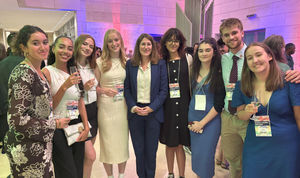
Megan Bancroft, a University of Birmingham student, from Wrexham, said: "I am grateful to experience the beauty of the forest and the experience of the people from Caxiuanã first hand."
Isabel dos Santos Rocha, a student from UEPA, Belém commented: "This experience allowed me to create connections with the forest and as someone from Belém, it made me feel I am also part of the Amazon."
Debora de Souza Flores, a student based in Caxiuanã, said: "The summer school made me aware how much the world depends on our way of living in Amazonia and our role in preserving this ecosystem. I don’t have words to describe how important this realisation was to me."
The Global Leaders Dialogue, which opened the International Studies Association’s conference on Development and Diplomacy in the Global South, brought together leading voices in international relations, science, and policy.
The panel featured Mrs. Stephanie Al-Qaq, HM Ambassador to Brazil, Professor Celso Lafer, Founder of CEBRI and former Brazilian Minister of Foreign Affairs, and Professor David Hannah, UNESCO Professor of Water Science and Director of the University of Birmingham Institute for Sustainability and Climate Action.
Chaired by Dr Adriane Esquivel Muelbert, Academic Director of the University of Birmingham Brazil Institute (UBBI), the discussion explored how diplomacy and science can work hand-in-hand to promote sustainable development and climate resilience in the Global South.