A call for year-round change: Patrick Vernon on diversity, wellbeing and true representation
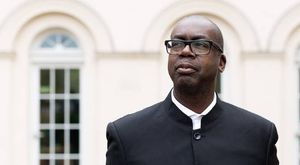
Renowned social commentator and campaigner Patrick Vernon has deep roots in Wolverhampton, where he was born and raised. His connection to the city has strongly shaped his lifelong commitment to social justice and community empowerment.
A leading voice in the UK on matters of race equality and heritage, Patrick is widely known for championing the Windrush generation, driving national awareness campaigns, and influencing government policy. With an OBE and an extensive record of public service, he is one of the most respected Diversity & Inclusion, Mental Health, and Wellbeing speakers in the country.
In this exclusive interview with The Champions Speakers Agency, Patrick reflects on building inclusive workplaces, improving access to mental health support, and why Black History should be recognised year-round — not just in October.

Q: Why has accessible mental health support remained such a critical yet neglected issue within the Black community?
Patrick Vernon: Yeah, I mean, mental health has always been a vexed issue in the Black community for many decades. I mean, from the late ’80s, there’s been some representation of Black people in the psychiatric system.
And on top of that, if you look at recent issues around Grenfell, the Windrush scandal, and just Black Lives Matter, now the conversation we’re having around myself about being done—the lockdown and pandemic—I think people now recognise the importance of mental health for everyone.

For the Black community, that’s not been taken that seriously in terms of commissioner services, policy development, on alternative support services. Some Black people seem to get the sharp end of the mental health system, particularly when the police are involved.
So I think—and one of the things I’m really passionate about—is making sure that we have services that are commissioned in a way that people feel they have the opportunity to reflect all aspects of counselling support, therapeutic interventions. Because the problems actually, for many, many decades, have been limited to therapeutic interventions—and it’s either medication, seclusion, or restraints. And that is sadly the real lived experience of a lot of Black people in the system.
Basically, it’s about changing that and having new ways of engagement as well.
Q: What does the wider public still misunderstand about the significance of the Windrush generation’s contributions?
Patrick Vernon: Yeah, my parents are from the Windrush generation. They came to Britain in the 1950s from Jamaica, like with many others that came from part of the Caribbean and also parts of Africa as well.
I mean, the Windrush generation have played an important part in British history—often not always valued and recognised. It unfortunately had to take the Windrush scandal in 2018 for the public to really appreciate the contribution of the Windrush generation to the NHS, to manufacturing, to retail, to public life, to all aspects of culture of Britain, basically.
That’s why I campaigned for many decades—for over 10 years—for a national Windrush Day to celebrate history and recognise that. And I’m glad that we got it, even though it happened because of the Windrush scandal, which again I was involved in, campaigning for the rights of the Windrush generation who were wrongly declassified as not being British.
The Windrush generation is important—it’s about legacy, it’s about contribution, it’s about honouring those men and women who made a lot of sacrifices, and it’s about celebrating Britishness. Britishness comes in all shapes and sizes. It’s not simply a cross between EastEnders and Brideshead Revisited—being British reflects the diversity of Britain and 21st-century Britain. And I think that’s quite—that’s the Windrush generation’s contribution, and it’s part of that process.
Q: With decades of diversity legislation behind us, why does workplace discrimination persist—and what must be done?
Patrick Vernon: It’s interesting, you know, if you look at the early legislation around race relations—from the 1965 Act, the ’68 Act, and then the ’76 Act, and then obviously we had the Race Relations Amendment Act, and the whole aspect of equality legislation—there have been some businesses who have tried to be progressive. Not that many, to be quite honest, compared to—if you compare it to America.
But I think because of George Floyd, Black Lives Matter, there has been now a real conversation—I'm not saying for years—particularly in the corporate world about not simply about race equality but the wider issues around equality, diversity as well.
The challenge now for companies, the corporates, as they embrace and recognise that they have to do more work in this area, is to have a degree of consistency and leadership, to work with staff from Black and minority ethnic backgrounds and other protected cultures in the business. They’ve got the ideas, they’ve got parts of the solutions.
Yes, I’ve done work on this agenda, and sometimes I’m invited to come into these spaces somewhat independently and challenge, because I’m not an employee. But also as well, it’s kind of bringing people together and facilitating conversations which people have difficulty in articulating, because they’re either fearful that it might lead to some sort of victimisation, or perhaps they haven’t got the confidence to speak out and want someone like me who can create that space for that.
But more importantly, it’s about measuring impact. So no different—no different to how you measure impact around shareholder value, capital; how you measure impacts around effectiveness—diversity strategies and policies around your workforce, supply chain, customers and beneficiaries, and more importantly, your contribution to wider society.
These are the kind of key yardsticks and measurements that now all corporates—no matter how much money you make—you will have a responsibility for doing, basically.
Q: How can organisations move beyond performative activism and make Black History Month a year-round commitment?
Patrick Vernon: I mean, Black History Month is important. I mean, it was established in Britain in 1987. Obviously, in America, it’s been going since 1926. And in Europe, other parts of Europe, they have also adopted it as well.
And we all know that there are limitations—we celebrate everything in four weeks.
One thing I say to corporates—don’t call it Black History Month, call it Black History Month season. Give you the permission—you can start in October, and you can carry it out right through the whole year. Look at the season. That’s supposed to happen in four weeks—that’d be my recommendation. And it means you don’t have to put everything in October, but you can spread key Black historical timelines throughout the year.
Obviously, October itself—you know, you can look at—if you look at what’s happened in America with the African-American Month in February, you’ve got International Women’s Day and Month in March. You know, you can choose key aspects of intersectionality around gender, ethnicity, LGBT issues—where the Black perspective has a lens on Black history.
This exclusive interview with Patrick Vernon was conducted by Sophia Hayes of The Motivational Speakers Agency.
For More Information: Champions Healthcare Speakers