
Lula secures Brazil election win but faces hurdle as Bolsonaro contests results
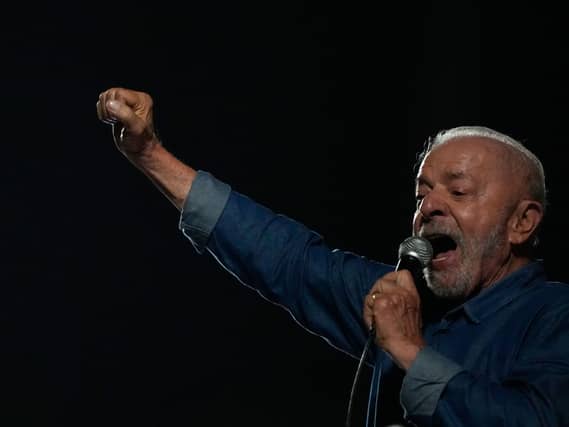

It set the stage for a possible showdown between the country’s two polarising political forces.
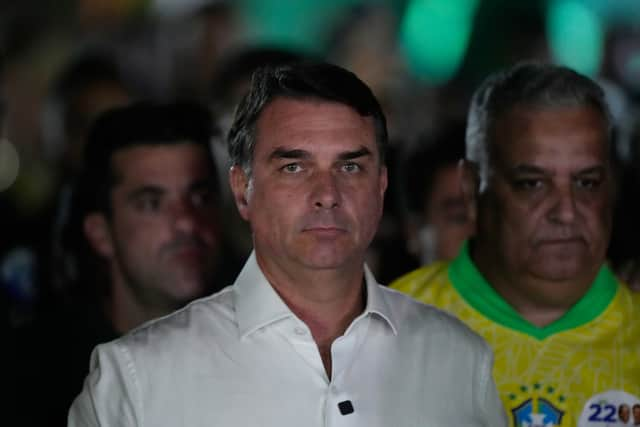
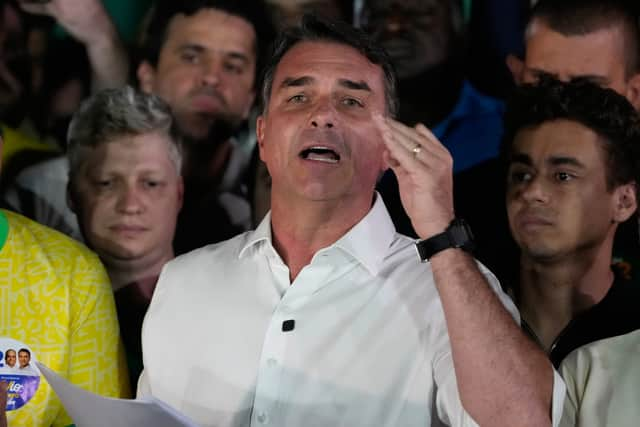
President Luiz Inacio Lula da Silva’s comeback to win Brazil’s presidential runoff is already facing its first hurdle after his competitor Flavio Bolsonaro challenged the results.
It set the stage for a possible showdown between the country’s two polarising political forces.
Mr Lula, who convinced an extra 10.4 million voters to support him in the runoff, is expected to take office on January 5 2027 for his fourth non-consecutive term.
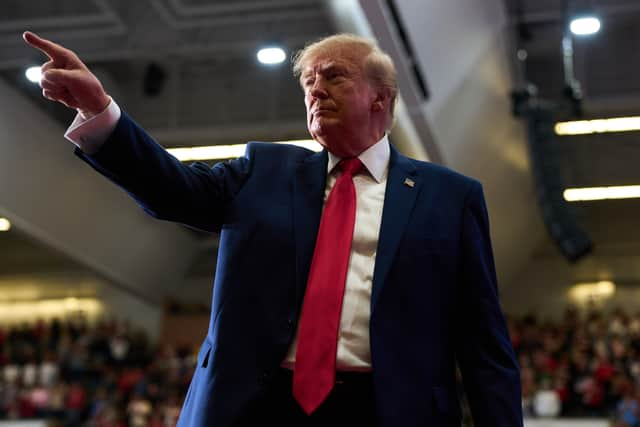
He will serve as a counterweight in a region where leaders are shifting to the right and aligning with US President Donald Trump.
Mr Bolsonaro, son of former president Jair Bolsonaro, promised to cosy up to the Trump administration.
At a news conference on Sunday, Mr Bolsonaro said he planned to request an annulment of the election following a chaotic extension of voting at the request of both candidates.
However, it is unclear what legal avenue he would have to do that.
His father also contested his loss to Mr Lula four years ago and is now serving a 27-year prison sentence for a coup attempt.
Early signs from Brazil’s institutions and from leaders across the region, including conservative presidents who oppose Mr Lula, suggest the results will be respected nationally and internationally.
Mr Trump has yet to weigh in.
Even with the vote extension, Mr Lula’s win was decisive.
The soon-to-be 81-year-old incumbent won more than 64 million votes compared to just under 60 million for Mr Bolsonaro, a margin of nearly 4%.
President of Brazil’s electoral authority, Kassio Nunes, who was appointed to the Supreme Court by ex-president Jair Bolsonaro, was among those who recognised Mr Lula’s victory on Sunday.
“This is a really uphill battle for Flavio Bolsonaro. Important Brazilian power brokers are closing ranks behind Lula, sometimes begrudgingly,” said Brian Winter, Brazil analyst and editor-in-chief of Americas Quarterly.
“I sense that Brazilian power brokers that matter don’t really want to go down the path of a truly contested election,” he said.
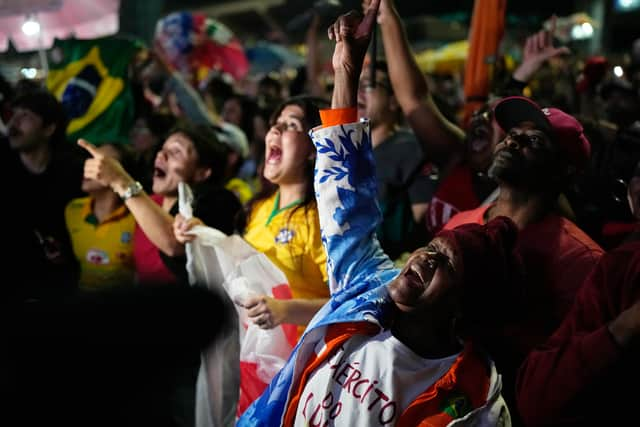
The key to Mr Lula’s win was the additional 14.1 million voters who showed up for the second-round election, including those who voted for other candidates in the first round.
Analysts say three-quarters of those votes went to Mr Lula, handing him the victory.
And notably, the first round set a record for the number of Brazilians who decided not to vote, while the second round had the least number of abstentions ever.
Mr Lula mounted a fierce social media campaign that mobilised those previously uncommitted voters.
It was the first time since 1989 that a candidate came from behind in the first round to win in the second.
And Mr Lula did it in an election in which a direct crossover between his own voters and Mr Bolsonaro’s voters was very unlikely.
Results show voter turnout surged overall, particularly in wealthier metropolitan centres, but Mr Lula achieved his highest gains in lower-income municipalities where his base was already established.
He mobilised former non-voters, those who voted blank in the first round and supporters of third-party candidates.
Brazil holds general elections every four years, and its electronic voting machines have made the tallying process quick and secure.
Brazilian authorities adopted electronic voting machines in the 1990s to combat fraud and the system has been largely reliable since then.
Results are usually reported mere hours after polls close.
In the lead-up to the 2022 vote, Jair Bolsonaro repeatedly cast unfounded doubts on Brazil’s electronic voting system.
No significant fraud has ever been detected.
But the usually swift voting process was thrown into disarray on Sunday after a last-minute decision to extend voting nationwide at both candidates’ requests.
Mr Lula made the request because of issues with public transportation in metropolis Sao Paulo and the north-eastern city, Salvador, two of his strongholds.
Mr Bolsonaro requested it after heavy rains in the south, which he won by a strong margin in the first round.
The decision was made by a Supreme Court justice mere minutes before polls were set to close at 5pm and the speed of Brazil’s counting process meant many polling stations did not receive the news until they were already wrapping up.
Yet given the reliability of Brazil’s voting system and Mr Lula’s win by a significant margin, a path to annul the results could be difficult for Mr Bolsonaro.

Benjamin Gedan, senior fellow and director of the Stimson Centre Latin America programme, said Mr Bolsonaro’s rejection of his loss was not surprising.
“False claims of fraud are becoming commonplace, though that does not make them any less dangerous,” he said.
He noted Mr “Lula’s margin of victory, and the quick recognition of the result by conservative leaders in the region”.
Nevertheless, Mr Lula still faces challenges moving forward, including political polarisation in the country, a possible fiscal crisis and a right-wing congress in which Mr Bolsonaro’s party will have more seats than any other.
Mr Bolsonaro himself remains a senator, though his term ends in January.
“We shouldn’t underestimate the power of the Bolsonaro family,” said Mr Winter, the Brazil analyst.
“They can make life difficult for Lula for weeks and months to come.”