Iran hits Kuwaiti refinery and explosions sound over Tehran from Israeli attack
Kuwait said drone strikes at its Mina Al-Ahmadi oil refinery sparked a fire and crews were working to control the blaze.
A Kuwaiti oil refinery came under attack early on Friday from Iranian drones and sirens sounded in Israel warning of incoming fire, while explosions boomed over Tehran as Israel hit Iran as the country marked the Persian New Year.
As the war that has rocked the global economy neared the end of its third week, Iran showed no signs of letting up on its attacks on the Gulf region energy structure, as Kuwait said drone strikes at its Mina Al-Ahmadi oil refinery sparked a fire and crews were working to control the blaze.
The refinery, which can process 730,000 barrels of oil per day, was already damaged on Thursday in another Iranian attack.
It is one of three oil refineries in Kuwait, the tiny, oil-rich nation on the Persian Gulf.

Iran stepped up its attacks on energy sites in Gulf Arab states after Israel on Wednesday bombed Iran’s massive South Pars offshore natural gas field in the Persian Gulf.
In a rare statement, the country’s new Supreme Leader Ayatollah Mojtaba Khamenei said Iran’s enemies need to have their “security” taken away. Mr Khamenei has not been seen since he succeeded his father, the 86-year-old Ayatollah Ali Khamenei, who was killed in an Israeli air strike on the first day of the war.
His remarks came in a statement issued on his behalf and sent to President Masoud Pezeshkian, after Israel killed intelligence minister Esmail Khatib earlier this week.
Heavy explosions shook Dubai as air defences intercepted early incoming fire over the city where people were observing Eid al-Fitr, the end of the holy Muslim fasting month of Ramadan, and mosques made the day’s first call to prayers.
Israel’s army said on Friday it struck infrastructure belonging to Syria in response to attacks on the Druze population in Sweida in southern Syria.
Syria’s state-run SANA news agency did not immediately acknowledge the attack, which marks the first Israeli attack on the country during the war.
Israel has a significant Druze population. Israel previously has intervened in defence of the Druze in Syria, launching dozens of airstrikes on convoys of government fighters and even striking the Syrian Defence Ministry headquarters in central Damascus.
Bahrain’s Interior Ministry said a fire broke out after shrapnel from an intercepted projectile landed on a warehouse, while Saudi Arabia reported shooting down multiple drones targeting its oil-rich Eastern Province.
The renewed attacks came after an intense day that saw Iran hit energy infrastructure around the region and launch more than a dozen missile salvos at Israel following the attack on South Pars.
South Pars, the Iranian part of the world’s largest gas field, is located offshore in the Persian Gulf and is owned jointly with Qatar.
With some 80% of power generated in Iran coming from natural gas, the attack posed a direct threat to the country’s electricity supplies.
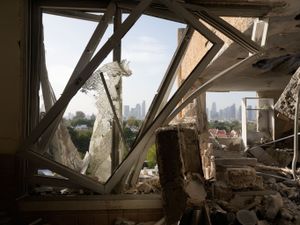
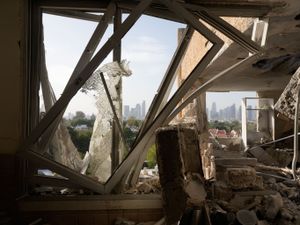
In Israel, sirens sounded early on Friday, warning of attacks on Jerusalem and in the north of the country, sending people again scrambling to shelters. There were no immediate reports of casualties.
Not long after Israel announced that it had begun new strikes on Iran, the sound of explosions were heard in Tehran as Iranians marked Nowruz, the Persian New Year.
More than 1,300 people in Iran have been killed during the war. Israeli strikes against the Iranian-backed Hezbollah militant group in Lebanon have displaced more than 1 million people, according to the Lebanese government, which says more than 1,000 people have been killed.
Israel says it has killed more than 500 Hezbollah militants.

In Israel, 15 people have been killed by Iranian missile fire.
Four people were also killed in the occupied West Bank by an Iranian missile strike. At least 13 US military members have been killed.
Late on Thursday, Israeli Prime Minister Benjamin Netanyahu said the country would hold off on any further attacks on the gas field at the request of US President Donald Trump after the Iranian response sent oil prices skyrocketing.
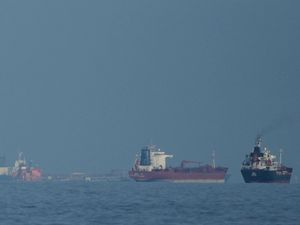
Beyond Iran’s attacks on its Gulf Arab neighbours, its stranglehold on shipping through the Strait of Hormuz, a strategic waterway through which a fifth of the world’s oil and other critical goods are transported, has caused rising concerns of a global energy crisis.
Brent crude oil, the international standard, which spiked to more than 119 dollars (£88.79) a barrel during Iran’s attacks on Thursday, was around 107 dollars (£79.83) in morning trading on Friday, up more than 47% since Israel and the United States attacked Iran on February 28 to start the conflict.