Half a century of US-Russian arms control ends with expiration of nuclear pact
Arms control experts say the termination of the New Start Treaty could set the stage for an unconstrained nuclear arms race.
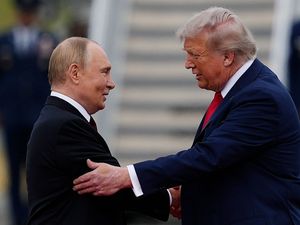
The Kremlin said it regretted the expiration of the last remaining nuclear arms pact between Russia and the United States that left no caps on the two largest atomic arsenals for the first time in more than half a century.
Arms control experts say the termination of the New Start Treaty could set the stage for an unconstrained nuclear arms race.
Russian President Vladimir Putin last year declared his readiness to stick to the treaty’s limits for another year if Washington followed suit, but US President Donald Trump has been noncommittal about extending it.
He has indicated that he wants China to be a part of a new pact — something Beijing has rebuffed.

US Secretary of State Marco Rubio said that Mr Trump has made clear, “in order to have true arms control in the 21st century, it’s impossible to do something that doesn’t include China because of their vast and rapidly growing stockpile”.
Mr Putin discussed the pact’s expiration with Chinese leader Xi Jinping on Wednesday, noting the US failure to respond to his proposal to extend its limits and saying that Russia “will act in a balanced and responsible manner based on thorough analysis of the security situation,” Kremlin adviser Yuri Ushakov said.
Kremlin spokesman Dmitry Peskov said Moscow views the treaty’s expiration “negatively” and regrets it.
He said Russia will maintain its “responsible, thorough approach to stability when it comes to nuclear weapons,” adding that “of course, it will be guided primarily by its national interests”.
With the end of the treaty, Moscow “remains ready to take decisive military-technical measures to counter potential additional threats to the national security,” the Russian Foreign Ministry said.
“At the same time, our country remains open to seeking political-diplomatic ways to comprehensively stabilise the strategic situation on the basis of equal and mutually beneficial dialogue solutions, if the appropriate conditions for such cooperation are shaped,” it said in a statement.

New Start, signed in 2010 by then-President Barack Obama and his Russian counterpart, Dmitry Medvedev, restricted each side to no more than 1,550 nuclear warheads on no more than 700 missiles and bombers — deployed and ready for use. It was originally supposed to expire in 2021, but was extended for five more years.
The pact envisioned sweeping on-site inspections to verify compliance, although they stopped in 2020 because of the Covid-19 pandemic and never resumed.
In February 2023, Mr Putin suspended Moscow’s participation, saying Russia couldn’t allow US inspections of its nuclear sites at a time when Washington and its Nato allies have openly declared Moscow’s defeat in Ukraine as their goal.
At the same time, the Kremlin emphasised it wasn’t withdrawing from the pact altogether, pledging to respect its caps on nuclear weapons.
In offering to abide by New Start’s limits for a year to buy time for both sides to negotiate a successor agreement, Mr Putin said the treaty’s expiration would be destabilising and could fuel nuclear proliferation.
New Start was the last remaining pact in a long series of agreements between Moscow and Washington to limit their nuclear arsenals, starting with the Salt I in 1972.
Mr Trump has indicated he would like to keep limits on nuclear weapons but wants to involve China in a potential new treaty.
“I actually feel strongly that if we’re going to do it, I think China should be a member of the extension,” Mr Trump told The New York Times last month. “China should be a part of the agreement.”
In his first term, Mr Trump tried and failed to push for a three-way nuclear pact involving China. Beijing has baulked at any restrictions on its smaller but growing nuclear arsenal, while urging the US to resume nuclear talks with Russia.

Foreign Ministry spokesperson Lin Jian said: “China’s nuclear forces are not at all on the same scale as those of the US and Russia, and thus China will not participate in nuclear disarmament negotiations at the current stage.”
He said China regrets the expiration of New Start, calls on the US to resume nuclear dialogue with Russia soon, and responds positively to Moscow’s suggestion that the two sides continue observing the core limits of the treaty for now.
Mr Peskov reaffirmed that Moscow respects Beijing’s position.
He and other Russian officials have repeatedly argued that any attempt to negotiate a broader nuclear pact instead of a US-Russian deal should also involve nuclear arsenals of Nato members France and the UK.
Arms control advocates bemoaned the end of New Start and warned of the imminent threat of a new arms race.
Daryl Kimball, executive director of the Arms Control Association in Washington said: “If the Trump administration continues to stiff-arm nuclear arms control diplomacy with Russia and decides to increase the number of nuclear weapons in the US deployed strategic arsenal, it will only lead Russia to follow suit and encourage China to accelerate its ongoing strategic build-up in an attempt to maintain a strategic nuclear retaliatory strike capability vis-a-vis the United States.
“Such a scenario could lead to a years-long, dangerous three-way nuclear arms build-up.”