Donald Trump withdraws Board of Peace invite to Canada
Questions persist over how many leaders will join the board, which Mr Trump has suggested could one day rival the United Nations.
US President Donald Trump has said the newly-formed Board of Peace is withdrawing its invitation for Canada to join the organisation.
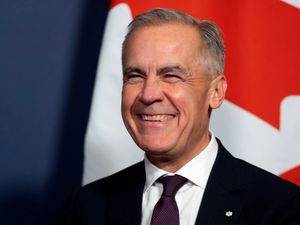
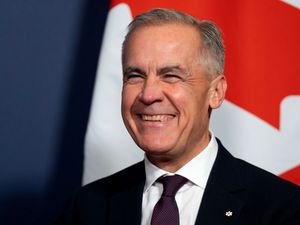
The rescinded offer to sign up to the body – which Mr Trump has said could eventually rival the United Nations – is the latest twist in a series of public spats the US president has had with Canadian Prime Minister Mark Carney.
“Please let this Letter serve to represent that the Board of Peace is withdrawing its invitation to you regarding Canada’s joining, what will be, the most prestigious Board of Leaders ever assembled, at any time,” Mr Trump wrote to Mr Carney on social media.

Mr Trump’s comments came after Mr Carney delivered a provocative speech at the World Economic Forum in Davos, Switzerland, in which he warned of a “rupture” from an international order based on rules.
Mr Trump inaugurated his Board of Peace on Thursday to lead efforts at maintaining a ceasefire in Israel’s war with Hamas, insisting “everyone wants to be a part” of the body. But many US allies have chosen not to participate.
During a speech in Davos, Mr Trump sought to create momentum for a project to map out a future of the war-torn Gaza Strip that has been overshadowed this week, first by his threats to seize Greenland, then by a retreat from that push.
The new peace board was initially envisioned as a small group of world leaders overseeing the ceasefire, with Mr Trump as chairman, but it has morphed into something far more ambitious – and scepticism about its membership and mandate has led some countries usually closest to Washington to take a step back.
Norway and Sweden indicated they would not participate in the board. France declined, citing concerns the board could seek to replace the UN and the UK said it would not sign up because of potential Russian involvement in the plan.
It is not immediately clear how many countries have signed up. In Davos, Mr Trump told reporters “we’re going to have, I think, over 50” countries join.
But at his launch, Mr Trump was joined by officials from 19 countries. He told the group, ranging from Azerbaijan to Paraguay to Hungary: “You’re the most powerful people in the world.”

Flying back to Washington DC, Mr Trump told reporters: “The letter only went out two days ago. We had almost 30 people already.”
Mr Trump said some leaders have told him they want to join but first require approval from their parliaments, specifically naming Italian Prime Minister Giorgia Meloni and Polish President Karol Nawrocki.
The charter for the board has not yet been publicly released. Asked whether the document would allow him to remain chairman beyond his time in office, Mr Trump said he would have the right to stay on if he chose to.
“It’s in theory, for life – but I’m not sure I want that,” Mr Trump said.
Mr Trump has spoken about the board replacing some UN functions, but in his speech on Thursday he said the two bodies would work together.
“This isn’t the United States, this is for the world,” he said, adding: “I think we can spread it out to other things as we succeed in Gaza.”
Mr Trump’s event featured Ali Shaath, the head of a new, future technocratic government in Gaza, announcing that the Rafah border crossing will open in both directions next week. But there was no confirmation of that from Israel, which said only that it would consider the matter next week. The Gaza side of the crossing, which runs between Gaza and Egypt, is currently under Israeli military control.
The idea for the Board of Peace was first laid out in Mr Trump’s 20-point Gaza ceasefire plan and was even endorsed by the UN Security Council.
An Arab diplomat in a European capital said that Middle Eastern governments co-ordinated their response to Mr Trump’s invitation to join the Board of Peace and that it was crafted to limit the acceptance to the Gaza plan as mandated by the UN Security Council.

The diplomat said the announced acceptance is “preliminary” and that the charter presented by the US administration contradicts in some parts the United Nations’ mission. The diplomat also said that other major powers are unlikely to support the board in its current form.
Some countries, including the UK, have raised questions about invitations Mr Trump extended to Russian President Vladimir Putin and other authoritarian leaders. Foreign Secretary Yvette Cooper told the BBC that there were “concerns about President Putin being part of something which is talking about peace, when we have still not seen any signs from Putin that there will be a commitment to peace in Ukraine”.
Mr Putin has said his country is still consulting with Moscow’s “strategic partners” before deciding to commit. The Russian was hosting Palestinian President Mahmoud Abbas on Thursday in Moscow.
The Kremlin said on Thursday that Mr Putin planned to discuss his proposal to send money to the Board of Peace and use it for humanitarian purposes during his talks with Mr Abbas – if Russia can use assets the US had previously blocked. Asked about that idea by reporters, Mr Trump said: “If he’s using his money, that’s great.”
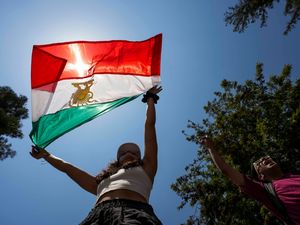
Mr Trump’s push for peace comes after he threatened military action this month against Iran as it carried out a violent crackdown against some of the largest street protests in years, killing thousands of people.
Mr Trump, for the time being, has signalled he will not carry out any new strikes on Iran after he said he received assurances that the Islamic government would not carry out the planned hangings of more than 800 protesters.
He said on Thursday that the US is moving a fleet of ships towards Iran “just in case” it wants to take action against the country over its crackdown.
And he said he was keeping in place a threat to slap 25% tariffs on countries doing business with Iran.
“We’re doing that,” he said.
The White House has not yet provided details on that tariff plan, which Mr Trump announced more than a week ago.