Iran protests ease after week-long crackdown and internet outage
The demonstrations began on December 28 over the collapse of the Iranian rial currency.
Nationwide protests challenging Iran’s theocracy appear increasingly smothered, a week after authorities shut the country off from the world and escalated a crackdown that activists say has killed at least 2,615 people.
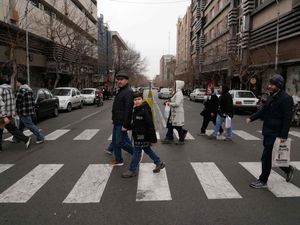
In the capital Tehran, witnesses said recent mornings showed no new signs of bonfires or debris in the streets. The sound of gunfire, which had been intense for several nights, has also faded.
State media has announced wave after wave of arrests by authorities, targeting those it calls “terrorists” while also apparently looking for Starlink satellite internet dishes, which offer the only way to get videos and images out to the internet.
“Since January 8, we saw a full-fledged war, and anybody who was in the gathering since then is a criminal,” said justice minister Amin Hossein Rahimi, according to a report on Wednesday from the judiciary’s Mizan news agency.
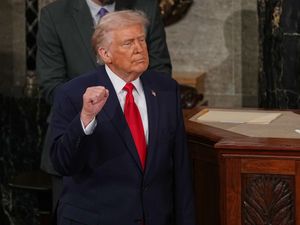
The prospect of US retaliation for the deaths of protesters still hung over the region, though President Donald Trump signalled a possible de-escalation, saying the killing appeared to be ending.
The demonstrations began on December 28 over the collapse of the Iranian rial currency, as the country’s economy has been squeezed by international sanctions levied in part over its nuclear programme.
But as Iran tries to assert control at home, it has signalled worries about threats from abroad, including the US, which has threatened military action over the killing of peaceful demonstrators.
The Islamic Republic shut its air space for hours early on Thursday without explanation, something it has done in previous rounds of attacks between it and Israel, as well as during a 12-day war in June.
The US also took steps to move some personnel from Qatar’s Al Udeid Air Base while warning diplomats in Kuwait to stay away from military bases where American troops are stationed.
The air space closure lasted for more than four hours, according to pilot guidance issued by Tehran, which lies on a key east-west flight route. International carriers diverted north and south around Iran, but after one extension, the closure appeared to have expired, and several domestic flights were in the air just after 7am.
Around midday, state television carried a statement from the country’s Civil Aviation Authority saying the nation’s “skies are hosting incoming and outgoing flights, and airports are providing services to passengers”. It did not acknowledge the closure.

Iran previously shut its air space during the war against Israel in June and when it exchanged fire with Israel during the Israel-Hamas war. However, there were no signs of current hostilities, though the closure immediately rippled through global aviation.
“Several airlines have already reduced or suspended services, and most carriers are avoiding Iranian air space,” said the website SafeAirspace, which provides information on conflict areas and air travel.
“The situation may signal further security or military activity, including the risk of missile launches or heightened air defence, increasing the risk of misidentification of civil traffic.”
In the past, Iran has misidentified a commercial aircraft as a hostile target. In 2020, air defences shot down Ukraine International Airlines Flight PS752 with two surface-to-air missiles, killing all 176 people on board. Iran for days dismissed allegations of downing the plane as western propaganda before finally acknowledging it.
Videos of demonstrations have stopped coming out of Iran, likely to signal the slowdown of their pace under the heavy security presence in major cities, but protests against Iran have been held around the world as global attention has focused on the crackdown.
The UN Security Council scheduled an emergency meeting on Iran for Thursday afternoon at the request of the US.
Mr Trump made a series of vague statements on Wednesday that left unclear what American action, if any, would take place against Iran.

In comments to reporters, he said he had been told that plans for executions in Iran have stopped, without providing many details. The shift came a day after he told protesters in Iran that “help is on the way” and that his administration would “act accordingly” to respond to the Islamic Republic’s deadly crackdown.
On Thursday, the US imposed a new round of sanctions against Iranian officials accused of repressing the protests.
They included the secretary of the Supreme Council for National Security, whom the Treasury Department accuses of being one of the first officials to call for violence against protesters.
The Treasury Department’s Office of Foreign Assets Control also designated 18 people and companies that the US says have participated in laundering money from sales of Iranian oil to foreign markets as part of a shadow banking network of sanctioned Iranian financial institutions Bank Melli and Shahr Bank.
Iranian foreign minister Abbas Araghchi also sought to tone down the rhetoric, urging the US to find a solution through negotiation.
The change in tone by the US and Iran emerged hours after the chief of the Iranian judiciary said the government must act quickly to punish the thousands who have been detained.
Activists warned that hangings of detainees could come soon. The crackdown on demonstrations has killed at least 2,615 people, the US-based Human Rights Activists News Agency reported, warning it was likely to rise higher. The death toll exceeds that of any other round of protest or unrest in Iran in decades and recalls the chaos surrounding the country’s 1979 Islamic Revolution.
The US-based agency, founded 20 years ago, has been accurate throughout multiple years of demonstrations, relying on a network of activists inside Iran that confirms all reported fatalities.