European troops arrive in Greenland as talks with US highlight ‘disagreement’
Personnel from France, Germany, Norway and Sweden have been deployed.

Troops from several European countries have continued to arrive in Greenland in a show of support for Denmark as talks among representatives of Denmark, Greenland and the US highlighted “fundamental disagreement” over the future of the Arctic island.
The disagreement came into starker focus on Thursday, with the White House describing plans for more talks with officials from Denmark and Greenland as “technical talks on the acquisition agreement” for the US to acquire Greenland.
That was a far cry from the way Danish foreign minister Lars Lokke Rasmussen described it as a working group that would discuss ways to work through differences between the nations.
“The group, in our view, should focus on how to address the American security concerns, while at the same time respecting the red lines of the Kingdom of Denmark,” he said on Wednesday after the meeting.
Before the talks began on Wednesday, Denmark announced it would increase its military presence in Greenland.
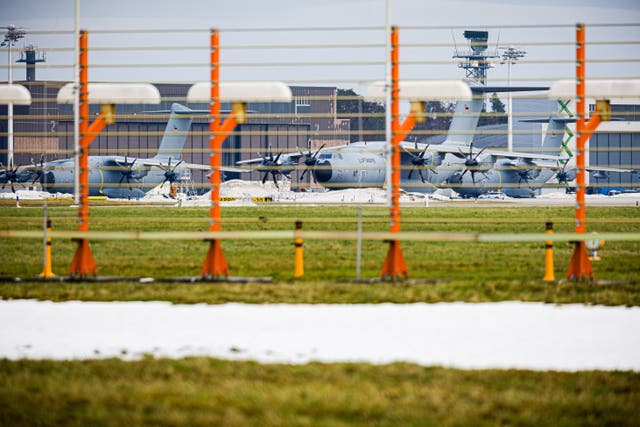
Several European partners – including France, Germany, the UK, Norway, Sweden and the Netherlands – started sending symbolic numbers of troops or promised to do so in the following days.
The troop movements were intended to portray unity among Europeans and send a signal to President Donald Trump that an American takeover of Greenland is not necessary as Nato together can safeguard the security of the Arctic region amid rising Russian and Chinese interest.
The European troops did little to dissuade Mr Trump.
White House press secretary Karoline Leavitt said on Thursday that it had no impact on the US president’s decision-making or goal of acquiring Greenland.
“The president has made his priority quite clear, that he wants the United States to acquire Greenland. He thinks it’s in our best national security to do that,” she said.
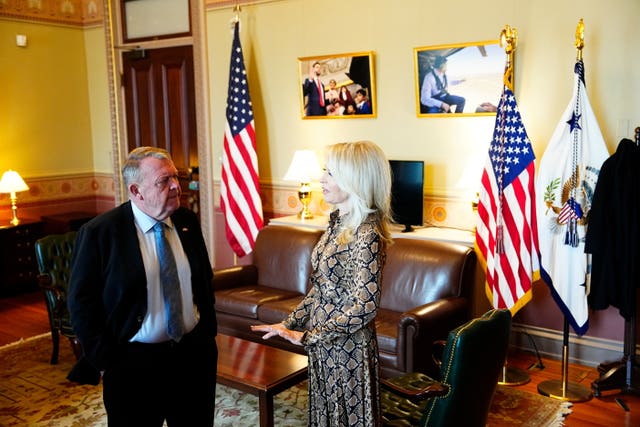
Mr Rasmussen, flanked by his Greenlandic counterpart Vivian Motzfeldt, said on Wednesday that a “fundamental disagreement” over Greenland remained after they met at the White House with vice president JD Vance and secretary of state Marco Rubio.
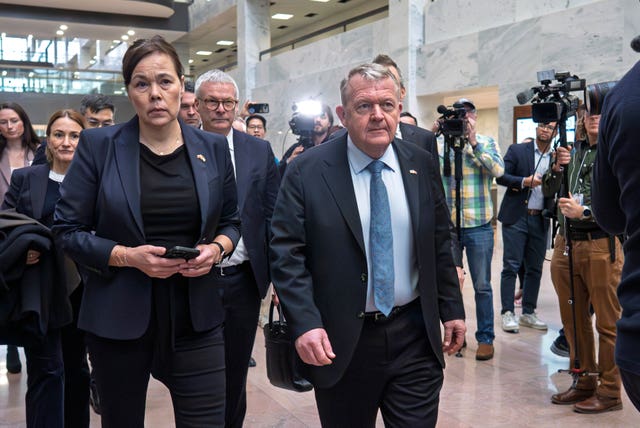
Mr Rasmussen said it remains “clear that the president has this wish of conquering over Greenland” but dialogue with the US would continue at a high level over the following weeks.
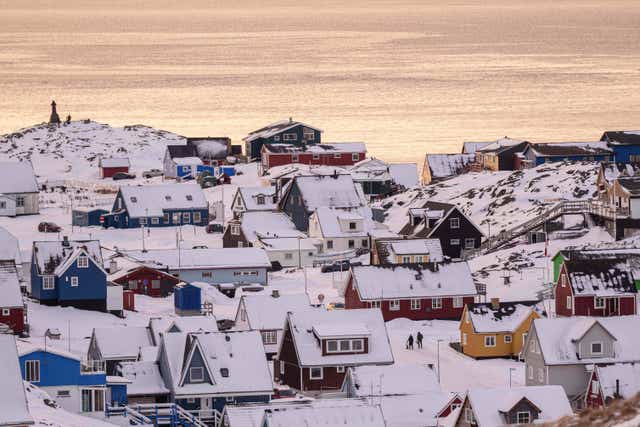
Meanwhile, French President Emmanuel Macron announced on Wednesday that “the first French military elements are already en route” and “others will follow”, as French authorities said about 15 soldiers from the mountain infantry unit were already in Nuuk for a military exercise.
Germany will deploy a reconnaissance team of 13 personnel to Greenland on Thursday, the Defence Ministry said.
On Thursday, Danish defence minister Troels Lund Poulsen said the intention was “to establish a more permanent military presence with a larger Danish contribution”, according to Danish broadcaster DR.
He said soldiers from several Nato countries will be in Greenland on a rotation system.
Inhabitants of Greenland and Denmark reacted with anxiety but also some relief that negotiations with the US would go on and European support was becoming visible.
Several people said they viewed Denmark’s decision to send more troops, and promises of support from other Nato allies, as protection against possible US military action, but European military officials have not suggested the goal is to deter a US move against the island.
Greenland’s Prime Minister Jens-Frederik Nielsen welcomed the continuation of “dialogue and diplomacy”, adding: “Greenland is not for sale. Greenland does not want to be owned by the United States. Greenland does not want to be governed from the United States. Greenland does not want to be part of the United States.”
On Wednesday, Mr Poulsen had announced a stepped-up military presence in the Arctic “in close co-operation with our allies”, calling it a necessity in a security environment in which “no one can predict what will happen tomorrow”.
“This means that from today and in the coming time there will be an increased military presence in and around Greenland of aircraft, ships and soldiers, including from other Nato allies,” he said.
Denmark informed Nato that it will be conducting exercises in Greenland, and the alliance’s supreme allied commander Alexus Grynkewich spoke on Thursday with Denmark’s chief of defence, Colonel Martin O’Donnell, a spokesperson for Mr Grynkewich told the AP.
He said such dialogue is typical and added that “we all agree the Arctic – including Greenland – is important for transatlantic security”.
The Danish exercises and deployment of additional troops “bolster our collective defences there”, Col O’Donnell said.
The Russian embassy in Brussels on Thursday lambasted the West’s “bellicose plans” in response to “phantom threats that they generate themselves”. It said the planned military actions were part of an “anti-Russian and anti-Chinese agenda” by Nato.
“Russia has consistently maintained that the Arctic should remain a territory of peace, dialogue and equal co-operation,” the embassy added.
Mr Rasmussen announced the creation of a working group with the Americans to discuss ways to work through differences.
“The group, in our view, should focus on how to address the American security concerns, while at the same time respecting the red lines of the Kingdom of Denmark,” he said.
Mr Poulsen said the group was “better than no working group” and “a step in the right direction”, but added that the dialogue with the US did not mean “the danger has passed”.
“We are really happy that action is being taken to make sure that this discussion is not just ended with that meeting alone,” Greenlandic MP Aki-Matilda Hoegh-Dam said on Thursday during a news conference in Copenhagen.
She said Greenlandic people understood they were at a “pivotal point” in a broader transformation of the international rules-based order and felt responsible not just for themselves but also for the whole world to get it right.
Speaking on Wednesday after the White House talks, Mr Rasmussen rejected both a military takeover and the potential purchase of the island by the US. Asked whether he thought the US would invade, he replied: “No, at least I do not hope so, because, I mean, that would be the end of Nato.”
He added that Greenlanders were unlikely to vote for US rule even if financial incentives were offered, “because I think there’s no way that US will pay for a Scandinavian welfare system in Greenland”.
Mr Trump told reporters: “We’ll see how it all works out. I think something will work out.”