Iranians able to make calls abroad but internet remains offline after protests
Witnesses said the internet remained cut off from the outside world.
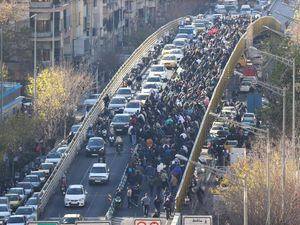
Iranians made phone calls abroad for the first time in days on Tuesday after authorities severed communications during a crackdown on nationwide protests that activists say killed at least 646 people.
The calls give a glimpse of life after being cut off from the outside world.
Witnesses described a heavy security presence in central Tehran, burned-out government buildings, smashed ATMs and few passersby.
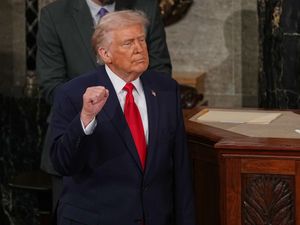
Meanwhile, people remain concerned about what comes next, including the possibility of strikes after US president Donald Trump said he could possibly use the military to defend peaceful protesters.

Mr Trump has also said Iran wants to negotiate with Washington.
“My customers talk about Trump’s reaction while wondering if he plans a military strike against the Islamic Republic,” shopkeeper Mahmoud, who gave only his first name out of concerns for his safety, said.
“I don’t expect Trump or any other foreign country cares about the interests of Iranians.”
Reza, a taxi driver who also gave just his first name, said protests remained on many people’s minds.
“People — particularly young ones — are hopeless but they talk about continuing the protests,” he said.

Several people in Tehran were able to call The Associated Press (AP) and speak to a journalist there. The AP bureau in Dubai, United Arab Emirates, was unable to call those numbers back.
The witnesses said SMS text messaging was still down and that internet users in Iran could connect to government-approved websites locally but nothing abroad.
Anti-riot police officers, wearing helmets and body armour, carried batons, shields, shotguns and tear-gas launchers, according to witnesses. Police stood watch at major crossroads. Nearby, the witnesses saw members of the Revolutionary Guard’s all-volunteer Basij force, who similarly carried firearms and batons. Security officials in plainclothes were visible in public spaces as well.
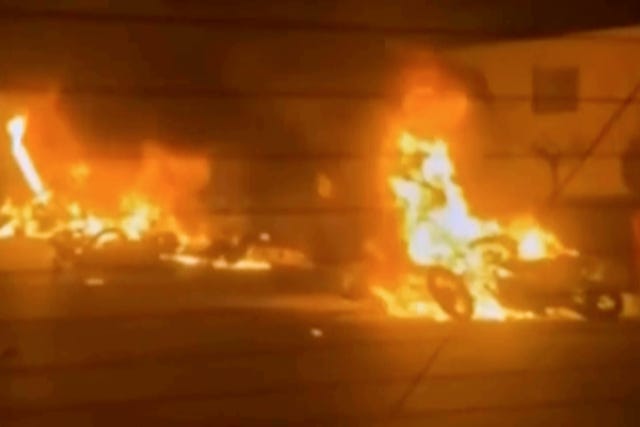
Several banks and government offices were burned during the unrest, they said. ATMs had been smashed and banks struggled to complete transactions without the internet, the witnesses said.
But shops were open, although there was little foot traffic in the capital. Tehran’s Grand Bazaar, where the demonstrations began on December 28, was to open on Tuesday. But a witness described speaking to multiple shopkeepers who said the security forces ordered them to reopen no matter what. Iranian state media had not acknowledged that order.
Meanwhile, it appeared that security service personnel were searching for Starlink terminals as people in northern Tehran reported authorities raiding apartment buildings with satellite dishes. While satellite television dishes are illegal, many in the capital have them in their homes and officials had broadly given up on enforcing the law in recent years.
On the streets, people could also be seen challenging plainclothes security officials, who were stopping passersby at random.
State television also read a statement about mortuary and morgue services being free — a signal some likely charged high fees for the release of bodies amid the crackdown.
Supreme Leader Ayatollah Ali Khamenei, in a statement carried by state TV, praised the tens of thousands who took part in pro-government demonstrations nationwide on Monday.
“This was a warning to American politicians to stop their deceit and not rely on traitorous mercenaries,” he said.
“The Iranian nation is strong and powerful and aware of the enemy.”

Iranian state television aired chants from the crowd, which appeared to number in the tens of thousands, who shouted “death to America” and “death to Israel”.
Others cried out “death to the enemies of God”. Iran’s attorney general has warned that anyone taking part in protests will be considered an “enemy of God” – a death-penalty charge.
Iranian foreign minister Abbas Araghchi, speaking to the Qatar-funded satellite news network Al Jazeera in an interview aired on Monday night, said he continued to communicate with US envoy Steve Witkoff.
The communication “continued before and after the protests and are still ongoing,” Mr Araghchi said. But he added: “Washington’s proposed ideas and threats against our country are incompatible.”
White House press secretary Karoline Leavitt said Iran’s public rhetoric diverges from the private messaging the administration has received from Tehran in recent days.
“I think the president has an interest in exploring those messages,” Ms Leavitt said.
“However, with that said, the president has shown he is unafraid to use military options if and when he deems necessary, and nobody knows that better than Iran.”
Mr Trump announced on Monday that countries doing business with Iran will face 25% tariffs from the United States.

He announced the tariffs in a social media posting, saying they would be “effective immediately”.
It was action against Iran for the protest crackdown from Mr Trump, who believes exacting tariffs can be a useful tool in prodding friends and foes on the global stage to bend to his will.
Brazil, China, Russia, Turkey and the United Arab Emirates are among economies that do business with Tehran.
Mr Trump said on Sunday that his administration was in talks to set up a meeting with Tehran, but cautioned that he may have to act first as reports of the death toll in Iran mount and the government continues to arrest protesters.
“I think they’re tired of being beat up by the United States,” Mr Trump said.
“Iran wants to negotiate.”
Iran, through the country’s parliamentary speaker, warned on Sunday that the US military and Israel would be “legitimate targets” if Washington uses force to protect demonstrators.