Myanmar holds second round of voting in first election since military takeover
The election is being held in three phases due to armed conflicts.
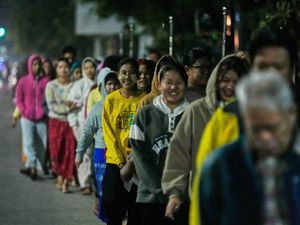
Myanmar began a second round of voting on Sunday in the country’s first general election since a takeover that installed a military government five years ago.
Voting expanded to additional townships including some areas affected by the civil war between the military government and its armed opponents.
Polling stations opened at 6am local time in 100 townships across the country, including parts of Sagaing, Magway, Mandalay, Bago and Tanintharyi regions, as well as Mon, Shan, Kachin, Kayah and Kayin states.
Many of these areas have seen clashes in recent months or remain under heightened security, underscoring the risks surrounding the vote.

The election is being held in three phases due to armed conflicts.
The first round took place on December 28 in 102 of the country’s total 330 townships.
A final round is scheduled for January 25, although 65 townships will not take part because of fighting.
Myanmar has a two-house national legislature, totalling 664 seats. The party with a combined parliamentary majority can select the new president, who can name a cabinet and form a new government. The military automatically receives 25% of seats in each house under the constitution.
Critics say the polls organised by the military government are neither free nor fair and are an effort by the military to legitimise its rule after seizing power from the elected government of Aung San Suu Kyi in February 2021.

The military government said there were more than 24 million eligible voters in the election, about 35% fewer than the 2020 election.
The government called the turnout a success, claiming ballots were cast by more than six million people, about 52% of the more than 11 million eligible voters in the election’s first phase.
While more than 4,800 candidates from 57 parties are competing for seats in national and regional legislatures, only six parties are competing nationwide with the possibility of gaining political clout in parliament.
The first phase left the military-backed Union Solidarity and Development Party, or USDP, in a dominant position, winning nearly 90% of those contested seats in that phase in Pyithu Hluttaw, the lower house of parliament. It also won a majority of seats in regional legislatures.
Ms Suu Kyi, Myanmar’s 80-year-old former leader, and her party are not participating in the polls.
She is serving a 27-year prison term on charges widely viewed as spurious and politically motivated.

Her party, the National League for Democracy, was dissolved in 2023 after refusing to register under new military rules.
Other parties also refused to register or declined to run under conditions they deemed unfair, while opposition groups have called for a voter boycott.
Tom Andrews, a special rapporteur working with the UN human rights office, speaking earlier in the week, urged the international community to reject what he called a “sham election”, saying the first round exposed coercion, violence and political exclusion.
“You cannot have a free, fair or credible election when thousands of political prisoners are behind bars, credible opposition parties have been dissolved, journalists are muzzled, and fundamental freedoms are crushed,” Mr Andrews said.