Embattled French PM Sebastien Lecornu survives no-confidence votes
The vote clears the way for Mr Lecornu to try to get a 2026 budget through parliament’s bitterly divided lower house before the end of the year.
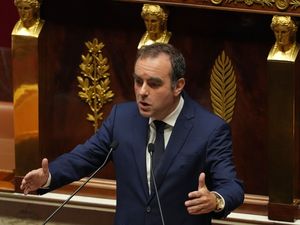
French Prime Minister Sebastien Lecornu has survived two votes of no-confidence that could have toppled his fragile new government and plunged France deeper into political chaos.
The National Assembly votes clear the way for the embattled Mr Lecornu to pursue what could be an even greater challenge: getting a 2026 budget for the European Union’s second-largest economy through parliament’s powerful but bitterly divided lower house before the end of the year.
Mr Lecornu’s survival also spares any immediate need for President Emmanuel Macron to again dissolve the National Assembly and call snap legislative elections, a hazardous option that the French leader had signalled he might take if Mr Lecornu fell.

The close ally of the French president faced two no-confidence motions filed by Mr Macron’s fiercest opponents – the hard-left France Unbowed party and Marine Le Pen of the far-right National Rally and her allies in parliament.
The 577-seat chamber voted on the France Unbowed motion first – and it fell short by 18 votes, with 271 legislators supporting it.
It needed a majority of 289 votes to succeed.
Ms Le Pen’s second motion got just 144 votes, well short of a majority.
Yael Braun-Pivet, the National Assembly president and a Macron loyalist, said the outcome left her “reasonably optimistic” about the chances of building consensus for the 2026 budget in parliament despite its deep divisions.
“I am sure that there’s a path,” she said.
But Mr Lecornu is not out of the woods yet.
To get the votes he needed, Mr Lecornu dangled the possibility of rolling back one of the flagship but most unpopular reforms of Mr Macron’s second term as president, which will gradually raise France’s retirement age from 62 to 64.
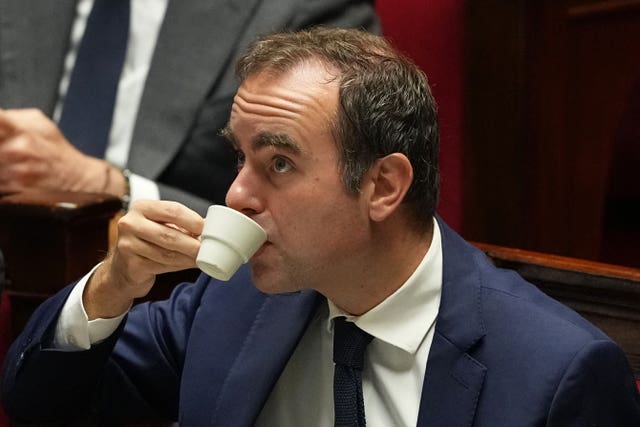
Mr Lecornu’s proposed suspension of the 2023 pension reform helped convince opposition Socialist Party legislators to grudgingly decide not to back the efforts to topple him, at least for now.
With 69 legislators, Socialist backing for Mr Lecornu’s removal would have tipped the votes against him.
But just seven Socialists broke ranks in voting for the France Unbowed motion.
The conservative Republicans, with 50 legislators, also withheld backing for Mr Lecornu’s removal, despite a fiery appeal for support from Eric Ciotti, a former Republicans leader who since 2024 has allied with Ms Le Pen’s far-right.
“Don’t compromise yourselves by supporting this government. Don’t swallow this snake, this boa (constrictor), this pink alligator,” Mr Ciotti said.
“No voter on the right will forgive you.”
In the closest-run first motion, just one Republicans legislator backed Mr Lecornu’s removal.
But for Ms Le Pen’s second motion, with lower stakes because it had little chance of succeeding, three Republicans broke ranks and voted against the prime minister, underscoring that conservative tolerance for Mr Lecornu could quickly run dry in the coming weeks or months.

Mr Lecornu’s still fragile position could yet crumble if Socialist or Republicans legislators change tack and support any future no-confidence votes if they do not get what they want in the budget negotiations that are sure to be fractious.
Mr Lecornu has promised not to use a special constitutional power to railroad the budget through parliament without legislators’ approval – which was the tool that Mr Macron’s government employed to impose the 2023 pension reform despite a firestorm of protests.
Building consensus in parliament for tax hikes, spending cuts and other budget measures to start reining in France’s ballooning state deficit and debt promises to be extremely difficult, with the National Assembly deeply divided since Mr Macron dissolved it in June 2024.
The ensuing legislative elections produced no outright winner and precipitated the political deadlock that has gripped France ever since, with Mr Macron’s prime ministers falling in quick succession.
The prospect of a hard-fought presidential race when Mr Macron’s second and last term ends in 2027 is also complicating consensus-building, with political parties already looking to score points with voters.
Addressing legislators before they voted, Mr Lecornu urged them to put those considerations aside for now.
“History, in any case, will judge these political manoeuvres very harshly, where the platform of the National Assembly has essentially been confused with an advertising platform,” he said.
“The presidential election will come. You will have the opportunity to campaign. For now, do not hold the nation’s budget and the social security budget hostage.”