French prime minister Lecornu resigns after less than a month in office
Sebastien Lecornu’s resignation comes just a day after he named his government and after less than a month in office.
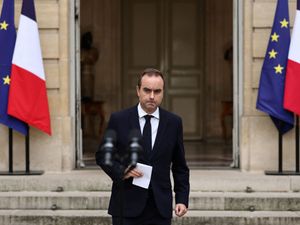
France’s new prime minister Sebastien Lecornu has resigned less than 24 hours after naming his government and after less than a month in office.
His resignation plunges the country into a deep political crisis and leaves French President Emmanuel Macron with few options.
The French presidency said in a statement that Mr Macron, who has been hitting record lows in opinion polls, has accepted his resignation.
Mr Lecornu had replaced his predecessor, Francois Bayrou, in September to become France’s fourth prime minister in barely a year, during a prolonged period of political instability.

French politics has been in disarray since Mr Macron called snap elections last year that produced a deeply fragmented legislature and a political impasse.
Far-right and left-wing politicians hold more than 320 seats at the National Assembly, while the centrists and allied conservatives hold 210, with no party having an overall majority.
A faithful ally of Mr Macron, Mr Lecornu said conditions were no longer met to remain in office after failing to build a consensus.
“It would take little for it to work,” Mr Lecornu said in his resignation speech.
“By being more selfless for many, by knowing how to show humility. One must always put one’s country before one’s party.”
With less than two years before the next presidential election, Mr Macron’s opponents immediately tried to capitalise on the shocking resignation, with the far-right National Rally calling on him to either call for new snap elections or resign.
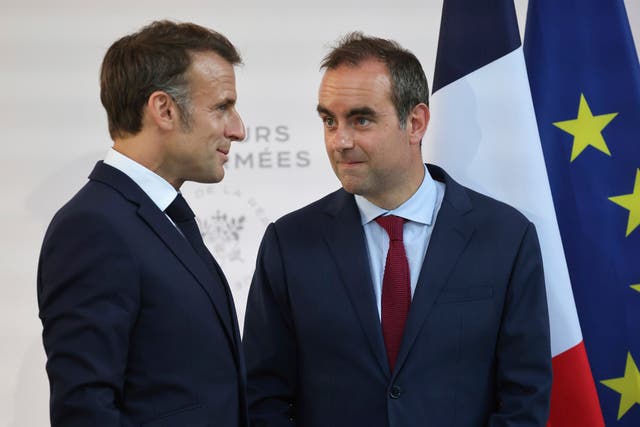
“This raises a question for the President of the Republic: can he continue to resist the legislature dissolution? We have reached the end of the road,” far-right leader Marine Le Pen said.
“There is no other solution. The only wise course of action in these circumstances is to return to the polls.”
On the far left, France Unbowed also called for Mr Macron’s departure, while voices on the left urged the revival of a coalition made up of leftists, socialists, greens and communists.
The resignation rattled investors, sending the CAC-40 index of leading French companies plunging. The index was down by nearly 2% on its Friday close.
Ministers appointed just the previous night found themselves in the bizarre situation of becoming caretaker ministers – kept in place only to manage day-to-day affairs until a new government is formed – before some of them had even been formally installed in office.
Agnes Pannier-Runacher, the newly reappointed minister for ecology, posted on X: “I despair of this circus.”

Mr Lecornu’s choice of ministers has been criticised across the political spectrum, particularly his decision to bring back former finance minister Bruno Le Maire to serve at the Defence Ministry, with critics saying that under his watch France’s public deficit soared.
Mr Lecornu’s main task would have been to pass a budget as France is faced with a massive debt crisis.
At the end of the first quarter of 2025, France’s public debt stood at 3.346 trillion euros, or 114% of GDP. Debt servicing remains a major budget item, accounting for around 7% of state spending.
Other key positions remained largely unchanged from the previous cabinet, with conservative Bruno Retailleau staying on as interior minister, in charge of policing and internal security, Jean-Noel Barrot remaining as foreign minister, and Gerald Darmanin keeping the Justice Ministry.
Seeking consensus at the National Assembly, Mr Lecornu consulted with all political forces and trade unions before forming his cabinet.
He also vowed that he would not employ a special constitutional power his predecessors had used to force budgets through parliament without a vote and would instead seek compromise with legislators from the left and the right.