Japan’s prime minister Shigeru Ishiba resigns
Mr Ishiba, who took office in October, has resisted demands from opponents within his own party for more than a month.
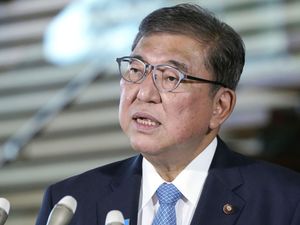
Japan’s prime minister Shigeru Ishiba has announced he will step down following growing calls from his party to take responsibility for a historic defeat in July’s parliamentary election.
Mr Ishiba, a 68-year-old centrist, had resisted demands from opponents further to the right within his own party to resign.
He argued that he wanted to avoid a political vacuum at a time when Japan faced key domestic and international challenges, including US tariffs, rising prices and growing tensions in the Asia-Pacific.
He explained at a news conference on Sunday that he had intended for some time to take responsibility for his party’s summer election loss, but was first determined to make progress in tariff negotiations with the United States. He described it as matter of the national interest.
“Who would seriously negotiate with a government whose leader says he is stepping down?” Mr Ishiba said.
He said the moment had arrived with an order by US president Donald Trump on Friday to lower tariffs on Japanese cars and other products from 25% to 15%.
“Having reached a milestone in the US tariff negotiations, I decided now is the time to make way for a successor,” Mr Ishiba said.
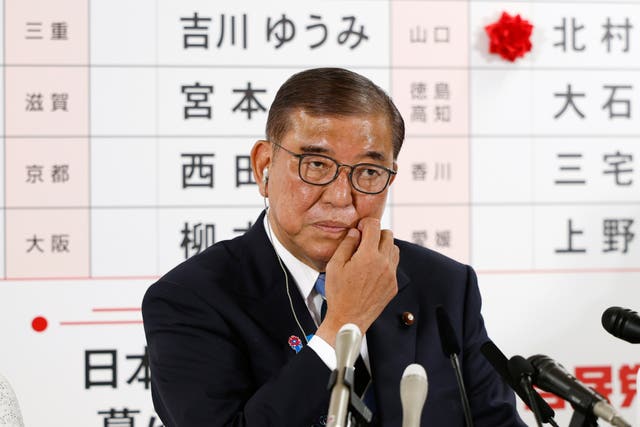
The resignation came one day before his Liberal Democratic Party (LDP) was to decide whether to hold an early leadership election, a virtual no-confidence motion against him if approved.
He said he made the “painful decision to resign” to avert that step because “it would cause a critical division within the party, and that is absolutely not my intention”.
Mr Ishiba said he would instead start a process to hold a party leadership vote to choose his replacement, which is expected to be held in October. He is to remain as prime minister until a new leader is elected and endorsed by the parliament.
His leadership lasted only one year and underscores the instability of Japan’s minority government.
A maverick who won the leadership on his fifth attempt, Mr Ishiba said he regrets he could not live up to voters’ expectations for change.
“As a result, I failed to go my own way, and I wonder how I could have done better,” he said.
He said he was not going to run in the next leadership race, even though he regreted leaving behind unfinished business, such as measures for salary increases, agricultural reforms and further strengthening Japan’s security.
He asked his future successor to tackle the issues he cherished.
Mr Ishiba’s ruling coalition failed to secure a majority in the 248-seat upper house in a crucial parliamentary election in July, further shaking the stability of his government.

The loss added to an earlier election defeat in the lower house, where the party-led coalition had also lost a majority.
His decision came after his meeting on Saturday with agriculture minister Shinjiro Koizumi and his perceived mentor, former prime minister Yoshihide Suga, who apparently suggested Mr Ishiba’s resignation ahead of Monday’s vote.
He had previously insisted on staying, stressing the need to avoid a political vacuum at a time when Japan faced big challenges, including US tariffs and their impact on the economy, rising prices, rice policy reforms and growing tension in the region.
Since the LDP’s adoption last week of its review of the election loss, which called for “a complete overhaul” of the party, requests for an early leadership vote or for Mr Ishiba’s resignation before Monday’s results had gained traction.
With Mr Ishiba stepping down as party leader, the LDP is expected to set a date for its party presidential election, likely to be held in early October.