Climate change ‘made deadly wildfires in Turkey, Greece and Cyprus more fierce’
The World Weather Attribution study found winter rainfall ahead of the wildfires had dropped by about 14% since the pre-industrial era.
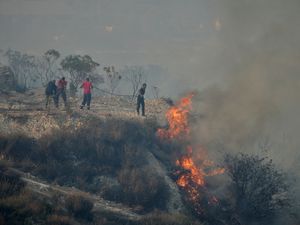
Climate change that has driven scorching temperatures and dwindling rainfall made massive wildfires in Turkey, Greece and Cyprus this summer burn much more fiercely, according to a study.
The study by World Weather Attribution (WWA) said the fires that killed 20 people, forced 80,000 to evacuate and burned more than one million hectares (2.47 million acres) were 22% more intense in 2025, Europe’s worst recorded year of wildfires.
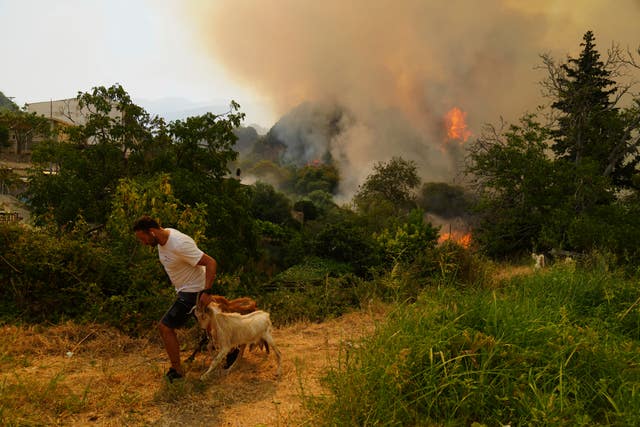
Hundreds of wildfires that broke out in the eastern Mediterranean in June and July were driven by temperatures above 40C, extremely dry conditions and strong winds.
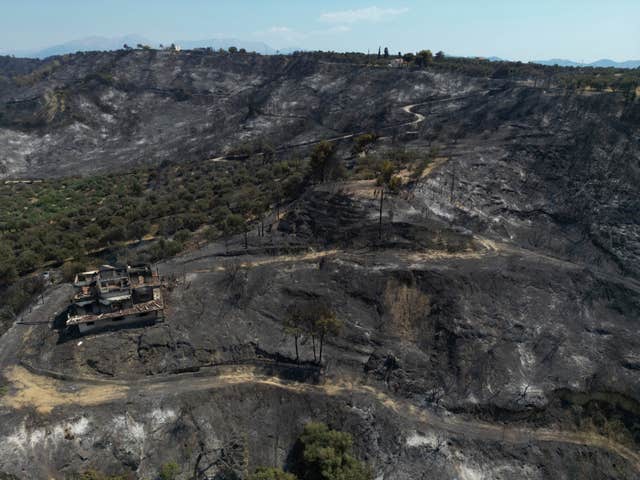
WWA, a group of researchers that examines whether and to what extent extreme weather events are linked to climate change, called its findings “concerning”.
“Our study finds an extremely strong climate change signal towards hotter and drier conditions,” said Theodore Keeping, a researcher at the Centre for Environmental Policy at Imperial College London.
“Today, with 1.3C of warming, we are seeing new extremes in wildfire behaviour that has pushed firefighters to their limit. But we are heading for up to 3C this century unless countries more rapidly transition away from fossil fuels,” Mr Keeping said.
The study found winter rainfall ahead of the wildfires had dropped by about 14% since the pre-industrial era, when a heavy reliance on fossil fuels began.
It also determined that because of climate change, week-long periods of dry, hot air that primes vegetation to burn are now 13 times more likely.
The analysis also found an increase in the intensity of high-pressure systems that strengthened extreme northerly winds, known as Etesian winds, that fanned the wildfires.
Gavriil Xanthopoulos, research director at the Institute of Mediterranean Forest Ecosystems of the Hellenic Agricultural Organisation in Greece, said firefighters used to be able to wait for such winds to die down to control fires.
“It seems that they cannot count on this pattern anymore,” Mr Xanthopoulos said.
More study is needed to understand how the wind patterns are reaching high velocities more often, he said.
Flavio Lehner, an assistant professor in earth and atmospheric sciences at Cornell University who was not involved in the WWA research, said its summary and key figures were consistent with existing literature and his understanding of how climate change is making weather more conducive to wildfire.
Climate change is “loading the dice for more bad wildfire seasons” in the Mediterranean, Mr Lehner said.