Trump announces 25% tariff on India plus penalties for buying Russian energy
The president said India buys military equipment and oil from Russia, which he said has enabled the war in Ukraine.
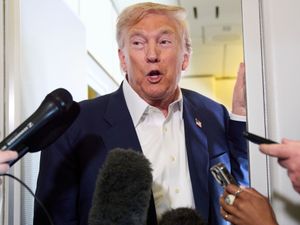
Donald Trump has said he will impose a 25% tariff on goods from India, plus an additional import tax because of India’s purchasing of Russian oil.
The US president said on Wednesday that India “is our friend” but its tariffs “are far too high” on US goods.
He added that India buys military equipment and oil from Russia, which Mr Trump said has enabled the war in Ukraine.
As a result, he intends to charge an additional “penalty” starting on Friday as part of revised tariffs on multiple countries.
The Indian government said it is studying the implications of the announcement.
India and the US have been engaged in negotiations on a “fair, balanced and mutually beneficial” trade agreement over the last few months, and New Delhi remains committed to that objective, the Trade Ministry said in a statement.
The new tariffs could put India at a disadvantage in the US market relative to Vietnam, Bangladesh and, possibly, China, said Ajay Sahai, director general of the Federation of Indian Export Organisations.
“We are back to square one as Trump hasn’t spelled out what the penalties would be in addition to the tariff,” he added. “The demand for Indian goods is bound to be hit.”
The announcement came after a series of negotiated trade frameworks with the European Union, Japan, the Philippines and Indonesia — all of which Mr Trump said would open markets for American goods while enabling the US to raise tax rates on imports.
The president views tariff revenues as a way to help offset the budget deficit increases tied to his recent income tax cuts and generate more domestic factory jobs.
While he has effectively wielded tariffs as a cudgel to reset the terms of trade, the economic impact is uncertain as most economists expect a slowdown in US growth and greater inflationary pressures as the costs of the taxes are passed along to domestic businesses and consumers.
His approach of putting a 15% tariff on America’s longstanding allies in the EU is also generating pushback — possibly causing European partners as well as Canada to seek alternatives to US leadership on the world stage.
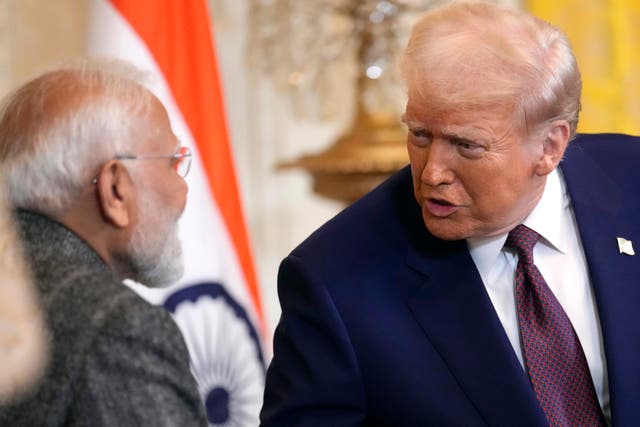
Washington has long sought to develop a deeper partnership with New Delhi. Indian Prime Minister Narendra Modi has established a good working relationship with Mr Trump, and the two leaders are likely to further boost co-operation between their countries.
At a population exceeding 1.4 billion people, India is the world’s largest country and a possible geopolitical counterbalance to China.
India and Russia have close relations, and New Delhi has not supported western sanctions on Moscow over its war in Ukraine.
When Mr Trump met Mr Modi in February, the US president said India would start buying American oil and natural gas.
He discussed his policies on trade and tariffs with reporters accompanying him on Tuesday on the flight home after a five-day visit to Scotland.
He declined to comment then about reports that India was bracing for a US tariff rate of at least 25%, saying: “We’re going to see.”
Mr Trump also said the outlines of a trade agreement with India had not yet been finalised.