Iran launches missiles and drones at Israel in the wake of US strikes
Tehran has warned the US its military has been given a ‘free hand’ to attack American targets.
Iran has fired a salvo of missiles and drones at Israel while warning the United States that its military has been given a “free hand” to attack American targets in the wake of the Trump administration’s massive strikes on Iranian nuclear sites.
Israel said its defence systems were operating to intercept the threat, which apparently targeted north and central areas, and told people to head to shelters.
Iran described the attack as a new wave of its Operation “True Promise 3”, saying it was targeting the Israeli cities of Haifa and Tel Aviv, according to Iranian state television.
There were no immediate reports of damage.
The attack came the day after the United States inserted itself into Israel’s war by attacking Iranian nuclear sites, prompting fears of a wider regional conflict.
Meanwhile, a suspected Israeli air strike hit the gate of Iran’s notorious Evin prison in Tehran, Iranian state television reported. Iranian media speculated the strike may have come from a drone.
The report shared what appeared to be black-and-white-surveillance footage of the strike.
The prison is known for holding dual nationals and Westerners often used by Iran as bargaining chips in negotiations with the West.
Israel did not immediately acknowledge carrying out the strike.
Earlier, the head of the United Nations nuclear watchdog said “very heavy damage” is expected at Iran’s underground facility at Fordo after the US air strike this weekend.
After the strike using sophisticated bunker-buster bombs, Rafael Mariano Grossi, the head of the International Atomic Energy Agency (IAEA), said in Vienna: “Given the explosive payload utilised and the extreme vibration sensitive nature of centrifuges, very significant damage is expected to have occurred.”
He added that “at this time, no-one, including the IAEA, is in a position to have fully assessed the underground damage at Fordo”.
Iran said the US had crossed “a very big red line” with its risky gambit to strike the three sites with missiles and 30,000-pound bunker-buster bombs.
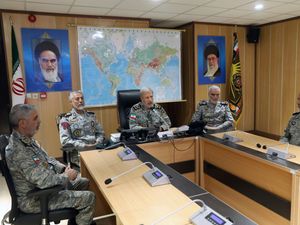
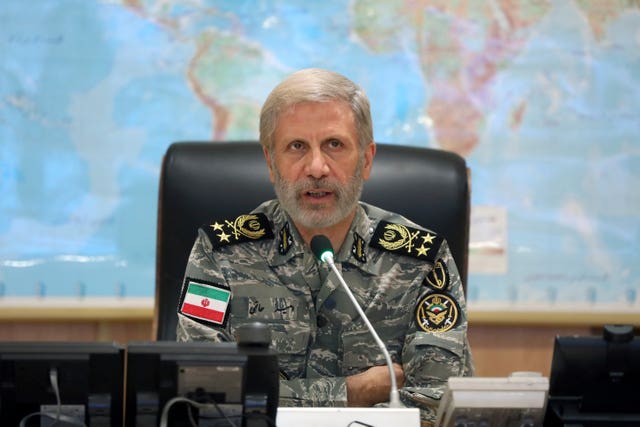
On Monday, Iranian Gen Abdolrahim Mousavi, the chief of joint staff of armed forces, warned Washington its strikes had given Iranian forces a “free hand ” to “act against US interests and its army”.
Gen Mousavi described the American attack as violating Iran’s sovereignty and being tantamount to invading the country, the state-run IRNA news agency reported.
In the wake of the American attacks on Iran, calls came from across the globe for de-escalation and the return to diplomacy to try and resolve the conflict.
On Monday, the European Union’s top diplomat said the bloc remained “very much focused on the diplomatic solution”.
“The concerns of retaliation and this war escalating are huge,” Kaja Kallas said at the start of a foreign ministers’ meeting in Brussels where Iran has jumped to the top of the agenda.
“Especially closing of the Strait of Hormuz by Iran is something that would be extremely dangerous and not good for anybody,” Ms Kallas said, referring to a maritime route crucial for oil transport.
After Sunday’s attacks, Iranian officials repeated their longstanding threats of possibly closing the key shipping lane.
Iranian foreign minister Abbas Araghchi is meeting Russian President Vladimir Putin, one of Iran’s key allies, in Moscow.