
Meet the author from Walsall who wants to teach us how to listen to what animals are telling us
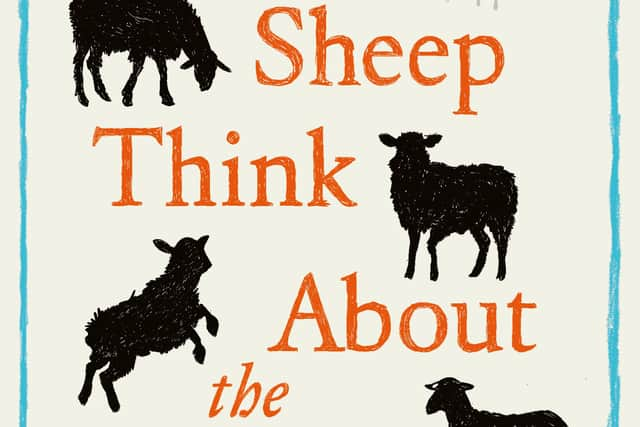
What are animals trying to say to humans and how can we be a good listener? Those are the questions Amelia Thomas hoped to answer during her journey of discovery in which she came face to face with many creatures great and small.

While writing her new book What Sheep Think About the Weather: How to Listen to What Animals Are Trying to Say, she met experts from all walks of life, from scientists and trainers to pet psychologists, to learn more from our furry and feathered friends.
Her lifelong love of animals began while growing up on Wellington Road in Walsall.
“My childhood home backed onto the West Midlands canal, so our garden was brimming with wildlife, including hedgehogs, bats, owls, jays, foxes, and the occasional stray moorhen.
"My mum tells how, when I was very little, I patiently made my way up the garden to sit beside a sleeping vixen beneath our apple tree.
"Meanwhile I filled our house with rescued rabbits, guinea pigs, cats, rats, mice, gerbils, and sometimes an injured pigeon – my parents were very patient!,” recalls Amelia, who attended Queen Mary’s High School.
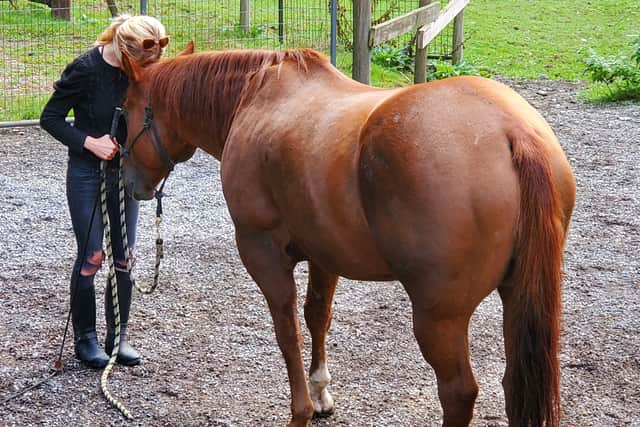

Now the author, naturalist and journalist lives with her Finnish husband and five children on a farm in Nova Scotia, Canada.
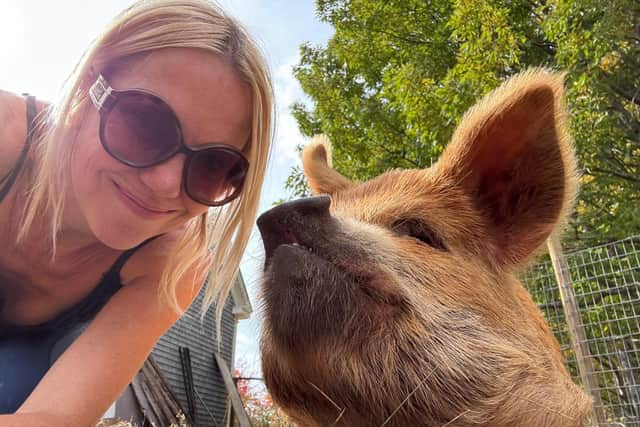
“We’ve been living here on this former dairy farm for about three years now, and share it with our pet Kunekune pigs, dogs, horses, chickens, a grumpy-faced Himalayan cat, and we’re currently preparing to welcome a pair of calves in the spring. In and around our woods and orchards live chipmunks, porcupines, deer, coyotes, raccoons, pheasants, bald eagles, hummingbirds, and groundhogs – along with a very vocal red squirrel.”
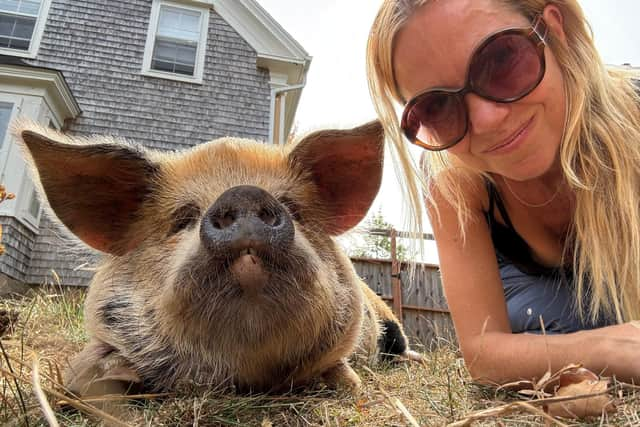
Explaining why she decided to write the book, Amelia, who has written for Lonely Planet, says: “I’ve always had the feeling that our animals are trying to say more to us than we realise: we spend lots of time, for example, teaching our dogs to understand “Sit” or “Stay,” but what subtle signals are they sending to us through their body language that we might be missing?
"On the chaotic day we moved onto our farm – when all our animals went a little loopy - I decided to take the plunge and spend a year asking the world’s best animal-listeners: what are animals trying to tell us, I wanted to know, and how can we listen better?
"I chatted with scientists, ethologists, trackers, TV animal trainers, psychologists, naturalists, a soundscape ecologist, and even psychic animal communicators all across the globe, along with meeting some extraordinary animals themselves: sign-language-speaking chimps in Quebec, a giant Pacific octopus in Boston, and free-flying hawks who are encouraged to tell their handlers “No” in Somerset.
"But probably my favourite listening experience was finding out how listening to my naturally timid Icelandic pony could build his confidence, until he actively wanted to play with me, learning tricks like to roll a ball, bow, “smile”, and spin in circles.”
Her most surprising discovery was “finding out how small personality can go”. “A cockroach researcher in Japan explained to me how even cockroaches have individual personality traits – something we successfully discovered, too, during some very Dad’s-Army-level experiments with a group of earwigs!,” she explains. "I also read scientific papers describing how fruit flies not only have dialects but can also learn each other’s, and that coral larvae can hear the sounds of a healthy reef and swim towards it. These revelations were truly jaw-dropping.”
She believes what she has learned has changed the way she now interacts with her own animals “enormously”. “I’ve learnt to be a much more patient listener, and what I might once have labelled a behavioural problem in an animal I now think of as interesting information. I’ll ask: what is it telling me? What have I been missing? How can we communicate better to solve it?,” explains Amelia.
Her advice for anyone who wants to become a better listener is to start by slowing down. “Our pets – and even the animals in our back gardens – signal to us all the time, but often in quiet, subtle ways that we miss when we’re in a hurry.
"Trying to imagine how animals might experience the world is also a fantastic first step to understanding what they’re saying: I got down on my hands and knees and sniffed around our old workshop with our dogs – which felt a bit silly, but gave me a fascinating insight into how differently they saw, heard and smelt the environment we share.
"And finally, don’t assume animals have nothing to say to you: science is constantly discovering that we’re more alike in so many more ways than we’d think,” she says.