Video and gallery: Snapshot of Birmingham's changing Chamberlain Square
It is one of the most recognisable sites in the West Midlands.
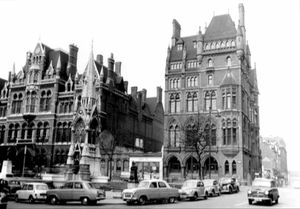
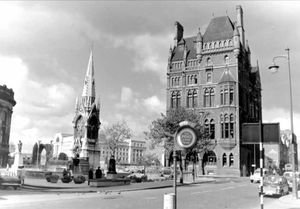
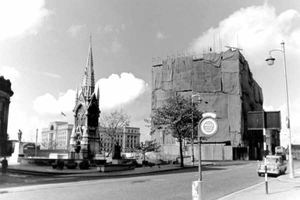
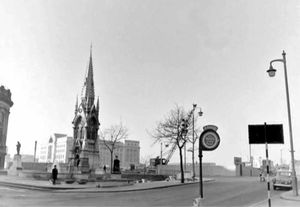
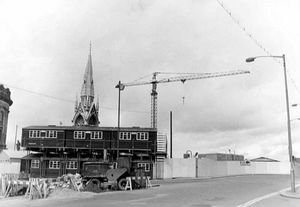
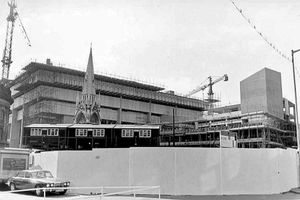
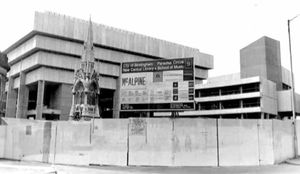
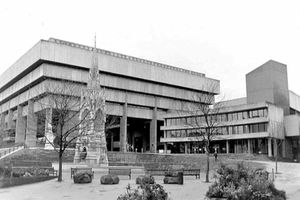
And now you can see Birmingham's Chamberlain Square as it was in years gone by thanks to the work of an amateur photographer.
It was back in the 1960s and 1970s when research chemist and amateur photographer Derek Fairbrother set about a task to document the changes in the city.
He focused his camera lens on Chamberlain Square, making more than 20 photographic time-lapse sequences of the public piazza.
The footage has been used to show how the site has developed into the busy metropolis it is today. And while almost everything else has changed one landmark has remained throughout the site's reinvention – a lasting memorial to a city mayor as the focal point in Chamberlain Square.
The square was named after former mayor of Birmingham, Joseph Chamberlain, who was a leading industrialist in the fledging city in the late 1800s.
The self-made man went onto lead a successful political career after becoming MP for Birmingham in 1876.
And the memorial in his honour stands 65ft tall. Around £3,000 of public funds was used to help the construction of the monument. It is linked with a sister landmark, the Chamberlain Clock which stands in the centre of the Jewellery Quarter.
Watch the time-lapse video of the photographs:
Mr Fairbrother stood with his camera at the edge of Chamberlain Square where it meets Victoria Square.
The first images that Mr Fairbrother took are from the mid-1960s when the council had removed the pools around a fountain which originally formed part of the memorial. They were later reinstalled when the area was pedestrianised.
It shows a very different scene to what visitors would see today as the memorial marked a busy road junction in the centre of the city. Cars are seen parked up with other vehicles driving around the narrow streets as the photographs are taken just above Victoria Square.
The road on the right of the images is Congreve Street, which used to end at Great Charles Street.
The large building dominating the images is the old Mason College which later became the University of Birmingham, according to historian Carl Chinn.
The images also capture to how the giant concrete library rose up on the site, devouring two buildings, including Mason College, which once stood at the square.
The buildings were taken down brick-by-brick, to make way for the Central Library were in Edmund Street.
One benefit of the clearance was the opening up of the view from Chamberlain Square to show the grand art-deco architecture of Baskerville House off Centenary Square.
Formerly offices for parts of Birmingham City Council, including the planning department, the Grade II listed building was vacant for several years after workers vacated the property in the spring of 1998. But now it is home to plush offices thanks to a £30 million refurbishment finished in 2007.
Plans to make the new library area into a civic centre fell through before the modern shopping and entertainment district Paradise Forum was created. Historian and Express & Star columnist Professor Carl Chinn has helped document the dramatic changes in Birmingham through the years.
And he says the time-lapse footage is a record of many of the city's famous former landmarks.
"Unhappily we lost many wonderful buildings of architectural and civic merit," he said.
"I was a youngster when these changes were happening but I do know that nobody consulted ordinary citizens in those days so that their views, sadly, meant little to planners and developers.
"Some people might say that not much has changed despite consultation processes."
And despite its many changes a new future of Chamberlain Square is now planned after the old Central Library moved out when the flagship £188 million Library of Birmingham opened last September.
Developers have plans to demolish the old library building and create a modern shopping and commercial centre.
The new proposals to redevelop the empty library and Paradise Forum will take the layout of the the busy thoroughfare back in time, so that it is reminiscent of of the area prior to the developments in the 1960s.
The Argent Group which is behind the scheme plans to create a sweeping outdoor route shaped by modern offices, shops and public spaces.
The concrete surroundings of the Central Library will be demolished as part of the revamp.Paradise Forum, which is home to shops, a pub and restaurants, will be overhauled in the scheme which was described as a 'one-in-a-lifetime' opportunity.
Work will start by next month with more major building work taking place early next year.
Mr Fairbrother's images have been shared thanks to his widow Gaynor.
Following Mr Fairbrother's death in 1999, she gifted his prints and negatives to the photography collections at Birmingham Library.
The photos have been on display at Birmingham Museum.