
Key questions answered as UEFA pledges World Cup boycott over FIFA plans
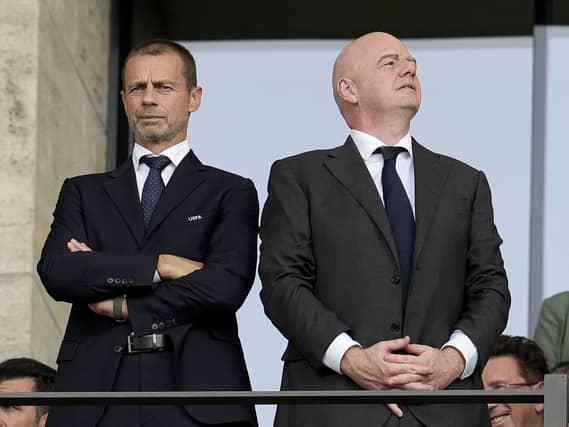

Representatives from UEFA’s 55 national associations held an emergency meeting on Thursday afternoon.
European national teams intend to boycott FIFA competitions until it drops plans to create a new company, backed by private investors, to run its events including the men’s and women’s World Cups.
Here the Press Association takes a closer look.
What has happened?
Representatives from UEFA’s 55 national associations held an emergency meeting on Thursday afternoon, less than 48 hours after reports emerged that FIFA planned to create a new company to oversee the commercial and operational running of its competitions, including the World Cup.
The most controversial aspect of the FIFA Forward Enterprise (FFE) plan was to sell a stake in the company to private equity. The lead investor in FFE, if approved, is set to be Thrive Eternal, a company founded by Joshua Kushner – the brother of United States President Donald Trump’s son-in-law, Jared Kushner.
European nations have now agreed to boycott FIFA competitions until the plans are dropped.
Why are European nations so opposed to the plan?
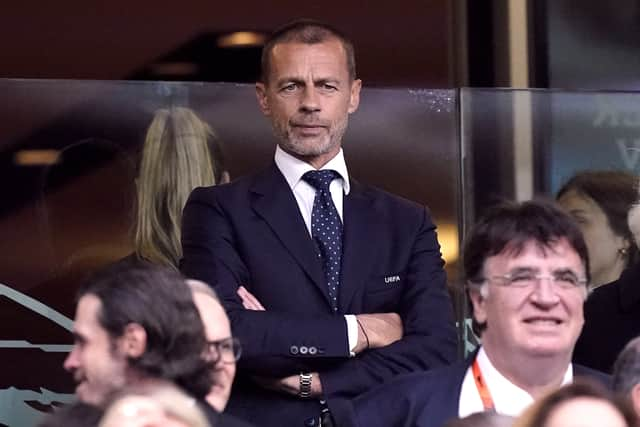
UEFA’s statement on Thursday afternoon attacked what it saw as the cloak-and-dagger conception of the plan – it is understood that even European members of the FIFA Council were unaware of it until Tuesday’s media reports were published. It also described FIFA’s efforts to get associations onside with offers of development cash as “coercion”. FAs were given until September 19 to give the green light, with the promise of additional funding of up to 20 million US dollars (£15m) if they did so.
Arguably the most fundamental issue though is the sale of stakes to private equity, with UEFA’s statement arguing that if this was allowed to happen, the future of football would forever be shaped by what is in the best interests of shareholders – potentially ever bigger, ever more frequent tournaments – with FIFA crucially holding power over the calendar.
Who else is opposed?
The European Football Clubs group, which represents over 800 clubs, expressed concern over the manner in which the plans had come to light while European and world leagues – concerned by the possibility of a FIFA commercial vehicle riding roughshod over the international calendar in pursuit of ever bigger profits – have also voiced their criticism.
Where does this leave FIFA and its president Gianni Infantino?
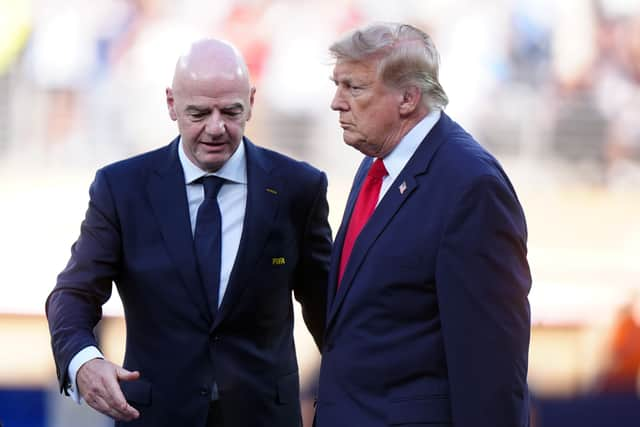
A confrontation between FIFA and UEFA feels as though it has been brewing for months now, but it is difficult to see how FIFA can proceed with a plan to further commercialise the World Cup if European teams are not involved, given their strength on the field and in terms of the interest in the sport across the continent.
What are the next FIFA international tournaments?
The next scheduled FIFA tournament is actually due to be in Europe – the Women’s Under-20 World Cup in Poland starting in September. As things stand, it is open to question whether Poland will host and other European teams will enter.
Following that is the Women’s Under-17 World Cup in Morocco in October and the Men’s Under-17 World Cup in Qatar in November, all ahead of the next major event – the Women’s World Cup in Brazil in the summer of 2027.
FIFA is also due to stage an inaugural boy’s Under-15 football festival in Azerbaijan in October, which was due to be open to all national associations.
What have other FAs said?
The English FA says it stands “shoulder to shoulder” with other European nations, while the Scottish Football Association said it was “aligned with our fellow national associations who seek to ensure our collective voice is heard resoundingly, and that the Corinthian spirit which underpins the beautiful game – invented here in Scotland and shared with the world – is protected”.
The Football Association of Wales (FAW) said it “stood with” its fellow European governing bodies.