What issues will new BBC director-general Matt Brittin have to deal with?
He joins the BBC at a tumultuous time as it faces a lawsuit from Donald Trump over the editing of a documentary.
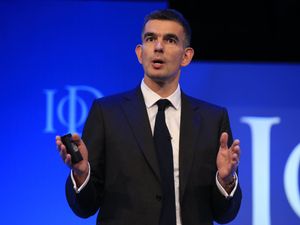
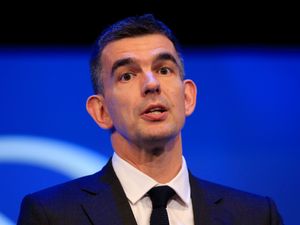
Former Google boss Matt Brittin has been announced as the new director-general of the BBC but what issues will he be dealing with during his first few months in the job?
The 57-year-old joins the corporation at a tumultuous time as it faces a 10 billion dollar lawsuit from US President Donald Trump over the editing of a Panorama documentary, and faces criticism for allowing a racial slur to be broadcast during the Bafta Film Awards last month.
Here are some of the things Mr Brittin will have to look at when he joins the BBC on May 18.
– Donald Trump lawsuit
President Donald Trump launched a 10 billion dollar (£7.5 billion) lawsuit over an episode of BBC documentary series Panorama, broadcast in 2024, claiming it had given the impression Mr Trump encouraged his supporters to storm the Capitol building in 2021 after he lost the election to Joe Biden.

The corporation filed a motion to dismiss the Florida lawsuit earlier this month, in which it warned of the “chilling effect” it would have on “robust reporting on public figures and events”.
In the motion, the BBC cited case law and said: “Early dismissal is favoured given the powerful interest in ensuring that free speech is not unduly burdened by the necessity of defending against expensive yet groundless litigation, which would constrict the breathing space needed to ensure robust reporting on public figures and events.”
Arguing the case should be thrown out, the corporation continued: “All the more so when plaintiff (President Trump) is among the most powerful and high-profile individuals in the world, on whose activities the BBC reports every day.
“The chilling effect is clear.”
The motion went on to cite a “lack of personal jurisdiction” and a “failure to state a claim” as further reasons for wanting the lawsuit dismissed, also arguing Mr Trump’s defamation claim should be dismissed because he cannot show the corporation “purposefully aimed the documentary at Florida”.
Following the lawsuit, BBC chairman Samir Shah apologised on behalf of the broadcaster over an “error of judgment” and accepted the editing of the 2024 documentary gave “the impression of a direct call for violent action”.
It also came shortly before the resignation of outgoing director-general Tim Davie.
– Bafta Film Awards editing incident
The BBC has faced criticism for allowing a racial slur to be broadcast during its coverage of the Bafta Film Awards last month.
During the award ceremony, which was held on February 22, campaigner John Davidson, who has Tourette’s, could be heard shouting as Sinners stars Michael B Jordan and Delroy Lindo presented the award for special visual effects.

Following the incident, the Culture, Media and Sport (CMS) Committee wrote to Mr Davie “seeking an explanation” for how a racial slur ended up in the broadcast “in spite of a two-hour time delay”.
Mr Davie said the BBC “profoundly regrets” the incident and added that it was “a genuine mistake”, which “should never have been broadcast”.
Davidson said that the BBC should have “worked harder” to ensure his racial slur was not broadcast, telling US entertainment magazine Variety that he “had an expectation that the BBC would physically control the sound” at the event.
It came after a previous editing incident, which saw the BBC face criticism for continuing to livestream the performance of punk duo Bob Vylan, as they led chants of “death, death to the IDF (Israel Defence Forces)” at last year’s Glastonbury Festival.
– Licence fee funding
The BBC has said its funding model is “not sustainable and needs reform” in a response to a government consultation on its future, and has said it is “willing to consider radical options for future funding”.
The corporation’s output is currently used by 94% of adults each month but only 80% pay the licence fee, according to the latest figures.
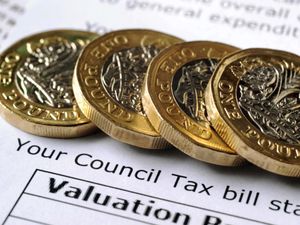
The annual charge will rise to £180 from April 1, up from £174.50, but the BBC has indicated it would be open to a cut to the licence fee or offering more concessions to help with affordability.
At present, there are three concessions funded from licence fee income, including free TV licences for over-75s in receipt of pension credit, half-priced licences for the severely sight impaired or blind, and an annual fee of £7.50 for people living in some types of care.
It has been against a subscription model, which it said would lead to “a very different BBC”, and would “not be universal”, while also appearing to rule out the suggestion of introducing advertising on its channels.
– BBC World Service
The BBC World Service, which is funded jointly by the BBC licence fee and the Foreign, Commonwealth and Development Office (FCDO), has seen its total budget fall by 21% in real terms between 2021 and 2026.
This was mainly driven by reductions in contributions from the licence fee.
Earlier this month, a Public Accounts Committee (PAC) inquiry concluded that the World Service is at risk of losing its position as the most-trusted international broadcaster because it was unable to present a strong case for investment.
While the service provided in 43 languages across the world has an average weekly audience of 313 million, the PAC said there is a serious risk of it losing ground to its rivals, in part because of increased spending on international media by states such as Russia and China.

The two countries invested a combined total of about £6 billion to £8 billion a year in global media operations, at a time when the World Service has experienced spending cuts.
In March, Foreign Secretary Yvette Cooper announced its funding would be increased by an additional £33 million over the next three years.
– Trust issues
Mr Brittin’s predecessor Mr Davie has said public trust in institutions such as the BBC is in “full-on crisis”, acknowledging that the corporation has made some “serious mistakes, which we regret”.
He told the Rest Is Entertainment podcast: “We have a crisis.
“It is – we should call it – a full-on crisis that people do not trust too many of our institutions.
“And in the UK, we’re well ahead of the world. We hate to even be happy about things, but it is a wonder that we have these institutions and they’re there to serve.
“But trust is built and I’m semi-obsessed by this – trust is built by people absolutely believing that someone is acting in their interest and that they listen to them.”
Mr Brittin will be tasked with regaining trust from sections of the public who have turned away from the BBC.