New figures could show fewer living in poverty than previously reported
Households where income is less than 60% of the median national average, after housing costs, are considered to be living in poverty.
Data to be released this week could show the number of people living in poverty in the UK is lower than previously reported, after an improvement in the way the figures are calculated.
Estimates for households classed as being below the average income in the year 2024/25 will be published by the Department for Work & Pensions (DWP) on Thursday.
Households where income is less than 60% of the median national average, after housing costs, are considered to be living in poverty.
Some 14.25 million people fell into this category in 2023/24, including 4.45 million children, according to data published last year.
The Child Poverty Action Group (Cpag) said while the number of children in poverty might be lower under the new measurements, it is likely the trend will still show increases in recent years.
Child poverty has been a major focus for the Labour Government, which recently scrapped the controversial two-child benefit limit – a policy that had restricted child tax credit and universal credit to the first two children in most households.
But as the legislation does not come into effect until next month, and the poverty statistics operate on a 12-month lag, the impact of the rule change will not be evident until the figures for 2026/27, which are likely to be published in spring 2028.
The Government has estimated that removing the two-child limit will lift 450,000 children out of poverty by the end of 2029/30.
The figures to be published on Thursday are based on data from the annual Family Resources Survey, which has been run by the UK government since the mid-1990s.
But while the survey has proved valuable for showing the change over time in levels of income and poverty, it has relied on people giving accurate responses to questions about how much they receive in social security.
These responses have often turned out to be incorrect, with people inadvertently declaring less support – and sometimes more – than they get.
To address this problem, the DWP has introduced a new method to estimate income, which no longer relies on respondents knowing exactly what benefits they receive or how much.
For the first time, benefits data held by the DWP has been linked directly with the records of people who have taken part in the survey.
The improvement to the data “will have a bigger impact on reading the accuracy of incomes at the lower end than at higher levels”, according to the Joseph Rowntree Foundation.
This is because many social security payments are means-tested or less likely to be received by high-income households, such as disability benefits.
As such, the new data is likely to show a larger number of households are getting more of their income from benefits than previously recorded – which in turn could suggest fewer people are below the poverty line than originally estimated.
Figures using the new method of calculating poverty will be published on Thursday for each year from 2021/22 to 2024/25.
Direct comparisons will not be possible with estimates produced using the old method, however.
“Improving the data is a positive step in understanding poverty in the UK,” the Joseph Rowntree Foundation said.
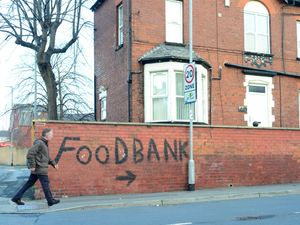
“We know people living on a low income in the UK continue to struggle to afford the essentials, food bank use continues to be at close to record levels and people continue to experience the stigma and trauma of living in poverty, but better measurement helps to accurately quantify the scale of the issue.”
Cpag said: “Addressing benefit under-reporting is sensible to capture more accurate household incomes.”
The group added that if trends in poverty remain the same, “child poverty is likely to be higher in 2023/24 than in 2022/23 and 2021/22, even if there were not 4.5 million children in poverty that year.”