Strait of Hormuz closure: 10 ways it could impact your finances
The Press Association looks at 10 ways that the disruption to the critical international shipping route could impact people’s finances.
US President Donald Trump declared a decision to delay strikes on Iranian energy sites by five days, having threatened an attack if the country does not reopen the Strait of Hormuz by midnight on Monday.
The threat being suspended but not dropped could mean that an effective closure of the critical international shipping route drags on for longer.
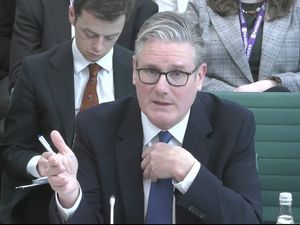
Prime Minister Sir Keir Starmer’s official spokesman said on Monday that the “Strait of Hormuz specifically needs to be reopened”.
Here, the Press Association looks at 10 ways that the disruption to the strait could impact people’s finances.
– Oil and gas
A major impact of disruption to the Strait of Hormuz, connecting the Persian Gulf with the Gulf of Oman and the Arabian Sea, is on the world’s oil and gas supplies.

The strait is a crucial shipping channel, used by tankers carrying about one fifth of the world’s oil supplies and seaborne gas.
In 2024, around 20 million barrels of oil flowed through it per day, the US Energy Information Administration said.
It estimated that more than 80% of the crude oil and liquefied natural gas (LNG) that moved through the Strait of Hormuz went to Asian markets in 2024.
While UK imports from the Middle East are limited, disruption to supplies means demand for alternatives go up, sending global prices higher – which is what has happened to crude oil and natural gas prices in recent weeks.
– Fuel
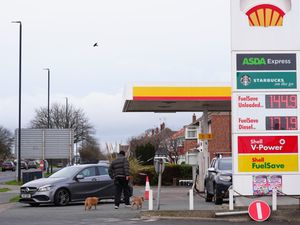
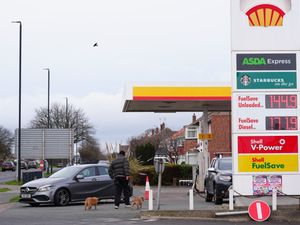
One of the quickest ways that higher crude oil prices filter through to households is via the cost of wholesale fuel, which is sending prices at the petrol pumps sharply higher.
The average price of unleaded petrol has risen by 14p a litre, or around 11%, since before the escalation of the conflict in the Middle East at the end of February, according to the latest figures from the RAC.
The situation is worse for drivers of vehicles using diesel, which has risen by 29p a litre, or about 20%, to reach the highest price since January 2023.
Simon Williams, the RAC’s head of policy, said drivers were “in for a rough ride at the pumps in the run-up to the Easter break with no end to price increases in sight”.
– Household energy bills
The impact of higher wholesale energy prices is likely to take longer to feed through into household gas and electricity bills, with prices currently fixed until the end of June.

But July is when the energy regulator Ofgem sets its next price cap, which will be based on average prices between March and May.
Energy consultancy Cornwall Insight said its forecast for the watchdog’s next price cap had surged to £1,973 a year for a typical dual fuel household – an increase of £332 or 20% on April’s cap.
It is updating its forecasts every week while energy markets remain volatile, and the figure is likely to change.
The Bank of England also warned last week that even a short-lived conflict was likely to leave energy prices elevated for a sustained period, causing it to raise its outlook for UK inflation through 2026.
– Heating oil
Home heating oil, which is used by around 1.5 million households in the UK – primarily in Northern Ireland – is not covered by Ofgem’s price cap.

The UK’s Competition and Markets Authority (CMA) is looking into concerns that households relying on heating oil are facing sudden price increases on the back of the conflict.
The Government recently announced that around £50 million will be made available to help low-income families who heat their homes with oil.
Some £17 million has been allocated to Northern Ireland, England will receive £27 million, Scotland £4.6 million and Wales £3.8 million.
– Fertiliser
Regions in the Middle East are major producers of fertiliser used for farming, such as ammonia and sulphur, so any disruption could drive up costs for farmers around the world.

Experts said fertiliser price spikes could affect products such as bread, cereals, pasta, potatoes and animal feed.
Jonathan Owens, a supply chain expert and senior lecturer at the University of Salford, said: “Rising costs and shipping delays could disrupt planting and harvesting cycles if this plays out for the long term.
“Livestock farmers may also face challenges as feed prices increase, putting additional pressure on meat and dairy production.
“These disruptions could threaten the stability of essential food supplies, making some staples more expensive or harder to find.
“Over time, we may see certain product choices diminish or disappear, like what happened during the pandemic.”
– Shop prices
Rising oil and shipping costs alongside disruption to supply routes and raw materials could start to filter through to shop prices in the months ahead.

Fashion, electronics and homeware could be affected if freight costs increase or delivery times lengthen, as many UK brands rely on global supply routes that pass through or near the region.
Manufacturers and businesses that use a lot of energy could also be impacted by higher wholesale prices, and this could mean that costs are passed through to consumers via higher shop prices.
The impact to shop prices will depend on how long the conflict lasts and how far energy prices remain elevated.
– Perfume and Dubai chocolate
Analysts have said specific categories to watch include fragrance, as the Middle East plays a key role in producing ingredients used in many perfumes, particularly oud and other luxury scent bases.

Marty Bauer, a retail analyst at Omnisend, said: “Luxury confectionery is another area.
“The recent surge in popularity of pistachio-rich ‘Dubai chocolate’ and Middle Eastern-inspired sweets relies on imported nuts and speciality ingredients.
“If shipping routes are affected or costs rise, those products may become more expensive or harder to source.
“The countries currently affected by conflict are also big producers of dates, olive oil, nuts and spices such as saffron.”
– Interest rates
The disruption to the Strait of Hormuz and the knock-on impact on energy prices has already changed the trajectory for UK borrowing costs, which had been on a downward path prior to the conflict.
The Bank of England left interest rates at 3.75% last week in the first unanimous vote since 2021.
And governor Andrew Bailey cautioned that further cuts were “not on the horizon”, while hinting over possible hikes to borrowing costs instead.
Other policymakers at the Bank said interest rates may need to rise in response to persistent pressure on inflation.
– Mortgages
Britain’s biggest lenders have been hiking their mortgage rates over the past couple of weeks, while nearly 1,500 homeowner deals have disappeared from the market, financial information website Moneyfacts reported.

Lenders have been scrambling to increase the mortgage rates they are offering and withdraw some products amid changing expectations for inflation, with the conflict in the Middle East putting pressure on prices.
Swap rates, which are used by lenders to price mortgages, have been rising in recent weeks.
– Investments
The disruption to global energy markets is causing significant volatility in the world’s financial markets, resulting in increased uncertainty for investors.
Experts suggested that investors can benefit from taking a longer-term view of their investments and considering whether their portfolios are appropriately diversified.
Tom Stevenson, investment director for Fidelity International, said: “The swing in relative performance makes a strong case for holding a diversified portfolio, geographically if not at the moment by asset class.
“Holding a good spread of investments can provide a smoother ride over the longer term.
“The ups and downs of the market during periods of uncertainty are the price investors pay for those superior long-term returns.”