Meningitis strain at the centre of Kent outbreak explained
The number of cases linked to the outbreak has reached 29.
Health officials have completed a genetic analysis of the strain of meningitis at the centre of the deadly outbreak in Kent.
But what is the strain and what does this mean?
– What is the strain of meningitis B in Kent?
Following genetic analysis, the UK Health Security Agency (UKHSA) has confirmed the strain in Kent belongs to a group of bacteria known as group B meningococci, sequence type 485 belonging to the larger clonal complex ST-41/44.
Further analysis is ongoing to understand more about the strain, officials said.
– Is this a new variant?
No, it has previously been identified in the UK and is not a new variant.
The UKHSA said similar strains have been circulating in the UK for around five years but detailed analysis of the outbreak pathogen is required.
Brendan Wren, professor of microbial pathogenesis at the London School of Hygiene & Tropical Medicine (LSHTM), said: “This suggests that the strain has not mutated into a more invasive strain, but scrutiny of the full genome sequences and further studies will be required to confirm this.”
– Does the vaccine work against it?
Yes, the current Bexsero menB vaccine should provide protection against this strain.

– How many cases have there been so far?
On Friday, the UKHSA said the number of cases linked to the outbreak in Kent has reached 29, up from 27.
Some 18 cases have been confirmed, alongside a further 11 “probable cases”. Thirteen of the 18 confirmed cases are menB. All cases have required hospital admission.
– Should we expect more cases?
Experts said is it likely that confirmed cases will rise, although there are suggestions the “peak” has passed.
Paul Hunter, professor in medicine at the University of East Anglia, said: “The incubation period though a little uncertain ranges from two to 10 days, so I think we can be fairly certain that the peak from the initial superspreading event will have already passed.”
However, Prof Hunter said secondary cases – people who did not get infected at the nightclub but from someone else who was there – are still a possibility.
Dr Michael Head, senior research fellow in global health at the University of Southampton, said “given the extent of contact tracing from public health teams, and the widespread publicity, it is plausible that we are seeing the tail-end of this outbreak”.

– How many doses of vaccine and antibiotics have been administered in Kent so far?
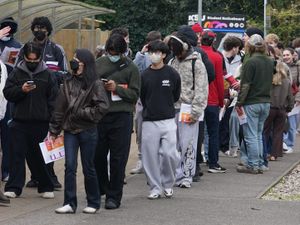
As of 5pm on Thursday March 19, some 2,360 vaccinations had been given and 9,840 doses of antibiotics had been prescribed.
More vaccination centres have also now been opened.
A facility at Faversham health centre started administering jabs at 9am on Friday and will remain open through Saturday, with additional clinics scheduled to open on Saturday at the Vicarage Lane clinic in Ashford and at the University of Kent, NHS England has said.
The Gate clinic at Kent and Canterbury Hospital have been open on Friday and will be open through the weekend for walk-ins.
Two doses of the vaccine are required for protection, with an interval of four weeks between doses.