High Court claim against Gerry Adams over IRA bombings discontinued
Mr Adams was being sued for £1 in damages by three men who were injured in Provisional IRA bombings in England in the 1970s and 1990s.
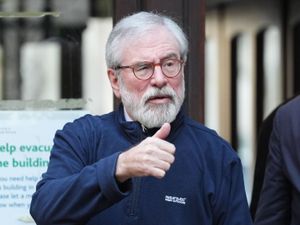
Three victims of Provisional IRA bombings in England have discontinued their High Court damages claim against former Sinn Fein president Gerry Adams.
Mr Adams was being sued for £1 in damages by three men injured in the blasts in the 1970s and 1990s.
John Clark, a victim of the 1973 Old Bailey bombing in London; Jonathan Ganesh, a 1996 London Docklands bombing victim; and Barry Laycock, a victim of the 1996 Arndale shopping centre bombing in Manchester, all alleged that Mr Adams was a leading member of the Provisional IRA on those dates, including of its army council.
The former Sinn Fein president denied the allegations and was defending the claim, telling the court earlier this week that he had “no involvement whatsoever” in the bombings and was never a member of the Provisional IRA.

On Friday, the last day of the two-week trial, Anne Studd KC, for the victims, told the High Court that the claim would be discontinued with “no order as to costs” after “proceedings developed overnight”.
She continued that the development was “related” to an argument around “abuse of process”, but was then stopped by the judge, Mr Justice Swift, who said: “Whatever statement your clients may wish to make outside court is entirely a matter for them.”
“I am happy to make an order in the terms the parties have agreed,” he continued.
Ms Studd then said: “The claimants’ view is that these proceedings have been affected by unfairness.”
Mr Adams was not in court on Friday.
In written submissions for the trial, Ms Studd said the three men claimed that none of the bombings “took place without the knowledge and agreement” of Mr Adams in his role in the Provisional IRA and of its seven-man army council.
She continued that the men believed that Mr Adams was “as involved as the people who planted and detonated those bombs”.
In his evidence, Mr Adams said that opponents of Sinn Fein, of which he was president from 1983 to 2018, “have repeatedly sought to conflate” the party with the Provisional IRA, and stressed that they are “separate organisations”.
He continued that he had “no involvement in or advance knowledge of” any of the bombings, and was “never a member of the IRA or its army council”, telling the court on Tuesday that he was “glad that the IRA has left the stage”.
Edward Craven KC, for Mr Adams, told the court in London that evidence that Mr Adams was involved in the bombings was “extremely limited and we say bordering on non-existent”.
The barrister also said the claim should be dismissed for being brought too late, suggesting the three men were using the claim to try to have a “public inquiry-style” hearing into finding historical truths.
He added that this could be an abuse of the court system.
In their evidence, the three men said the reasons they did not bring claims earlier were that they did not realise they could do so, could not afford it, were suffering from mental or physical injuries and feared violent reprisals.