Yvette Cooper insists the UK will remain a ‘major player’ on aid despite cuts
The Foreign Secretary said hard choices had been made on allocations across the world as the Government aims for ‘partnership not paternalism’.
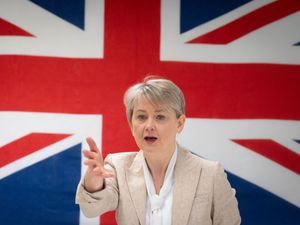
Yvette Cooper has said the UK will remain a “major player” in overseas aid despite widespread cuts to funding.
The Foreign Secretary told MPs hard choices were required when deciding on allocations, but insisted a new approach recognising the need for “partnership not paternalism” would be effective and maintain the UK’s global “leadership”.
In a statement to the Commons, Ms Cooper said: “Allocating a reduced budget inevitably leads to hard choices and unavoidable trade-offs.
“So we’re focusing aid on the people and places that need it most, and we will still be a major player, and expect to be the fifth biggest funder in the world.

“We will still use international leadership, such as our 2027 G20 presidency, to shape the global agenda for development and we will continue to use our other policies and levers so that lower-income countries benefit from trade and growth, and tackling flows of illicit finance and dirty money, which harm developing countries most and fuel crime on everyone’s streets.
“This modernised approach to international development and our allocation of ODA (official development assistance) reflects our values and our interests, because our driving force has been, and continues to be, working for a world free from extreme poverty, on a liveable planet.”
The Government slashed Britain’s aid budget earlier this year from 0.5% of gross national income to 0.3% in order to pay for increased defence spending.
Total ODA spending was expected to fall from £10 billion in 2026-27 to £8.9 billion the following year before increasing slightly to £9.4 billion in 2028-29.
Billed as a “fundamental change” in Britain’s approach to aid, Ms Cooper confirmed the UK would refocus on being an “investor” rather than a “donor”, providing expertise and technical support as well as funding.
Assistance to countries wracked by war has been prioritised, including humanitarian support to Ukraine, Gaza, Lebanon and Sudan.
Support for women and girls will also be a key element, along with efforts to mobilise private investment and the work of international institutions such as the World Bank.
Ms Cooper said: “We will support women and girls, and we will invest in line with our values, even where other countries have changed their development approach.
“So I have taken the decision to make support for women and girls not just the priority for development, but a central theme across the work of the Foreign, Commonwealth and Development Office.
“That means work to prevent violence, to champion political and economic participation and to keep children learning even during conflict.”
Ms Cooper confirmed the Government will withdraw from traditional bilateral funding for countries in the G20 which represent about 85% of the global gross domestic product.
She said: “We have taken the decision to withdraw from traditional bilateral funding for G20 countries, with nations such as Yemen, Somalia and Afghanistan remaining humanitarian priorities.
“Pakistan and Mozambique will remain development priorities but their direct grant funding will be significantly reduced and instead, we will run partnerships for investment.”
The BBC World Service will receive an increase in funding of £11 million per year, while funding for the aid spending watchdog, the Independent Commission for Aid Impact, will be cut by 40%.
Foreign Office minister Baroness Chapman said: “We have had a discussion with them. We think we can make it work so we can keep our external inspectorate.”

Conservative shadow foreign minister Wendy Morton said the announcement lacked details about how the Government would reform aid and development spending.
She said: “We hear warm words about a fundamental change in approach, about moving from donor to investor, but the Foreign Secretary has not told us what that means in practice.
“What programmes have been called this year as a result of these reductions? Which partnerships have been scaled back? Which commitments made by this country will no longer be honoured?
“For decades UK development policy has delivered transformative results around the world.
“It works as its best when we’re not a charity but ruthlessly focused on driving genuine outcomes with genuine objectives, rigorous criteria for selecting projects and a clear view on how to play to our strengths.”
Ms Cooper replied: “She asked a series of questions in particular areas, but I would just also gently point out to her that she has said nothing to explain what her approach would be under a Conservative Party policy which is to reduce development to 0.1% of GNI, a two-thirds reduction on the funding that we are setting out, with no explanation about whether that funding would be cut from Sudan, from vaccines, from the global health support.
“Clear that prosperity and stability in lower-income countries matters for outcomes here at home, for the cost of living, for the security of our borders, for the resilience of our economy and upholding our UK values across the world.
“And clear that the UK’s sustained commitment to international development is about delivering both at home and abroad.”

Sarah Champion, chairwoman of the International Development Committee, said the general “policy and direction” changes outlined by the foreign secretary were “the right thing to do”, but questioned the logic of prioritising defence spending over aid.
She said: “I fear the Government’s decisions have actually been made on a false dichotomy. We have had defence pitched against international development.
“If you ask any military person, they will tell you the best line of prevention and first defence is our development money because it keeps people safe and secure in their homes. It keeps them prosperous, it holds governments to account.
“I am very fearful in the world that we find ourselves in, that taking that first line of defence away is going to have massive consequences.”
The equality impact assessment of the official development assistance (ODA) programme confirmed there will be a 31% reduction in total spend.
Multilateral spend has been prioritised but will decrease by about 22%, therefore benefits at scale “will reduce due to absolute reductions”.
Bilateral ODA will reduce by 37%.