Stay-at-home pandemic order sent message NHS was closed – Covid-19 Inquiry
The coronavirus probe has published its report on the NHS during the crisis.
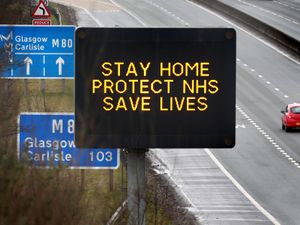
Stay home, Protect the NHS, Save Lives slogans used during the Covid-19 pandemic “sent the message that healthcare was closed”, the inquiry into the crisis has said as it highlighted how the NHS “came close to collapse”.
The message, which was created by Cabinet Office officials without input from health leaders, was part of the reason people were “deterred” from accessing healthcare during the pandemic, according to the UK Covid-19 Public Inquiry findings.
Some people avoided A&E, even for life-threatening emergencies such as heart attacks, did not seek help for other medical conditions to avoid being a burden to the NHS and did not attend hospital for fear of catching the virus, according to the inquiry’s latest report on the NHS during the pandemic.
The report highlights how the need to protect the NHS from being overwhelmed became a key priority for politicians.
Ministers, including former health secretary Matt Hancock, insisted the health service was not overwhelmed during the crisis, but inquiry chairwoman Baroness Heather Hallett said this was “semantics”, adding: “There was clearly overwhelm”.
Lady Hallett said UK healthcare systems “teetered on the brink of total collapse” and coped “but only just”.
Her latest 387-page report says the devastating impact on the NHS was “unsurprising” given the “parlous state” the service was in at the start of the crisis.

Other findings from the new UK Covid-19 Public Inquiry report include:
– Thousands of patients died in hospitals alone and grieving families were “deprived of the opportunity to say goodbye”;
– Pausing elective (non-urgent) treatment in spring 2020 meant millions of people had non-urgent operations cancelled. For some, this meant their condition deteriorated so much that surgery was no longer an option.
– Initial guidance on preventing the infection from spreading was “flawed” because it “failed properly to consider the extent to which the virus was also spread by aerosol transmission”, initially focusing on spread through contact;
– Communications with millions of people shielding during the crisis “were not always appropriately handled”, with some incorrectly told to shield while others were not given the instruction when they should have;

– Decisions made in the early stage of the crisis – including discharging patients from hospitals to care homes – should have been planned for sooner and not in the “turbulent early stages of the pandemic”;
– Lady Hallett highlighted reports of blanket do not attempt cardiopulmonary resuscitation (DNACPR), adding that blanket orders “should not have happened”.
– Pausing cancer screening in some nations – such as pausing the bowel cancer screening programme in Scotland, Wales and Northern Ireland “came at a high cost” and led to “missed and late diagnoses, longer waits for colorectal cancer treatment and ultimately loss of life”.
– Access to healthcare for long Covid “has been and remains variable” across the UK;
The report contains high praise for NHS staff who worked under “intolerable pressure” for months on end.
And it highlights how supplies of personal protective equipment (PPE) were “particularly constrained” at the start of the pandemic, putting healthcare staff at risk as staff sometimes had to work with inadequate and unsuitable PPE.

Lady Hallett said the necessary equipment was in “short supply”, highlighting how supplies of oxygen in some English hospitals “nearly ran out”.
She said the UK entered the crisis “ill-prepared”, with the NHS in a “parlous state”, with severe workforce shortages; low hospital bed numbers and high bed occupancy rates.
“It is unsurprising therefore that the impact on the healthcare systems of the four nations was devastating,” she wrote.
She added: “Politicians, including the secretary of state for health and social care, Matt Hancock, were reluctant to accept that healthcare systems were ‘overwhelmed’, as they chose this to mean total collapse.
“Ultimately, in my view, it is a question of semantics. Whatever word one chooses, healthcare systems were placed under intolerable strain.”
She went on: “There was clearly overwhelm.”

In a statement, she added: “I can summarise that impact as: we coped, but only just.
“The healthcare systems came close to collapse.
“Healthcare workers carried the burden of caring for the sick in unprecedented numbers.
“Collapse was only narrowly avoided thanks to the extraordinary efforts of all those working in healthcare across the UK.
“Despite those efforts, some patients did not get the level of care they would usually receive.
“The enormous strain placed upon the healthcare systems was unprecedented.
“Those working within it were obliged to work under intolerable pressure for months on end.”
The report makes 10 recommendations “to prevent healthcare systems being overwhelmed in the next pandemic”.
These include increasing capacity in urgent and emergency care; strengthening the body responsible for infection prevention and control guidance and better advance care planning.
Lady Hallett added: “We cannot know when, but there will be another pandemic. My recommendations, taken as a whole, should mean that the UK is better prepared for that pandemic.
“In doing so, we shall avoid some of the terrible human cost of Covid-19.”

A Government spokesperson said: “Today’s report makes for sober reading.
“The pandemic had a profound and lasting impact across our society, but its effects were felt particularly acutely within the health and social care system.
“We have every sympathy with those who suffered during this period, and we are deeply grateful to everyone across health and social care who gave so much in the country’s response.
“This Government is committed to learning the lessons of the Covid Inquiry — we are investing in and reforming the health service to make it fit for the future, so it’s there for people when they need it.
“We will consider Baroness Hallett’s findings and recommendations carefully and respond in full in due course.”
The inquiry was formally launched in July 2022.
A report published in November last year found chaos at the heart of government and a failure to take Covid-19 seriously cost 23,000 lives in the first wave of the pandemic.
By the end of December, the inquiry had spent just under £204 million including on setup, chairwoman and lawyer costs and holding public hearings in all four nations of the UK.
And the Government said it has spent £111 million in responding to the inquiry, covering legal advice and staffing costs.