Mother who was told son might not survive meningitis B urges wider vaccination
Gaynor Simpson wants the menB jab to be available to teenagers and young people.
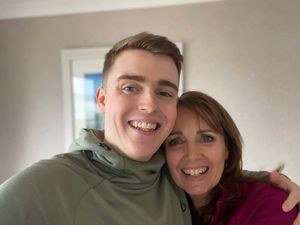
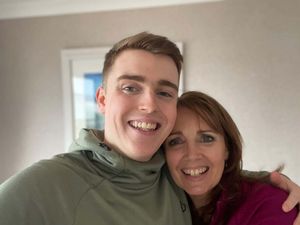
A mother who was warned her student son might not survive as he battled meningitis B has backed calls for a programme to vaccinate teenagers and young people.
Gaynor Simpson said it is “heart-breaking” and “infuriating” that two young people have died amid a meningitis outbreak in Kent when there are vaccines available.
The menB vaccine was introduced on the NHS for babies in 2015 but children born before then have not been vaccinated on the health service.
Mrs Simpson, whose son Ross fell ill aged 18 in 2023, says she would have had him protected “in a heartbeat” if she had known about the vaccine sooner.

Ross, a computing science student at the University of Glasgow, first started feeling unwell with a headache in a flat he was sharing with two others in February 2023.
After his mother suggested he return to be looked after at the family home, his condition deteriorated and she took him to hospital when he described severe pain in his head, a stiff neck and dislike of bright lights – which are among the symptoms of meningitis.
He spent five days on life support at the Queen Elizabeth University Hospital in Glasgow and his family were warned he might not survive.
A lumbar puncture confirmed invasive meningococcal disease, which started to progress into sepsis, blood poisoning.
Mrs Simpson told the Press Association: “He was on life support for five days. The first three of those days were the days where we just we didn’t know.
“We were told it’s very possible that he will not make this, he was that ill.
“He did pull through, he started to turn the corner thankfully, and he was in intensive care in total for 10 days, and then came home to start the long road to recovery.”
Recalling his time in hospital, the mother-of-two said: “You can’t get your head around what it is that you’re being told that your child, who a few hours earlier just felt a little bit off colour and had a bit of a headache, was now on life support, and you were being told it’s very possible that he will not make this because he is so unwell.”
Her son, now 21, has recovered though still sometimes experiences fatigue.
Mrs Simpson is an ambassador for Meningitis Now, which is calling for teenagers and young people to be vaccinated against meningitis B on the NHS and a booster programme by 2030 to protect those vaccinated as babies.
She said: “That’s what I would really like to see happen, that this vaccine becomes available for all the young people as they get to 16, so that we know that they’ve had everything that they can have that’s going to protect them during that window of time when they are at higher risk of developing it.”
Teenagers in school are currently offered the MenACWY vaccine, a single dose jab that protects against four strains of meningococcal bacteria that was also introduced in 2015.
It is also available to those entering university, up to the age of 25.

As authorities continue to deal with the Kent outbreak, UK Health Secretary Wes Streeting has asked the Joint Committee on Vaccination and Immunisation to “re-examine eligibility for meningitis vaccines” for a wider group of people after it previously ruled a menB catch-up campaign for older children was not cost-effective.
The UK Health Security Agency said that as of 5pm on Wednesday, 15 cases had been confirmed and a further 12 were under investigation.
Currently, nine of the 15 confirmed cases are known to be caused by menB.
Mrs Simpson said her son had the MenACWY vaccine but it is “confusing messaging” for parents who think they have done all they can to protect their child by taking up the vaccines offered by the NHS.
She said: “It’s just very confusing for parents when you find out that there’s a vaccine.
“If we had known that there was a menB vaccine, Ross would have had that vaccine in a heartbeat, without question.”
Mrs Simpson, who lives in Bearsden, East Dunbartonshire, and also has a younger son Stuart, 19, said she was “heartbroken” to hear about the deaths in Kent and that it highlights the need for vaccinations for teenagers.
She said: “There’s two mums out there on that day that had the worst possible Mother’s Day.
“It’s heart-breaking, but it is also infuriating, because we know that there’s a vaccine there that could protect and saves lives.”