Campaigners warn of ‘damage’ caused by the Government’s aid decisions
Yvette Cooper announced allocations under the official development assistance (ODA) regime on Thursday.
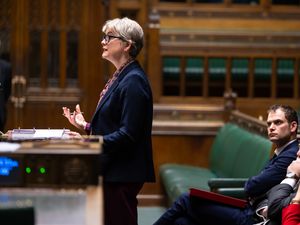
Campaigners and aid organisers have been damning in their assessments of the Government’s funding decisions following cuts to the aid budget, claiming they are set to cause widespread damage.
Yvette Cooper announced allocations under the official development assistance (ODA) regime, which distributes money to specific countries and programmes, saying the UK will remain a “major player” in overseas aid and development despite shifting funding to defence.

Aid spending will fall to less than 0.4% of national income this year before falling again to 0.3% in 2027 under plans announced by Sir Keir Starmer last year.
The Foreign Secretary told MPs hard choices were required when deciding where to focus capacity, but insisted a new approach recognising the need for “partnership not paternalism” would be effective.
However, organisations operating in the sector insisted the cuts would severely limit efforts to improve lives.
Romilly Greenhill, chief executive of Bond, the UK network for non-Governmental organisations, said: “Today’s allocations show the harsh reality of Labour’s cuts to the UK aid budget, the steepest in the G7 – lives lost, the UK’s reputation in tatters, and a poorer, more unequal and unstable world for us all.
“Africa and the Middle East, both home to some of the world’s least-developed countries, will be forced to pay the highest price because of the reduced budget.”
Mr Greenhill welcomed the Government’s commitment to supporting women and girls, the pivot away from rich countries and continued support for places of conflict such as Gaza, Sudan and Lebanon.
But he called for details on allocations to individual countries to clarify whether support for some of the world’s most marginalised countries will continue.
Mr Greenhill added: “At a time of increasing global instability, we urge the UK government to meet rhetoric with action and broaden its commitment to an ambitious development agenda.
“This must include a sufficient UK aid budget to help meet humanitarian need worldwide, and leadership on much-needed reforms to global systems that trap the lowest income countries in unjust cycles of debt and prevent them from investing in their own public services.
“Ahead of the UK’s G20 leadership next year, the UK needs to step up and build back its shattered reputation, limit the damage already caused by its political choices, and help build a safer, healthier and more prosperous world for us all.”
The ONE Campaign, a global advocate for the investment in Africa, said UK bilateral aid to the continent is due to be cut by almost £900 million by 2028-29 – the largest regional cut in absolute terms.
Analysis by the organisation found UK aid cuts are set to be steeper than any other country in the G7, going even further and faster than the United States.
Adrian Lovett, UK executive director of the ONE Campaign, said: “Today’s figures lay bare the true scale of these cuts and the damage they will do.
“Slashing bilateral aid to Africa, where need is greatest, will have a devastating impact.
“These choices will leave millions without access to basic healthcare, education and urgent humanitarian support, and risk a resurgence of deadly diseases we’ve spent decades trying to fight.”

Ian Mitchell, co-director of the Europe programme at the Centre for Global Development, said UK aid assistance is set to fall to its lowest share of national income on record by 2027 and also raised concerns about the approach to Africa.
He added: “If the government is determined to proceed on this path, prioritising effective multilateral organisations (where UK taxpayers’ money has the greatest impact) and fragile states is the right approach.
“But reducing the share of aid going to Africa, where most fragility, poverty, and future opportunity are concentrated, is difficult to justify and risks making talk of ‘global partnerships’ ring hollow.
“There remains strong public support for helping those most in need — and for a government serious about tackling extreme poverty, that means a clear focus on Africa.”
Action Aid, an international charity working with women and girls living in poverty, said the true impact of the Government’s deep cut to the official development assistance budget “has become painfully clear”.
Hannah Bond and Taahra Ghazi, co-chief executives of ActionAid UK, said: “We’re pleased to see the Foreign Secretary acknowledge that women and girls disproportionately bear the brunt of poverty, violence and conflict by promising to make them a priority – but without backing up this pledge with increased long-term funding, it rings hollow.
“The announcement that international climate finance will be reduced is a huge betrayal for women and girls on the frontline of the climate crisis and of this government’s own manifesto commitments on climate and gender equality – and comes at a time when urgent scaling up is needed as the frequency and scale of climate emergencies intensifies.
“This finance should never have been taken from ODA in the first place: the government could and should be raising funds through progressive taxation and fines for big polluters, and the banks which finance them.”

The International Rescue Committee (IRC) warned that reducing support to Afghanistan while freezing study and skilled‑worker visas “risks sending a signal that Afghans are being forgotten”.
Flora Alexander, IRC UK executive director, said: “Reducing direct UK support to some of the world’s most severe humanitarian emergencies will have devastating consequences.
“It also raises important questions about how the UK’s commitments apply in places like Afghanistan, where women and girls continue to face extremely restrictive conditions.
“Cutting aid, whilst simultaneously freezing study and skilled worker visas for Afghan nationals, risks sending a signal that Afghans are being forgotten.”
In a statement to the House of Commons, the Foreign Secretary said: ““We will still use international leadership, such as our 2027 G20 presidency, to shape the global agenda for development and we will continue to use our other policies and levers so that lower-income countries benefit from trade and growth, and tackling flows of illicit finance and dirty money, which harm developing countries most and fuel crime on everyone’s streets.”