BBC World Service to see funding increased by extra £33m
The World Service is provided in 43 languages across the world and has an average weekly audience of 313 million.
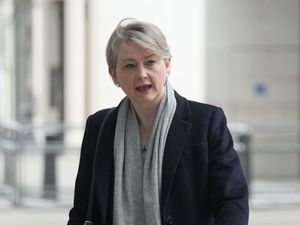
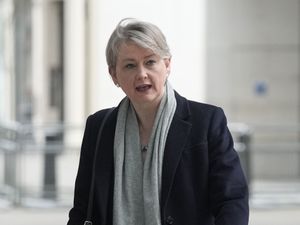
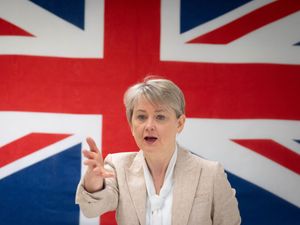
The BBC World Service will see funding increased by an additional £33 million over the next three years, Foreign Secretary Yvette Cooper will confirm today.
Ms Cooper said the service “provides hundreds of millions with journalism they can trust and rely on” and “offers clarity, accuracy and an independent voice where reliable information is increasingly difficult to access”.
The World Service is funded jointly by the BBC licence fee and the Foreign, Commonwealth and Development Office (FCDO), and saw its total budget fall by 21% in real terms between 2021 and 2026.
This was mainly driven by reductions in contributions from the licence fee.
The FCDO said it will increase funding by an additional £11 million per year for the next three years, representing an 8% increase on the previous year’s allocation.
It said the provision of accurate news reporting around the world has never been more crucial and that, by increasing funding, “the Government is acting in Britain’s interests, supporting our security and promoting our culture and values to the world”.
The FCDO said the funding boost for the international broadcaster takes total funding to 42% higher than in 2024-25.
It said this means it can keep delivering impartial, accurate and trusted journalism to people in countries like Iran where – despite the BBC being banned - one in four people sought out access before the internet shutdowns in January.
Cooper said: “In a world of rising disinformation, the BBC World Service provides hundreds of millions with journalism they can trust and rely on.
“It offers clarity, accuracy and an independent voice where reliable information is increasingly difficult to access.
“We are seeing in real time how the BBC Persian service is playing a crucial role in ensuring impartial, accurate news is reaching the Iranian people.
“This further increase in FCDO support ensures that independent, impartial reporting continues to reach audiences who depend on it.”
Earlier this month, a Public Accounts Committee (PAC) inquiry concluded that the World Service is at risk of losing its position as the most-trusted international broadcaster because it was unable to present a strong case for investment.
While the service provided in 43 languages across the world has an average weekly audience of 313 million, the PAC said there is a serious risk of it losing ground to its rivals, in part because of increased spending on international media by states such as Russia and China.
The two countries invested a combined total of about £6 billion to £8 billion a year in global media operations, at a time when the World Service has experienced spending cuts.
In addition to support for the World Service, the FCDO said the UK works with partners to defend strong independent journalism around the world.
The UK currently holds the position of co-chair of the Media Freedom Coalition alongside Finland.
The Government is later expected to publish further figures on how it will spend the aid budget for the next three years.