Dunblane 30 years on: ‘It’s a wound that’s there forever’
On March 13 1996, 16 pupils and their teacher were shot dead at Dunblane Primary School in what remains the deadliest mass shooting in UK history.
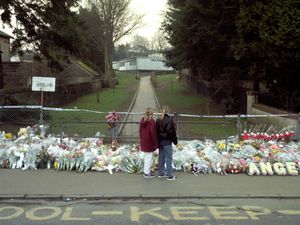
As the nation marks 30 years since the Dunblane massacre, the sister of one of the victims has described her grief as “a wound that’s there forever”.
Rachael Irvine’s brother Ross was a pupil at Dunblane Primary School when on the morning of March 13 1996, Thomas Hamilton walked in armed with four handguns and hundreds of rounds of ammunition.
Minutes later, Ross and 15 other Primary One children had been murdered, along with their teacher Gwen Mayor, before Hamilton turned one of the guns on himself.
Fifteen others – 12 children and three adults – were also injured, in what remains the deadliest mass shooting in British history.
The incident plunged a shocked nation into mourning, and the UK Government soon introduced a ban on most handguns.
Thirty years on from the death of a brother she never met, Ms Irvine, 28, spoke of the grief her family – and families like hers – continue to feel every day.

“In terms of the loss of the child and the family member, that’s not something that ever goes away,” she said.
“I think it’s a wound that’s there forever.
“Life continues, but you don’t ever stop thinking about your child. You don’t ever move on from your child.
“You’re always thinking about them. And of course it’s especially poignant on the 30th, but it’s true every day.”

Ms Irvine lived in Dunblane until she was seven, and said the event had been a “very profound moment” in the history of the town.
“In many ways, it’s defined Dunblane,” she said.
“I imagine because no-one ever thought that something like that would happen there. But of course, it can happen anywhere.”
She and her family will mark the 30th anniversary by travelling to Ayr to visit Ross’s grave, as they do most years around March 13.

Her family chose to bury him there because that was where he spent most of his life, with her family only moving to Dunblane in the autumn of 1995, around six months before the shooting.
“I think it’s very hard for them,” Ms Irvine said.
“I know for my mum, in some ways she feels like they brought him there to die, which of course is not at all the case.
“But those are the kinds of things you think as a parent when something like that happens to your child.”

Asked to describe Ross, Ms Irvine said he had been “a fun-loving, outgoing, chatty boy”, and “very full of life”.
“He really loved to talk to people. He was very good at it, and he could talk to people of any ages,” she said.
“He was very curious about the world. He had a lot of interests and the things he loved, he was really invested in.”
She said he “really loved” dinosaurs and could name “almost all” of them, and that he also loved trains, the Thunderbirds and The Animals Of Farthing Wood.
She recalled her mother saying that when he was at Dunblane Primary School, Ross would always ask if he could bring in an extra snack for one of his friends.

“It’s a small thing, but I think it says a lot about about who he was and and his personality,” she said.
Despite never meeting her brother, Ms Irvine said Ross was “always present” in the family home through photographs and stories, and that “his belongings and pieces that he left behind were always there”.
Two years ago, Ms Irvine joined the Gun Control Network, which was set up in the wake of the massacre to campaign for stricter gun control laws.
She said she was motivated by the “frustration” at seeing the gun violence in other countries, and the “backsliding” on gun laws in countries where they have previously been considered strong.

She also said she hoped someone of her age getting involved will help educate a younger generation about the importance of the laws brought in after Dunblane.
“Many people of my age wouldn’t be aware of Dunblane and what happened, and why we have the strong gun laws that we’ve grown up under,” she said.
“I think I take it for granted, because, of course, it’s a part of my life.”
She added: “So if there’s any way where I can just help to shed light on the issue and bring attention to it for younger generations, I think that’s really important.”