Gerry Adams was ‘de facto leader’ of IRA, court told
Three men injured in IRA bombings are bringing legal action against Gerry Adams.
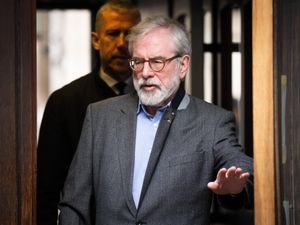
Gerry Adams was the “de facto leader” of the IRA, a police intelligence officer has told the High Court.
Giving evidence for the civil trial against the former Sinn Fein president, witness B, who cannot be named, said he concluded that Mr Adams was “undoubtedly a member of the Army Council”.
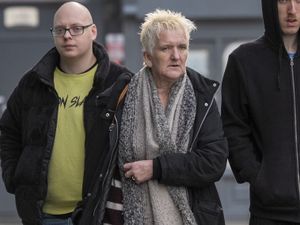
The case has been brought by victims of three bombings in England: Jonathan Ganesh, who was injured in the 1996 London Docklands bombing; John Clark, a victim of the 1973 Old Bailey bombing in London; and Barry Laycock, a victim of the 1996 Arndale shopping centre bombing in Manchester.
The three men allege that Mr Adams was a leading member of the Provisional IRA on those dates, including of its Army Council, and are seeking £1 in damages.
Mr Adams denies ever being in the Provisional IRA and is defending the claim.

In a statement for the trial on Thursday, witness B said: “A great deal of intelligence which I read communicated, both explicitly and implicitly, that Adams was a senior member of the IRA Army Council and the de facto leader of the IRA.”
He also said that if Mr Adams did not hold a high rank in the IRA, then he pulled off “a remarkable coup” in convincing the British, Irish and US governments, as well as many IRA members, that he was.
The witness added: “Had the defendant not been the senior figure in the IRA that he was, there would have been absolutely no point in the British, Irish and United States governments dealing with him the way they did on the road to the Good Friday Agreement in 1998.”
A handful of protesters surrounded Mr Adams’ car as he arrived at the High Court on Thursday, shouting and holding placards.
In court, witness B sat behind a screen while being cross-examined.
James Robottom, for Mr Adams, said it was previously a criminal offence to be an IRA member.
He said there is “no evidence” Mr Adams was arrested for a criminal offence until the 21st century.
Witness B replied: “I would say he was consistently being looked at to see if there was any evidence that would meet the criminal burden of proof.”
He also said that “very few people” were prosecuted for membership of the IRA and that it was usually “added on if someone was caught red-handed with guns or bombs”.
Witness B described the Army Council as a “very strong” and “disciplined” body and that no attack, such as the bombings in London and Manchester, would have taken place without its approval.
He said: “The operations outside Northern Ireland specifically required Army Council authority and especially something as significant as breaking the ceasefire, that would have been authorised by the Army Council, decided on by the Army Council.”
Mr Robottom also put to the witness that Mr Adams was one of the people pushing hardest for peace in the 1990s.

Witness B said: “Our assessment is not simply because he wanted peace, but because he knew his organisation was going nowhere and he wanted to extract the best possible price.
“He was the one truly strategic leader they had. He is a strategic thinker, that’s why he is where he is today.”
Edward Craven KC, for Mr Adams, said at the start of the trial on Monday that the former Sinn Fein president “emphatically, unequivocally and categorically denies that he was ever a member of the IRA”.
He also said there was “no shortage of people with an axe to grind” who sought to discredit his client.
People such as British officials, members of the Royal Ulster Constabulary or other republicans opposed to the peace process had an interest in discrediting Mr Adams, the barrister added.
In written submissions, Mr Craven said: “The defendant’s alleged factual and legal responsibility for the claimants’ injuries is strongly contested, as is the claimants’ ability to bring these claims against the defendant several decades after the expiry of the applicable limitation period.”
The trial, before Mr Justice Swift, is due to conclude next week.