‘Static’ Al Quds Day protest could still cause serious disorder, Mahmood told
The Home Secretary approved a request on Tuesday from the Metropolitan Police to ban the annual march in London planned for Sunday.
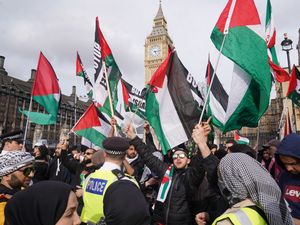
An Iran-linked march banned by the Government could still cause serious disorder if it is allowed to go ahead as a “static protest” this weekend, a former political violence tsar has warned.
Lord Walney said there was a “loophole” in public order legislation meaning ministers did not have the power to stop rallies that stayed in one location.
Home Secretary Shabana Mahmood approved a request on Tuesday evening from the Metropolitan Police to ban the annual Al Quds Day march in London planned for Sunday “to prevent serious public disorder”.
But the Islamic Human Rights Commission (IHRC), which organises the protest, has said it will now go ahead as a static rally instead.

The protest had drawn criticism over apparent backing for the Iranian regime after its organisers expressed support for the country’s late leader Ayatollah Ali Khamenei.
Lord Walney, the former independent adviser on political violence, said the Home Secretary should look again at the issue urgently.
He told the Press Association: “It was the right decision to ban this due to the risk of serious disorder, but it’s not clear how that risk would be substantially lessened if they go ahead with a static protest.
“So this does highlight the loophole in our public order legislation, which is well-intentioned due to the freedom of assembly.
“But that freedom is not absolute, and in exceptional cases like this, it makes sense for the police to be able to recommend that a large, static protest doesn’t go ahead either.
“It is a loophole, and given the volatility of the situation which is already spilling over to British streets, I hope this is an issue that the Home Secretary will look at urgently.”
Ms Mahmood’s decision represents the first time a protest march has been banned since 2012.
It was due to start outside Downing Street before going past Parliament and ending outside the Home Office.
Scotland Yard said previous Al Quds Day marches had resulted in arrests for supporting terrorist organisations and antisemitic hate crimes.
In a statement on the organisation’s website, the IHRC said it “strongly condemns” the banning decision and was seeking legal advice.

Confirming that a “static protest” would go ahead on Sunday, the statement said: “The police have brazenly abandoned their sworn principle of policing without fear or favour. They cannot present evidence because there is none.
“In essence, this is a politically charged decision, not one taken for the security of the people of London.”
The decision follows calls from Labour and Conservative MPs to ban the march.
Al Quds Day is named after the Arabic name for Jerusalem, and is usually held on the last Friday of Ramadan.