Fact check: Postal votes made up majority of ballots in one 2025 local election
There were 23 local elections held in England in May 2025.
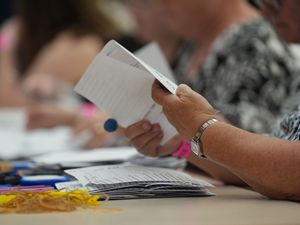
Reform UK leader Nigel Farage said at a press conference on Monday that 34% of turnout in the 2025 local elections were postal votes.
In reference to the local elections due to be held in England later this year, Mr Farage said: “You may well find that there are council elections determined where up to 50% of the vote will be postal vote.”
Evaluation
The Electoral Commission’s report on the local elections in England in May 2025 shows 34% of votes counted were postal votes.
While postal voter turnout in upcoming elections can not be predicted, Press Association analysis of the 23 local elections held last year shows just one area – Northumberland – recorded postal votes accounting for more than half of ballots counted, at 51%.
The facts
In England, anyone who is registered to vote is eligible to vote by post.
Local elections took place in 23 local authorities in May 2025, including at 14 county councils, eight unitary authorities and one metropolitan district.
There were also six mayoral elections.
The Electoral Commission’s report on the local and mayoral elections recorded 1.6 million postal votes – accounting for 34% of all ballots counted.
The report added those registered as postal voters were more likely to vote, with the proportion of people doing so increasing since the Covid-19 pandemic.
The turnout for registered postal voters in the May 2025 elections was 69%, compared with 27% for in-person voters.
PA analysis (download) of the report’s supporting data shows Northumberland, a unitary authority, was the only local election that recorded postal votes accounting for more than half of ballot papers counted, at 51%.
It was followed by Doncaster (48%) – which the Electoral Commission confirmed includes data on its council and mayoral elections – and by Durham (41%).
Oxfordshire had the lowest level of postal voting at 25%, while Buckinghamshire, Cambridgeshire, and Shropshire all recorded 29%.
Analysis of data on individual wards rather than entire council areas found 63 of the 1,400 wards (5%) involved in the local elections recorded postal votes accounting for half or more of all ballots counted.
On May 7 this year, 134 of England’s 317 councils will hold local elections. There will also be two “shadow elections” for new unitary authorities due to be created in 2027.