February demand for new cars hit 22-year high
Some 90,100 new cars were registered last month, latest figures suggest.
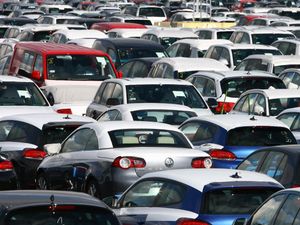
The UK’s new car market recorded its strongest February sales in 22 years despite demand for new electric vehicles (EVs) stalling.
Some 90,100 new cars were registered last month, the Society of Motor Manufacturers and Traders (SMMT) said.
That was an increase of 7.2% from 84,054 during the same month last year, and represented the highest February volume since 2004.
February registrations are often volatile as it is typically a lower volume month because many buyers prefer to wait for the March numberplate change.
Demand was largely driven by recovering private retail registrations, which were up 17.6% year-on-year.
Uptake for fleets owned or leased by businesses or other organisations accounted for nearly three out of five sales, and increased by 1.8%.
The market share of pure battery electric new cars was down from 25.3% a year ago to 24.2%, which is the second consecutive month of decline.
The SMMT said this partly reflected the strong start to 2025, when some electric vehicle buyers brought forward sales to avoid the introduction of new tax rates.
Registrations for the cars still rose by 2.8% in February.
Petrol cars were up 5.2%, while diesels fell 3.8%.
Plug-in hybrid electric vehicles saw a 43.5% spike in registrations.
Mike Hawes, SMMT chief executive, said: “The UK’s new car market is continuing to recover and EV volumes are growing too, even if market share remains disappointing.
“All eyes are now on ‘new plate’ March, which typically sets the tone for the year – and given sales of new pure petrol and diesel cars are currently required to end in less than four years, EV uptake must accelerate rapidly.
“Manufacturers have committed monumental investment to drive demand but such costs cannot be sustained indefinitely, making a review of the transition an urgent priority to ensure ambition matches natural demand.”
Ian Plummer, chief customer officer at online vehicle marketplace Autotrader, said: “February delivered another solid month for the new car market, reflecting the underlying strength of buying demand we’ve continued to see so far in 2026.
“While the situation in the Middle East adds a potential layer of uncertainty for businesses and consumers amid wider economic disruption, the new car market has remained resilient so far.

“Any sustained shock to oil prices is likely to increase interest in electric vehicles when it feeds into petrol prices, as we saw in 2022.”
Ginny Buckley, chief executive of electric car buying advice site Electrifying.com, said: “The worst thing ministers could do now is send mixed signals on EV running costs.
“The direction of travel is clear: drivers want cheaper running costs and greater energy security.
“Policy should reinforce that shift towards fully electric vehicles, not slowing it down.”
Under the Government’s zero-emission vehicle (Zev) mandate, at least 33% of cars sold by each manufacturer this year must be zero-emission, which generally means pure battery electric.
But companies are able to use flexibilities to achieve compliance, such as selling large numbers of plug-in hybrids.