Tax burden heading to ‘uncharted territory’ with risk to growth, OBR warns
Budget responsibility committee member Professor David Miles said there was ‘clearly a risk’ in the historically high tax burden.
The historically high tax burden could be stifling growth, a senior member of the budget watchdog has warned.
The Office for Budget Responsibility (OBR) slashed its growth forecast for 2026 but has signalled modest improvements in 2027 and 2028.
But David Miles, a member of the OBR’s budget responsibility committee, said there was uncertainty because the tax burden was moving into “uncharted territory”.

The tax burden, or tax take, is a measure of how much the Government collects in taxation, expressed as a proportion of gross domestic product (GDP), a measure of the size of the economy.
The burden is forecast to be 36.3% in 2025/26, unchanged from the previous forecast, then rise in every successive year to reach 38.5% in 2030/31, above the previous forecast of 38.3%.
This is the highest level since current records began in 1948.
Prof Miles said: “The scale of this rise will be large. Taxes relative to GDP are on a trajectory at the moment that looks like they may rise, relative to a couple of years ago, by about five percentage points in GDP. So that’s a big increase in taxes.
“It would take the tax take of GDP in the UK probably higher than it’s been since the end of the Second World War.
“So this is, in recent economic history of the UK, going into uncharted territory.”

The UK economy is forecast to grow by 1.1% in 2026, lower than the previous forecast of 1.4% made by the OBR in November last year.
The forecasts published on Tuesday indicated GDP will grow 1.6% in 2027 and 2028, up from 1.5% each year, with the forecasts for 2029 and 2030 unchanged at 1.5%.
Speaking at a Resolution Foundation event, Prof Miles said those projections could be optimistic because of the impact of the tax burden.
He said there was “clearly a risk” in increasing the tax rate “unless you’re very clever in how you do it and can manage to increase the average tax rate without increasing marginal tax rates substantially and eroding incentives to invest, for people to work and save and for companies to employ people”.
If that could happen “then maybe the harm done to growth will be minimal” and perhaps even less than the OBR had already factored in to its forecasts.
But, he added: “The pessimistic side of all that would be that the UK already has, in certain areas, very high marginal tax rates and that some of those will go higher and some of those that are lower will catch up with the high ones and that will do further damage and really constrain growth.”
The OBR’s forecasts were drawn up before the economic shock of the Middle East conflict, which has hit energy prices – something which could feed through into the wider economy through higher inflation.
The Resolution Foundation think tank said the nation’s immediate economic future is “highly uncertain”.
Ruth Curtice, the organisation’s chief executive, said: “The immediate economic outlook for Britain is highly uncertain, with yesterday’s forecasts already looking out of date, while the living standards picture for the rest of the parliament is very lopsided.
“This coming year is set to be a decent one for living standards, and a bumper one for poorer families, as wages and benefit support rise above the level of inflation. But a fresh energy price shock risks puncturing this good news.
“With wage growth set to tail off, the living standards picture for the rest of the parliament is bleak.”
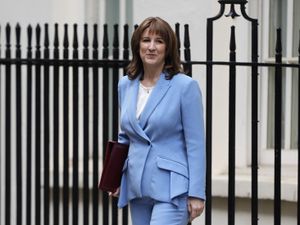
In a statement responding to the OBR’s forecasts on Tuesday, Chancellor Rachel Reeves insisted she had the “right economic plan” which was “even more important in a world that has become yet more uncertain in the last few days”.