Bereaved to keep up justice fight as UK Covid-19 Inquiry witness evidence ends
Hearings in the inquiry’s 10th and final module, examining the pandemic’s impact on society, will conclude on Thursday.
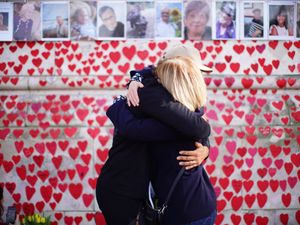
Bereaved families have vowed to keep fighting for justice in memory of their loved ones as the final witness testimony was heard in the UK Covid-19 Inquiry.
Wednesday afternoon heard the last of the evidence from those whose relatives died and was a described as a “moment (which) belongs to many people”.
The Covid Bereaved Families for Justice (CBFFJ) campaign group said key among those are the “thousands bereaved by Covid across the country who came together and refused to be silent”.
Relatives gathered outside the inquiry hearing centre in London on Wednesday, holding photographs of loved ones ahead of a minute of silence in their memory.
Hearings in the inquiry’s 10th and final module, examining the pandemic’s impact on society, are expected to conclude on Thursday with lawyers’ closing statements.
The impact of lockdowns on domestic abuse victims, the homeless and bereaved unable to attend loved ones’ funerals were among the issues examined as part of the inquiry’s last section.
Matt Fowler, co-founder of CBFFJ UK and the first person to paint a heart on the National Covid Memorial Wall in London, pledged the group’s work will carry on.
Speaking outside the inquiry on Wednesday, he told those gathered: “Over the years, we have heard hundreds of hours of evidence, and although only two of 10 reports have been published so far, the inquiry’s verdict on those in power during the pandemic has already been utterly damning.
“Thousands of lives cut short because of government incompetence, chaos and callousness.
“That is what this inquiry has exposed. And that truth is now on the public record.”
The inquiry was formally launched in July 2022 and a report published in November last year found chaos at the heart of government and a failure to take Covid-19 seriously cost 23,000 lives in the first wave of the pandemic.
Inquiry chairwoman Baroness Heather Hallett’s report on the government response to Covid accused then-prime minister Boris Johnson of being too “optimistic” in his outlook in the early months of 2020.
He presided over a “toxic” culture in No 10 and regularly changed his mind, while Cabinet members including then-health secretary Matt Hancock plus key scientists all failed to act with the urgency needed to tackle the virus, her report concluded.
While public hearings are concluding this week, further reports will be published in the coming months from the inquiry’s other modules. including on healthcare systems, vaccines and therapeutics, procurement, the care sector as well as the test, trace and isolate system.
Mr Fowler said future reports “will give us a blueprint for saving lives”.
He added: “Our job now is to ensure the blueprint turns into action. Another crisis is inevitable. It is a question of when, not if, and despite more than five years having passed since the start of the pandemic, we are still not prepared.
“So the Government must use the blueprint this inquiry provides to change the country for the better, to take brave, decisive, urgent action.”
Campaigners said they will “pursue accountability for the deaths of our loved ones through every route available to us” and to “ensure that the country continues to remember those we lost and the cost that the pandemic continues to exact on everyone, from the bereaved to those suffering with long Covid”.
Mr Fowler added: “We will keep fighting for justice.”
By the end of December the inquiry had spent just under £204 million including on setup, chairwoman and lawyer costs and holding public hearings in all four nations of the UK.
An inquiry spokesperson said: “The inquiry has the broadest scope of any previous public inquiry. The most expensive part of the inquiry’s work comes to an end in early March with the conclusion of its programme of public hearings.
“Focus then moves to writing the inquiry’s remaining reports, five of which will be published this year and three in the first half of 2027. Its recommendations, if implemented swiftly and in full, will ensure that the UK is better prepared for when another pandemic strikes.
“Only a fraction of the billions spent during the Covid-19 pandemic needs to be saved next time for this inquiry to have been worth it.”