Middle East faces uncertainty after Trump claims Ayatollah killed
The UK Government has not yet commented on reports of the Iranian Supreme Leader’s death.
The Middle East faces further uncertainty after Iran’s Supreme Leader was reportedly killed in joint US-Israeli strikes on the country.
US President Donald Trump claimed Ayatollah Ali Khamenei had died in the attacks on Saturday morning and urged the Iranian people to seize “the single greatest chance … to take back their country”.
The Government has not yet commented on reports of the Ayatollah’s death, but shadow foreign secretary Dame Priti Patel said: “No-one should shed any tears for the death of Khamenei.”
Saturday’s attack prompted retaliation from Iran, with strikes reported in several Gulf countries including the United Arab Emirates, Qatar, Bahrain and Saudi Arabia.
Hundreds of thousands of British nationals are believed to be present in the Gulf, and those in Bahrain, Israel, Palestine, Qatar and the UAE have been urged to register their presence with the Foreign Office.
The US and Israel described the attacks as a “pre-emptive” strike against a Tehran government intent on developing nuclear weapons.
Talks between the US and Iran aimed at resolving the issue of Tehran’s nuclear ambitions ended on Thursday without agreement, but were expected to resume at a later date.
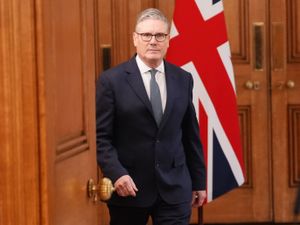
Following the strikes, Sir Keir Starmer convened the Government’s emergency Cobra committee on Saturday morning, before consulting with European and Gulf allies.
Later on Saturday, Sir Keir spoke to Mr Trump to discuss the situation and set out the UK’s role in defensive operations in the region.
In a joint statement with the leaders of France and Germany, the Prime Minister condemned Iran’s retaliation and urged Tehran to “refrain from indiscriminate military strikes” and “seek a negotiated solution”.
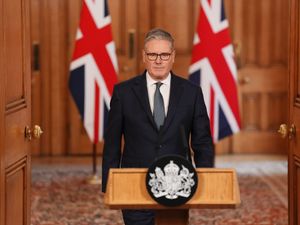
Speaking from Downing Street, Sir Keir said the UK had not been involved in the strikes, but had subsequently deployed aircraft “as part of co-ordinated regional defensive operations to protect our people, our interests and our allies”.
He added that protections had been stepped up for British bases in the Middle East and the Government was “reaching out to UK nationals in the region and doing everything we can to support them”.