Woman told Valdo Calocane could have killed her years before attacks – inquiry
Calocane, who was diagnosed with paranoid schizophrenia, killed three people and injured three others in Nottingham in 2023.
A police officer warned a woman who jumped out of a window from fear when Valdo Calocane kicked at her door that she could have been killed by him, the Nottingham attacks public inquiry has heard.
Calocane had already been arrested earlier that same day on suspicion of causing criminal damage to a different door, but the incident was not given “the attention it deserved” and police body-worn camera footage of that arrest cannot be found, chairwoman to the inquiry Deborah Taylor heard on Thursday.
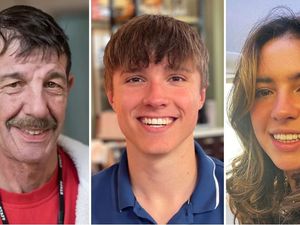
The former student killed University of Nottingham undergraduates Barnaby Webber and Grace O’Malley-Kumar, both 19, and grandfather Ian Coates, 65, and attempted to kill three more people in the early hours of June 13, 2023.
The inquiry heard that more than three years earlier, on May 24 2020, a young woman thought there was a group of thieves trying to break in when the triple-killer, who on another day threatened to rape his neighbour’s partner, shook her door while she was having a shower.

An officer who visited the woman after she was discharged from hospital with injuries to her spine told her she had been “brave” when she escaped and that Calocane could have killed her or been violent if he got to her, the inquiry was told.
The woman, who has not been named, gave evidence with the help of an interpreter and said she heard “someone knocking repeatedly on the door”, which “became louder and louder with kicks”.
When the woman asked who was there, Calocane replied “it’s me, open, open”, the inquiry heard.
She said: “I could see that the door was shaking, I could feel it coming off.
“I thought as a matter of fact it was a group of thieves or someone who wanted to hurt me.”
She said she leant out of the first-floor window, which was 10-12ft from the ground, and was “shouting for help”, but no-one was around because of the Covid lockdown.
The woman continued: “I tried to jump but I slipped and I fell on to the ground. I was scared, I was very scared.
“I was shaking. I could not hold on to the window very well at all. I thought that someone wanted to hurt me, I did not know what to do. I was by myself.”
She told the inquiry Calocane tried to come to her again after she fell but police “pinned him down”.
The inquiry heard the woman, who had never seen Calocane before, underwent surgery on her spine and is in “constant” pain.
Speaking about what an officer told her after the fall, the witness said: “He also told me I had been brave, if I had not jumped out of the window many things could have happened to me.
“He could have killed me or could have been violent.”
She added: “They (police) said they tried doing anything they could but because of his mental health problems, they mentioned schizophrenia, this person could not be jailed and he was therefore taken to a mental health hospital.
“I was very upset and angry. I thought this was not enough, the psychiatric hospital was not enough, but because there were no other possibilities I accepted it.”
The woman said: “I thought ‘what would happen to the person who tried to attack me – how would this end?’”
Calocane was released from custody after damaging another door earlier that evening when mental health professionals “considered” research about the disproportionate detention of young black men.
Asked whether the first incident involving Calocane that day had been given the attention it deserved, Nottinghamshire Police inspector Katie Eustace said: “No, I don’t think it was.”

The inquiry heard that after his first arrest that day, Calocane was talking about seeing “devils and demons”, before he was released back to the same accommodation.
After the first incident, an officer emailed the owners of the building asking if they wanted to “press charges”.
Asked whether there was a reluctance to pursue the incident as a criminal matter, Ms Eustace said: “I would say it’s not the best email,” adding she would have got a statement from the building’s owners.
Ms Eustace said she alerted the inquiry team that she could not find her body-worn camera footage of the incident with Calocane that occurred hours before the woman jumped out the window.
She said: “Unfortunately I don’t know what happened to that footage, and it’s incredibly frustrating for myself as a witness I couldn’t use it to refresh my memory, or for the inquiry to be able to see it.”
One of Calocane’s neighbours at Brook Court in Nottingham, who was referred to as Liam, told the inquiry he recalls the killer knocking at his door on four or five occasions over an unspecified period of time.
Speaking about one occasion in early 2022, the witness said: “The last time he came to my door, he did threaten to rape my partner.”
The witness said Calocane went down the stairs, adding: “I followed to make sure he left the building itself. He saw my partner leaning out the window. That’s when he threatened to come back and rape them.”
The witness said he did not call the police because he thought it would be a “waste of time”.
The inquiry continues.