Areas of West Midlands, Shropshire and Staffordshire see drop in number of asylum seekers housed in hotels - find out how it changed in your local area
The number of asylum seekers being housed temporarily in UK hotels has fallen to its lowest level for 18 months with new data showing significant drops in local figures.
In the West Midlands, Birmingham houses the most asylum seekers in hotels – but has had almost a 16 per cent drop in numbers between September and December 2025.
However, other areas – including Sandwell as well as Telford and Wrekin – saw much higher drops in figures despite their already lower asylum seeked population numbers.
Sandwell recorded the sharpest proportional fall, with numbers down by 30.7 per cent over the three-month period, while Telford and Wrekin saw an 18.8 per cent decrease.
Wolverhampton also experienced a notable reduction of 13.1 per cent, and Dudley and Worcester saw smaller declines of 11.6 per cent and 7.5 per cent respectively.
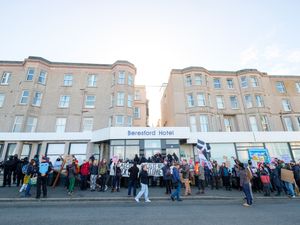
The issue of people being housed in hotels rose to prominence last year with protests outside some sites. Labour has pledged to no longer be using asylum hotels by the end of this Parliament, which would be 2029, if not earlier.
Several local authorities – including Cannock Chase, Lichfield, Shropshire, Stafford, Walsall and Wyre Forest – reported no asylum seekers housed in hotels at either date.
Find out where your local area ranks below:
Nationally, the number of asylum seekers in hotels peaked at 56,018 at the end of September 2023 under the then Conservative Government but dropped to a record low of 29,561 at the end of June 2024 just before the general election.
But there were 30,657 people staying in such accommodation while they were awaiting a decision on their asylum claims at the end of December.
The latest data from the Home Office showed December levels were 15 per cent lower than the previous quarter at the end of September when there were 36,273 people in hotels.
Figures for hotels, which represent the total population at that point in time rather than across the three-month period, date back to December 2022. The figures also show the number of people in so-called contingency accommodation other than hotels had fallen to its lowest level since the end of December 2022. There were 2,010 in this accommodation – which could include barracks – at the end of December 2025.
Once support has been granted, people are moved to what is known as “dispersal accommodation”, where they remain while waiting to hear if their application for asylum in the UK has been granted or refused.
The latest figures showed there were 68,538 people in this kind of longer-term temporary accommodation – typically privately managed houses, flats or rooms in properties of multiple occupancy – at the end of December. This was up 4 per cent on the same point in 2024 when there were 65,707 people in this kind of accommodation.
Meanwhile, other Government data published on Thursday showed a fall in the number of people applying for asylum in the UK and that the asylum backlog had dropped to its lowest level in more than five years.
The Home Office figures show 100,625 people applied for asylum in the UK in 2025, which is down 4 per cent from 104,764 in 2024, which was the highest for a calendar year since current records began in 2001.
There were 64,426 people waiting – as part of the so-called backlog – for an initial decision on an asylum application in the UK at the end of December 2025. This is the lowest figure since 60,548 at the end of September 2020.
A Home Office spokesperson said the latest statistics “show real progress as we restore order and control to our borders” but they said that “too many hotels remain in use”, adding: “That is why the Home Secretary is introducing sweeping reforms to tackle the pull factors drawing illegal migrants to Britain, and we are ramping up removals of those with no right to be here.”