Nottingham attacks inquiry is ‘turning point in our pursuit of truth’ – families
The two-year public inquiry into the attacks is due to begin on Monday.
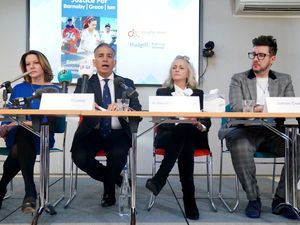
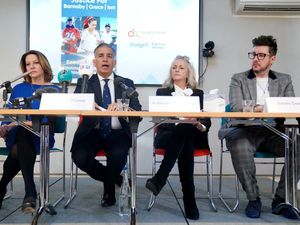
The families of the Nottingham attacks victims have said the upcoming inquiry “represents a critical turning point in our pursuit of truth and justice”.
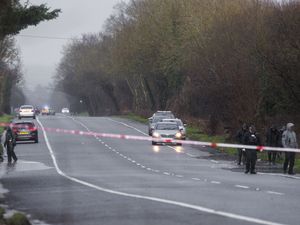
Valdo Calocane, who had been diagnosed with paranoid schizophrenia, killed University of Nottingham students Barnaby Webber and Grace O’Malley-Kumar, both 19, and caretaker Ian Coates, 65, and attempted to kill three more people in Nottingham in June 2023.
An inquiry is due to begin on Monday, with the families of the victims saying the probe is about “holding those who neglected their jobs to account”.

Prosecutors, police and medical professionals are due to be scrutinised by the two-year public inquiry, which will be chaired by senior retired judge Deborah Taylor.
The Independent Office for Police Conduct (IOPC) previously prepared a report which concluded that officers failed to properly investigate an assault on warehouse workers by Calocane which could have stopped his killing spree a month later.
Calocane was sentenced to an indefinite hospital order in January 2024 after admitting manslaughter by diminished responsibility and attempted murder – something which has been widely criticised by the victims’ families.
When the inquiry was announced, the Ministry of Justice said the management of Calocane’s risk to others in the lead-up to the attacks and public servants accessing information without authorisation will form part of the inquiry.
The victims’ families previously said claims healthcare staff illegally accessed medical records belonging to their loved ones were “sickening” and “inexcusable”.
In a statement ahead of the inquiry starting on Monday, the families of Mr Webber, Ms O’Malley-Kumar and Mr Coates said: “This inquiry represents a critical turning point in our pursuit of truth and justice.
“For too long, we have been met with failure and silence.
“This inquiry is not just about looking back; it is about holding those who neglected their jobs to account.
“We will no longer accept the institutional shielding of individuals who failed our loved ones.”
The statement continued: “We hope that it brings individual and institutional accountability, holding to account not just the organisations that failed in their duty of care, but the specific individuals whose decisions allowed these events to unfold.
“We want it to expose systemic neglect with a thorough examination of the missed opportunities by mental health services, law enforcement, and judicial bodies.
“Finally, we want it to address what we view as a miscarriage of justice with Calocane being sentenced to a hospital order.
“We want to challenge the legal framework and decision making which we feel led to an enormous miscarriage of justice that could see the killer of our loved ones released in as little as a few years.”
Speaking in London before the start of the inquiry, Mr Webber’s mother Emma Webber told reporters: “We’ve seen reviews, we’ve read reports – none of which have served their purpose. Virtually all of which are useless.
“Apologies do not keep the public safe, but change does. This inquiry must not become a procedural exercise.
“It must expose the systemic failures that allowed these warning signs to be missed, risks to go unmanaged, and responsibility to be diluted.
“It’s not about isolated errors. It’s about whether the systems designed to protect the public are fit for purpose, and they’re not.”
She added: “We’re not here for sympathy. We’re not here for safeguards. We’re certainly not here for lessons learned or benign apologies.”
Dr Sanjoy Kumar, the father of Ms O’Malley-Kumar, said: “There are many, many unanswered questions and that is why we are here today. And we are hoping today starts the process of giving us answers.”