Lord Mandelson: Labour grandee brought down by ties to Epstein
The former Labour minister was arrested on suspicion of misconduct in public office.
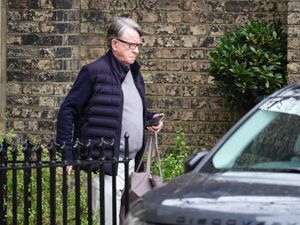
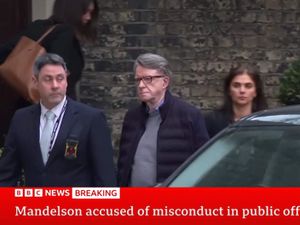
Lord Peter Mandelson’s long and varied political career has hit a new low as the former Labour minister was arrested on suspicion of misconduct in public office.
He is accused of passing on information to paedophile financier Jeffrey Epstein when he was business secretary.
It is the latest development in a spectacular fall from grace that has seen him resign his Labour membership and stand down from the House of Lords.
Lord Mandelson has made a career of comebacks – from spin doctor to returning to cabinet after quitting twice – but he was axed as the UK’s top diplomat in Washington last year over his friendship with Epstein.
As Sir Keir Starmer’s ambassador to the US, he was the first political appointment to the role in decades and took on the job as Donald Trump returned to the White House.
Mr Mandelson started out as a Labour communications director in 1985 and was first elected as an MP in 1992. He served in the cabinets of Sir Tony Blair and Gordon Brown.
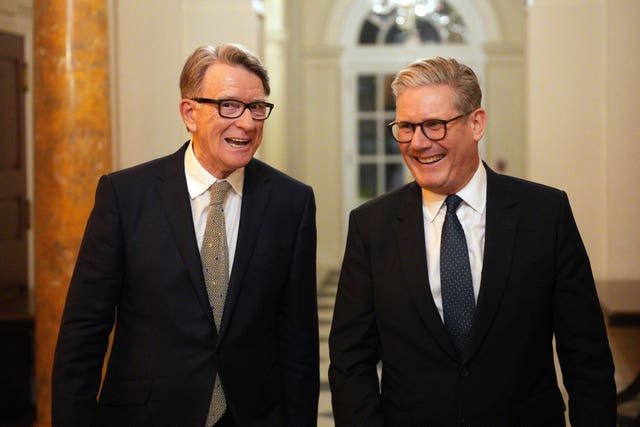
The Labour grandee resigned twice from cabinet, in 1998 and 2001, became Britain’s European commissioner between 2004 and 2008, and then made an astonishing return in 2008 under Mr Brown, who made him a peer to become business secretary.
A linchpin of the New Labour project from its birth in the early 1990s, Lord Mandelson witnessed and participated in the feuds that dominated much of its 13 years in power.
His ability to manipulate the levers of power from the shadows earned him monikers such as “the Prince of Darkness” and “the Dark Lord”.
His first departure from the Department of Trade and Industry in 1998 came after it emerged he had received a £373,000 home loan from then paymaster general Geoffrey Robinson.
He returned to the cabinet as Northern Ireland secretary in 1999 but quit again in 2001 as he became embroiled in the Hinduja affair.
He had been accused of helping one of the Indian billionaire Hinduja brothers get a British passport in return for a £1 million donation to the Millennium Dome.
Despite being cleared by an inquiry of any impropriety in the case, his Westminster career looked finished and he became a European commissioner in Brussels.
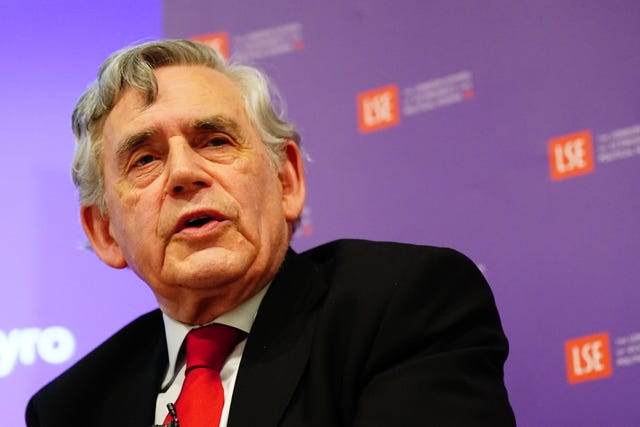
Mr Brown recalled him to the cabinet table as business secretary in October 2008, in a move widely seen as an attempt by the then-PM to shield himself from Blairite criticism as he came increasingly under fire.
Lord Mandelson was chief strategist for Labour in London in the 2010 election while Mr Brown toured the country.
A vocal critic of Jeremy Corbyn’s leadership of the Labour Party, Lord Mandelson then provided advice to Sir Keir as he sought to win power.
He was named Sir Keir’s ambassador to the US in December 2024.
His trade experience was seen as a strength amid the US president’s pledge to impose wide-ranging tariffs and he was involved in negotiations to ease their impact on the UK.
Questions had been raised about his links to Epstein over the years, but came under new scrutiny in September after it was revealed that he had supported the disgraced US financier while he was being investigated for sexual offences.
Emails emerged in which he told Epstein to “fight for early release” shortly before he was sentenced to 18 months in prison.
He is also reported to have told Epstein, “I think the world of you”, the day before the disgraced financier began his sentence for soliciting prostitution from a minor in June 2008.
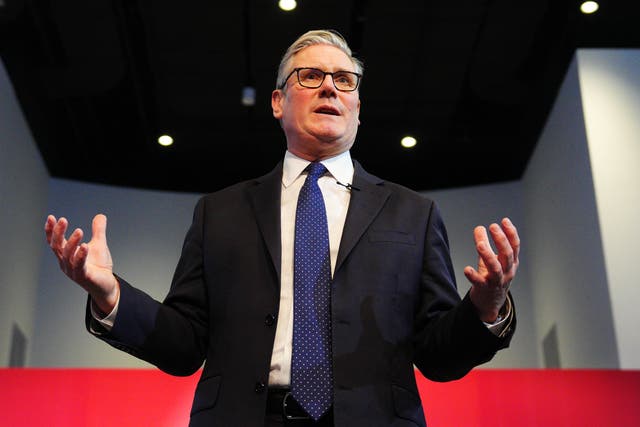
The Prime Minister sacked him as ambassador amid mounting pressure.
But another tranche of documents released by the US Department of Justice in January then raised new questions.
The so-called Epstein files appeared to show that the financier paid for an osteopathy course for Lord Mandelson’s husband, Reinaldo Avila Da Silva, in 2009, at the time the government was dealing with the financial crisis.
Meanwhile, bank statements from 2003 and 2004 indicated he received payments totalling 75,000 US dollars (£54,735) from Epstein, but Lord Mandelson said he had “no recollection” of receiving the funds.
The files also appeared to show him passing on sensitive information to Epstein.
Emails from 2009 appeared to show Lord Mandelson passing on an assessment by Gordon Brown’s adviser of potential policy measures, including an “asset sales plan”.
He also appeared to discuss a tax on bankers’ bonuses and confirm an imminent bailout package for the euro, the day before it was announced in 2010.
Lord Mandelson resigned from Labour, saying he did not wish to “cause further embarrassment” to the party.
Faced with the prospect of legislation to strip him of his title, he then confirmed he would quit the House of Lords.
Weeks later, after police searched his property, he was arrested on suspicion of misconduct in public office and taken to a London police station for interview.
He has not publicly commented, but is reported to reject that he has acted criminally in any way.
Meanwhile, the government is preparing to release its own documents related to Lord Mandelson’s appointment as ambassador, which Sir Keir has said will prove he lied during the vetting process, with the first files expected to be made public in early March.