Jury retires in trial of driver accused over fatal M4 smart motorway crash
The M4 alert system had been malfunctioning for five days when Barry O’Sullivan crashed his van into the back of a broken-down car, the trial heard.
A jury has retired to consider its verdicts in the trial of a van driver who crashed into a broken-down car on a smart motorway where the safety alert system was malfunctioning.
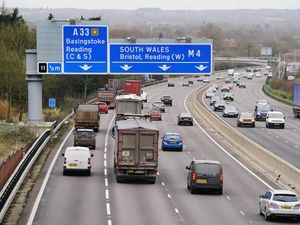
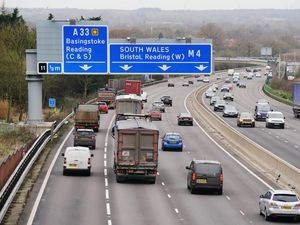
Barry O’Sullivan, 45, was driving a grey Ford work van along the M4 on March 7 2022 when he collided with a Nissan Micra that had come to a halt in the fast lane of the motorway.
The collision – which took place during the morning rush hour on the M4 westbound between junctions 11 and 12 – caused both vehicles to propel forward, with the Nissan bursting into flames.
Pulvinder Dhillon, who was a passenger in the Nissan, suffered fatal injuries.
Prosecution alleges O’Sullivan – who also suffered serious injuries in the crash – caused the death of Ms Dhillon by driving carelessly and “at speed”.
He did not pick up on “cues” that the vehicle was stationary, including the fact that other motorists were taking steps to avoid the broken-down Nissan, prosecution further alleged during the trial.
The defence, however, pointed to an unresolved technical failure on the M4 smart motorway network which meant radar alerts for broken-down vehicles were not being properly communicated to the control room – and had not been for five days until the crash.
Ian Bridge, representing O’Sullivan, told the trial “there was no automatic communication of the fact of a stationary vehicle and the closure of that lane to other traffic” as a result.
Summarising the case on Tuesday, judge Amjad Nawaz told jurors: “The crux of the defence’s case is that this accident was inevitable because of the fact that it (the car) was stationary in that fast lane, and there was nothing Mr O’Sullivan could have done (to avoid the crash).
“Approach your considerations in a calm and dispassionate manner,” he added before instructing the panel to retire for deliberations.
The Nissan had been stopped on the fast lane with the hazard lights on for six minutes when the collision happened, the trial previously head.
O’Sullivan was driving his Ford van at speeds of about 74 to 80mph along that same stretch of motorway for the five seconds before the crash.
A roadside breath test and drug test was later administered and O’Sullivan had a zero reading for alcohol and no cocaine or cannabis was detected.
It was discovered after the crash that alerts from stopped vehicle detection (SVD) radars on the M4 junction 8/9 to 12 had not been communicated since March 2 2022 due to a technical failure on the IT network, Mr Bridge further told jurors.
The technical malfunction had been flagged by the system and automatically generated tickets, but they were assigned to the wrong National Highways team and with an incorrect priority level of “7-day resolution”.
The technical issue on the M4 smart motorway system was fixed on the day of the fatal collision, the trial heard.
During his evidence, the defendant told jurors the crash “wouldn’t have happened” had he been “forewarned”.
He said that when he saw the vehicle on the fast lane, he “didn’t perceive it to be a hazard” and “perceived it to be moving”.
He said: “All of a sudden I realised, I’m gaining on this vehicle really fast, then I went to slam the brakes on – and then before I knew it, the collision happened.”
O’Sullivan, of Wixams, near Bedford, denies one count of causing death by careless driving.