Starmer pledges to act in ‘months not years’ to protect children on social media
A three-month consultation on banning children from social media and restricting infinite scrolling is to be launched in March.
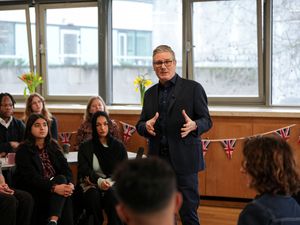
Sir Keir Starmer has pledged to act in “months, not years” to protect young people from addictive social media platforms, amid calls for a ban for under-16s.
The Prime Minister said his Government must make sure it does not cut off “sensible, good access” to news for young people.
A three-month consultation on banning children from social media and restricting infinite scrolling is to be launched in March.
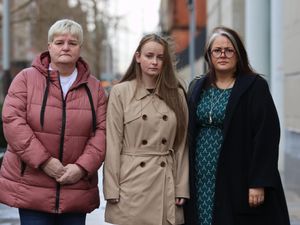
Supporters of the Australian-style ban have said parents are in “an impossible position” with regard to the online harms to which their children are being exposed.
Meanwhile, other online-safety campaigners have called for big tech firms to be regulated like banks, with a “conduct-based regime that holds senior managers accountable for product safety risks”.
During a visit to a community centre in London, the Prime Minister pledged to stand alongside concerned parents, referencing his own teenage children.

Sir Keir said: “I don’t think there’s a parent in the country who isn’t worried about this, by the way, I really don’t.
“The status quo, things as they are now, is not good enough. Nobody can make the argument that things can be left as they are. They can’t, they’re not protective of children, and we intend to act.”
In a bid to bolster online safety the Government has also proposed to restrict children’s access to virtual private networks (VPNs) and AI chatbots.
Sir Keir continued: “We’ve taken the powers to make sure we can act within months, not years.
“We also need to act very quickly, not just on the age concern, but on the devices and applications that make the sort of auto-scrolling, the constant glueing to the machine that you can never stop scrolling.”

Earlier on Monday, Technology Secretary Liz Kendall suggested budget-style online safety debates could help Parliament keep up with artificial intelligence and social media developments.
She pointed to the Finance Bill process, which takes place after a budget to write the Chancellor’s tax plans into law.
“We’re going to have to start thinking in the same way around online safety so we constantly keep pace, so that we protect children, give them their childhood back, as well as preparing them for the future,” Ms Kendall said.
Speaking to BBC Breakfast, she said technology “is developing much, much more quickly” than the law is, adding: “We will definitely come forward with our proposals before the summer.
“We want to get the legislation right, whatever we decide to do in the end.”

Ms Kendall said the time it took to pass the Online Safety Act 2023, which brought in new duties for social media and search firms to identify and prevent the spread of illegal content, was “really frustrating”.
The Government intends to extend the Online Safety Act duties to cover one-to-one conversations with AI chatbots.
“We’re taking steps so that any illegal content shared by AI chatbots, for anyone, adults too, will be stopped,” Ms Kendall told Times Radio.
During his visit, Sir Keir was asked by a 17-year-old whether the decision to extend votes to young people could be “incompatible” with a potential age-limit on social media.
The Prime Minister was told most young people get their news from social media, to which he replied: “I’m acutely aware of your point about news, because in politics, there’s always been a heavy sort of focus on newspapers, but frankly, I don’t think many people, and young people certainly, ever read newspapers any more, or even sit down as a family and watch the six or 10 o’clock news, it’s much more likely to be through social media.”
He said the Government must make sure it does not cut off “sensible, good access” to news for young people.