Assisted dying Bill has been a ‘long time coming’, MSP says
Liam McArthur says assisted dying should be available for people who are sound of mind but are living with a terminal illness.
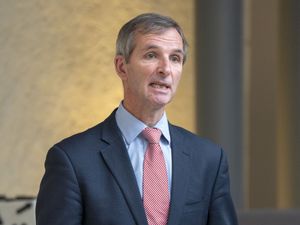
An MSP has said an assisted dying Bill has been “a long time coming” and many terminally ill Scots are in need of it.
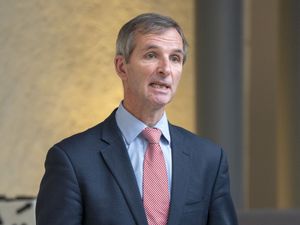
Liam McArthur, Liberal Democrat MSP for Orkney, said his Assisted Dying for Terminally Ill Adults (Scotland) Bill, would allow people who are sound of mind but are terminally ill to legally end their lives.
His comments follow a Sunday Mail article in which he drew criticism from the Association of Palliative Medicine (APM), which said the Bill is “unsafe, inequitable and unworkable”.
Mr McArthur said: “My Bill has choice at its heart: the choice for someone of sound mind with a terminal illness to request an assisted death and the choice for all medical professionals about whether to take part or not.
“While some palliative care professionals would not opt in to support their patients who wish to exercise that choice, I have spoken with many who would and see assisted dying as an essential part of patient-centred care at the end of life.
“This Bill has been a long time coming but it does now offer the opportunity to provide compassionate choice for the small number of terminally ill Scots who need it.
“Drawing on international evidence, my Bill would ensure that people are able to exercise that option in a way that is robustly safeguarded, putting in protections for all.”
He said a report from the House of Commons Health and Social Care Select Committee “did not see any indications” of palliative and end-of-life care deteriorating in quality or provision after the introduction of the Bill, saying the introduction of assisted dying has improved palliative care in many areas.
He added: “From the outset I have been clear that mechanisms to address some issues around legislative competency would be required in order for a comprehensive scheme of assisted dying to operate in Scotland.
“Both the Scottish and UK Government have worked constructively and at pace on this and MSPs can be confident that the measures they vote for will be enacted.”
The APM, which represents around 1,400 palliative medicine specialists in the UK and Ireland, said there were a number of issues with the Bill, including forced coercion, and a lack of mental health assessments.
Their letter said: “It is now evident that critical provisions concerning professional regulation and conscientious objection will be omitted from the final Bill.
“This means MSPs are being asked to approve legislation without the very safeguards they initially deemed necessary for safe implementation.
“The decision on these safeguards has been deferred to Westminster. There is now no guarantee that healthcare professionals will have the right to conscientiously object to involvement in AD without penalty, nor is there provision to protect patients from doctors suggesting assisted dying to them unprompted when they meet the eligibility criteria.”
It urged the MSP to review several parts of the Bill, including clinical concerns regarding the removal of essential clinical safeguards, and look at its 2022 assisted dying survey, which said three quarters of palliative care specialists would refuse to partake in assisting someone’s death.
The letter adds: “In matters of life and death, the threshold for safety must be unassailable.
“The current proposals fall demonstrably short of this standard, exposing vulnerable people to risks we cannot undo, while the palliative care they need remains inequitable and often unavailable.
“Until these profound concerns are meaningfully addressed, moving forwards with assisted dying in Scotland would risk normalising irreversible decisions borne from unequal access to care and not genuine choice.
“We urge extreme caution: dying people need investment in care and support, not legislation that could compound existing inequities.”
Health Secretary Neil Gray said: “The assisted dying Bill is a member’s Bill, and the Scottish Government remains neutral.
“The Scottish Government’s view is that the Bill in its current form is outside the legislative competence of the Scottish Parliament.
“Given that the Scottish Parliament voted in favour of the general principles of the Bill at stage one, and following consultation with the UK Government, we have made a formal request to them to try to resolve the legislative competence issues that have been identified.”