UK warships will be deployed to Arctic, PM says, as he calls for closer EU ties
The Prime Minister announced British efforts to bolster security in the so-called High North at the Munich Security Conference.
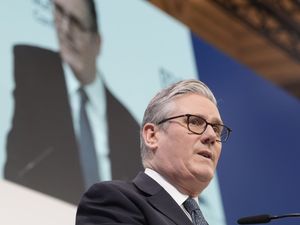
A group of British warships will patrol the Arctic, Sir Keir Starmer has said, following Donald Trump’s threats to annex Greenland after he cited concerns about its security.
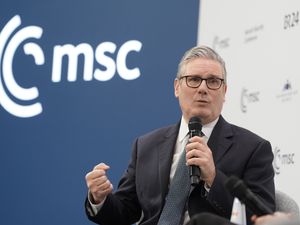
The Prime Minister announced the British efforts to bolster security in the so-called High North at the Munich Security Conference, and said the US, Canada and other Nato allies would join the initiative.
Sir Keir also announced Britain will seek “deeper economic integration” with the European Union and to “move closer to the single market” in more sectors during his speech.
He insisted the EU-UK “status quo is not fit for purpose”, but he acknowledged there would be “trade-offs” as a result of the move.
Amid ongoing domestic political strife, Sir Keir also claimed he “ended the week much stronger than I started it”.

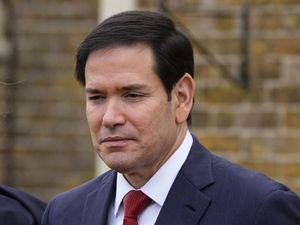
Sir Keir’s speech at the major security gathering followed an address by US Secretary of State Marco Rubio, who hit out at the mistakes of Western nations over the past 40 years, but sought to reconcile ties between the US and Europe after recent turmoil in the transatlantic relationship.
Mr Rubio snubbed a Ukraine meeting at the conference on Friday, where allies rallied around the war-torn country as the fourth anniversary of Russia’s full-scale invasion nears.
US officials reportedly blamed scheduling conflicts but his absence may have been seen by Europeans as a sign of the White House’s dwindling interest in including them in its bid to end the conflict.
Mr Rubio has met with the prime minister of Denmark, of which Greenland is a territory, during the conference and has discussed the island’s future, according to reports.
Mr Trump earlier this year asserted that he wants to take over the territory, sparking a divide between the US and its traditional European allies.
Mr Trump has claimed he does not believe Denmark does enough to defend it from threats by Russia and China.
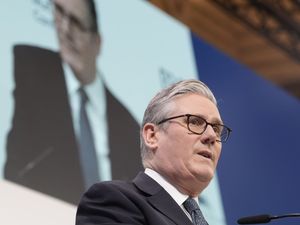
In an apparent attempt to address these concerns, Sir Keir said during his speech: “I can announce today that the UK will deploy our carrier strike group to the North Atlantic and the High North this year, led by HMS Prince of Wales, operating alongside the US, Canada and other Nato allies in a powerful show of our commitment to Euro-Atlantic security.”
In another likely nod to Mr Trump, the Prime Minister also insisted the UK would honour the Nato commitment to defend its allies if called upon.
One of the alliance’s founding principles, Article 5, is that an attack on one Nato member is an attack on all.
The US President has questioned whether the US’s European partners would answer this call if it were made.
But Sir Keir insisted all allies should “be in no doubt, if called on, the UK would come to your aid today”.
Elsewhere, he spoke of “closer economic alignment” between the EU and UK as he shared the stage with Ursula von der Leyen, president of the European Commission.
Sir Keir said: “So we must look at where we could move closer to the single market in other sectors as well, where that would work for both sides.
“The prize here is greater security, stronger growth for the United Kingdom and the EU, which will fuel increased defence spending, and the chance to place the UK at the centre of a wave of European industrial renewal.”
He added: “I understand the politics very well. It will mean trade-offs.
“But the status quo is not fit for purpose, and to me there’s no question where the national interest lies, and I will always fight for what’s best for my country.”
At home the Prime Minister has faced questions about his judgment in appointing Lord Peter Mandelson as US ambassador, due to his close links with the paedophile Jeffrey Epstein.
Some senior Labour figures, including Scottish leader Anas Sarwar, have called for Sir Keir to resign over the scandal.
Asked whether his domestic challenges left him vulnerable, the Prime Minister told the Munich conference: “No, I reject that.
“I ended the week much stronger than I started it.
“And that’s a very good place to be, and my party and my Government is completely united on the question of Ukraine and defence and security and the need for stronger relations with Europe on defence, on security and on economy as well.
“And so I think that there is real strength in the position I’ve now set out.”